The Screenless AI Device Era: What OpenAI’s AI Companion Device Signals for Hardware
For most of the personal-computing era, every major technology shift has introduced another screen. Desktop computers placed screens on desks. Smartphones put them in our pockets. Smartwatches moved them onto our wrists. Smart glasses are now attempting to place digital information directly in front of our eyes. The next major AI device may move…
AI Hardware Architecture: A Complete Guide to Designing Intelligent Devices
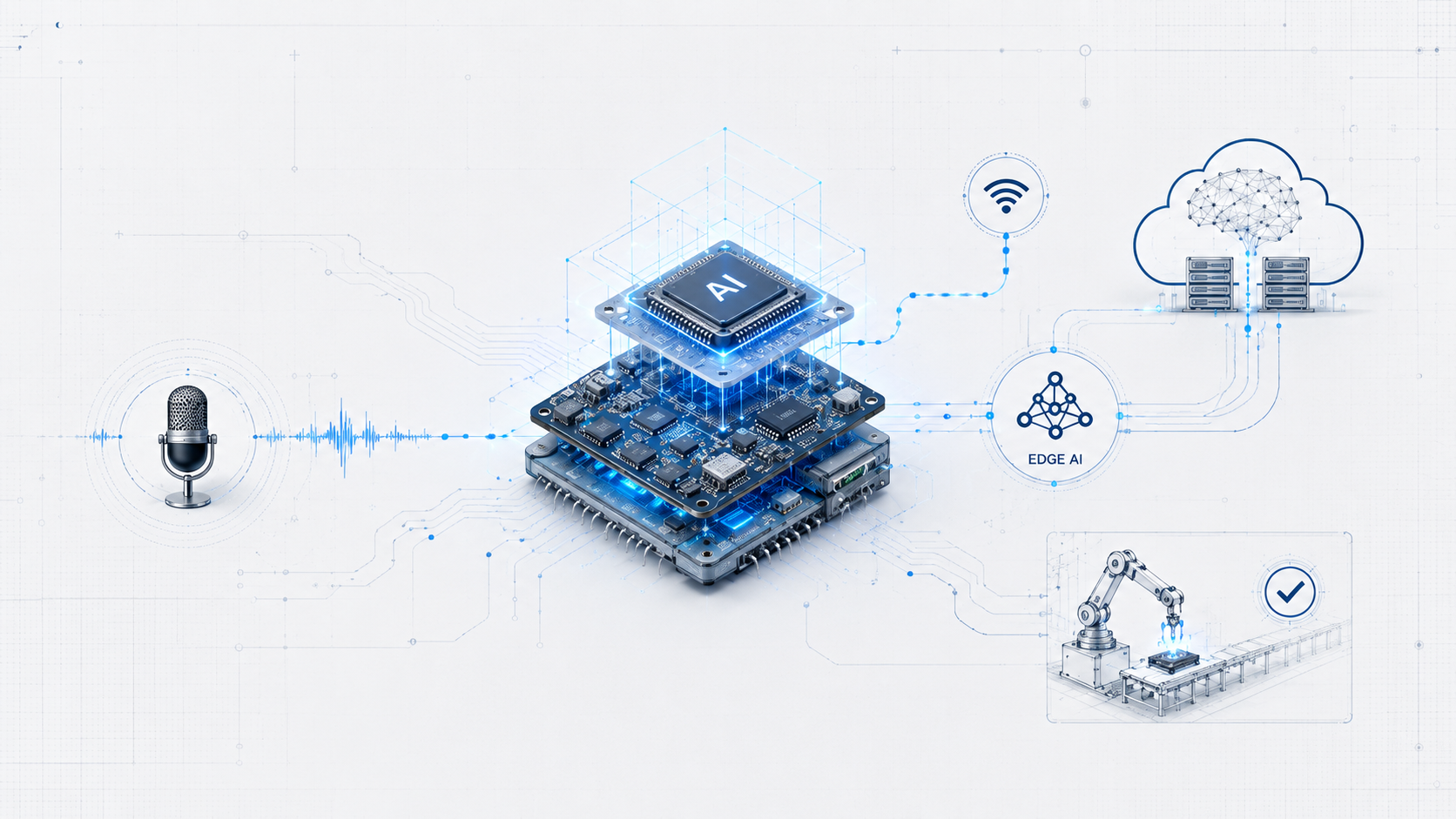
Artificial intelligence has become dramatically more capable over the past few years, but even the most advanced AI models depend on one thing to interact with the real world: hardware. Whether it’s an AI voice recorder capturing conversations in a noisy hospital, smart glasses assisting field technicians, or wearable devices supporting enterprise workflows, the…

AI Hardware Integration: The Complete Guide to Building Intelligent Devices
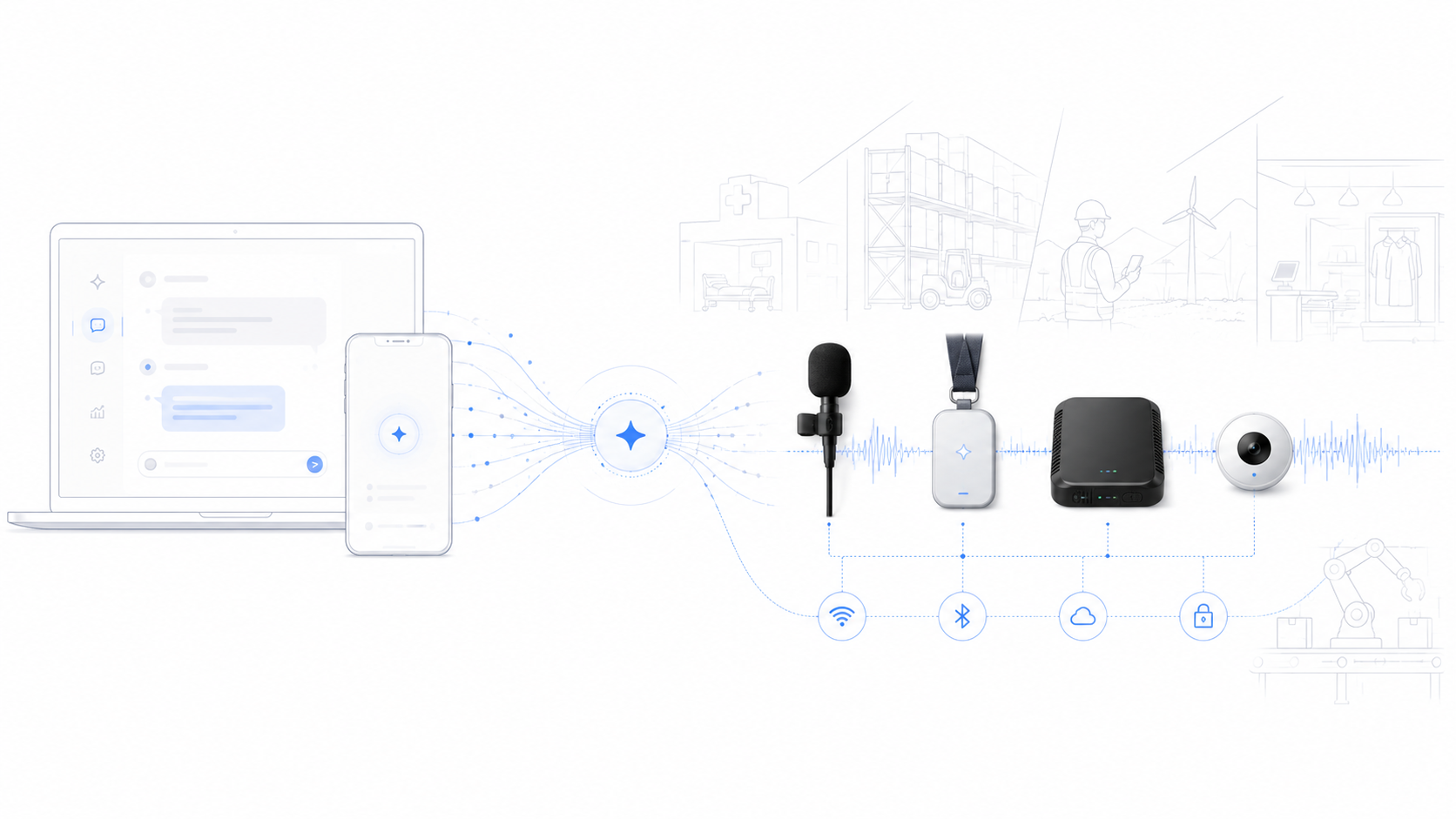
Artificial intelligence has moved far beyond chatbots and cloud-based applications. Today’s AI products increasingly depend on specialized hardware that captures data, processes information, and interacts with the physical world in real time. From AI-powered meeting assistants and wearable voice recorders to smart glasses and industrial inspection devices, hardware has become the bridge between AI…

Custom AI Wearable ODM: The B2B Hardware Builder’s Guide
Introduction: Why Most AI Wearable Projects Fail at Hardware, Not Software The AI wearable market has reached a genuine inflection point. Plaud, Bee, Ray-Ban Meta, and a wave of clinical AI scribe companies have demonstrated that people will wear AI hardware — and pay for it. Investment is flowing, use cases are real, and…

AI Voice Capture Device Manufacturer USA: What Actually Matters (2026)
The short answer (before you scroll) If you’re searching for an AI voice capture device manufacturer in the USA, what you’re really looking for isn’t just a manufacturer — it’s a partner that can deliver: 👉 In practice, this narrows the field down to a few companies like GMIC.AI, PLAUD.AI, and select enterprise hardware…

Best AI Voice Capture Device Manufacturers (2026 Guide)
If you’re looking for the best AI voice capture device manufacturer, here’s the short answer first: Top manufacturers right now: What Defines a “Best” AI Voice Capture Manufacturer? AI voice capture devices today are no longer just recorders. They are full-stack conversation intelligence systems that include: When choosing a manufacturer, the key factors are:…

MIC06V2 and Low-Friction AI for Business
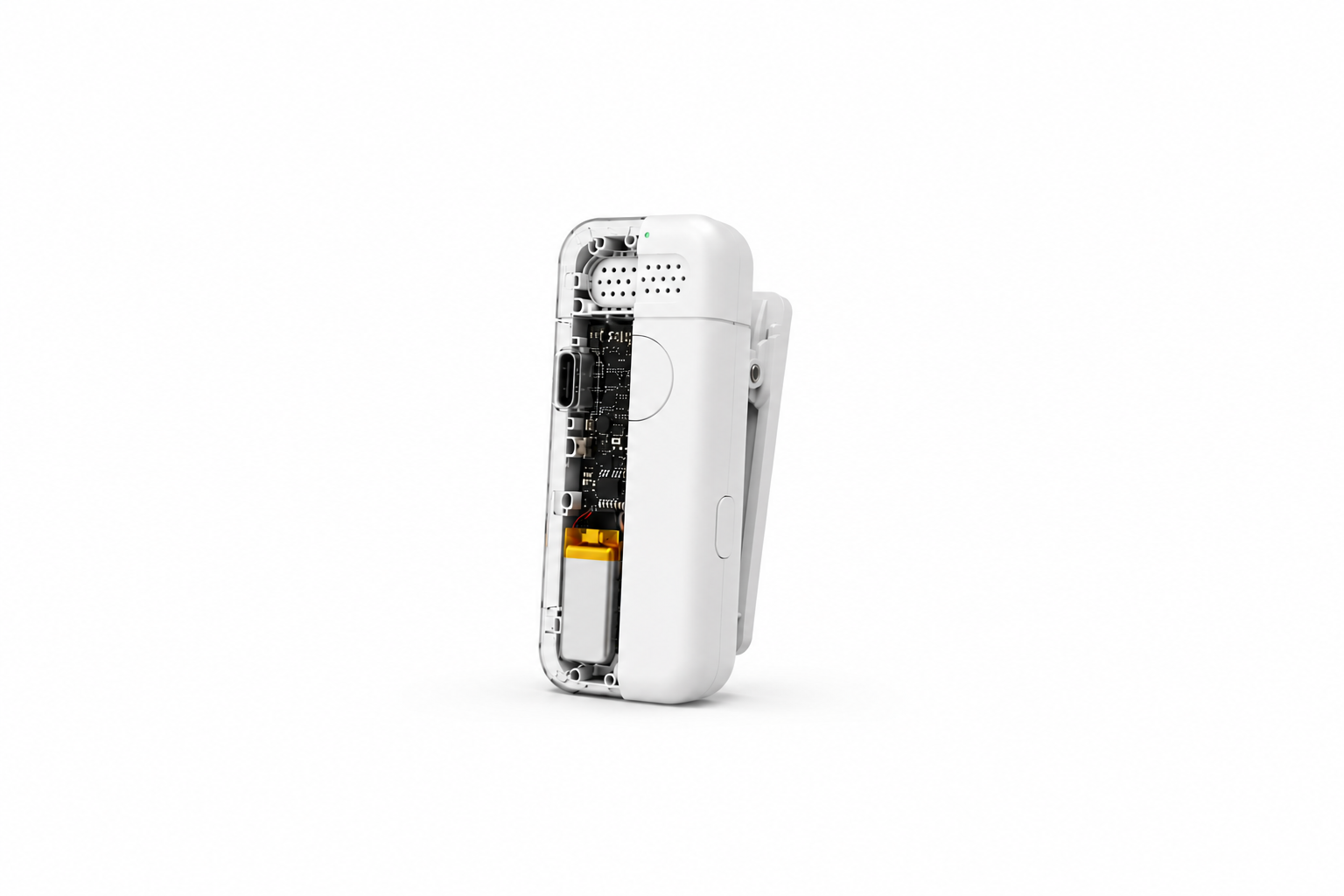
MIC06V2 wasn’t born from AI hype. It came from a failed voice workflow that taught us a harder lesson: small businesses don’t need more dashboards. They need a low-friction way to capture conversations, turn them into structured records, and make sure the next action actually happens.
AI Audio Front-End: MIC06V2 Explained
AI audio front-end technology helps AI capture real-world conversations. See how MIC06V2 turns speech into usable workflows and insights.
Below is the internal project awareness document for the MIC06V2 project, aimed
Below is the internal project awareness document for the MIC06V2 project, aimed at aligning the team’s understanding. — # MIC06V2 Project Internal Awareness Document ## We are not creating a recording device, but a new work entry point. ## I. Let’s make it clear in one sentence. **MIC06V2 is a Voice-Driven Work Companion.** In…
Wearable Voice Device Business Starts With a Mic
Why microphones are becoming a primary AI interface—and why selective edge audio processing matters before sending anything upstream.
Wearable Voice Device Business Needs Boundaries
AI recording devices won’t matter because they save audio. They’ll matter if they become bounded memory tools: capturing the right conversations, turning them into useful notes and actions, and respecting human limits from the start.
Wearable Voice Device Business: The Next AI Wave
Wearable AI recording devices are turning everyday conversations into searchable, structured knowledge. Powered by advances in speech recognition, low-power hardware, and large language models, they are becoming a critical infrastructure layer for ambient intelligence.
The New Wave of AI Hardware: Why Software Teams Need ODM Partners
AI is leaving the screen. More and more AI products are becoming physical devices. For AI startups, the fastest path from software idea to hardware product is the right ODM partner. Here’s why.
Wearable Voice Device Business: Recorder or Interface?
A wearable AI mic only matters when a real conversation turns into a callback, a task, or a follow-up your team can actually use. Here’s where shops get it wrong — and what fixed it.

AI Voice × AI Wearables: How GMIC AI Is Powering the Next Interface Era
I. When Speaking Becomes the New Way to Work For decades, our lives revolved around screens. We typed, tapped, and swiped to communicate with technology.But human communication has always been speech-first—and AI Voice is finally catching up. Today’s voice technology allows people to complete tasks in seconds simply by speaking, not typing.Real-time transcription, semantic…
Empower Your Brand: Add a Custom Voice AI Assistant to Your Product
Challenges & Opportunities Leveraging 15 years of deep expertise in communications technology and AI-driven manufacturing, GMIC AI accelerates your innovation journey. We partner with you to transform your vision into a market-ready product in just 6-9 months. High HardwareDevelopment Barrier Lack of expertise in microphone design,low-power systems, and acoustics. Fragmented VoiceAI Experience Disconnected multi-turn…