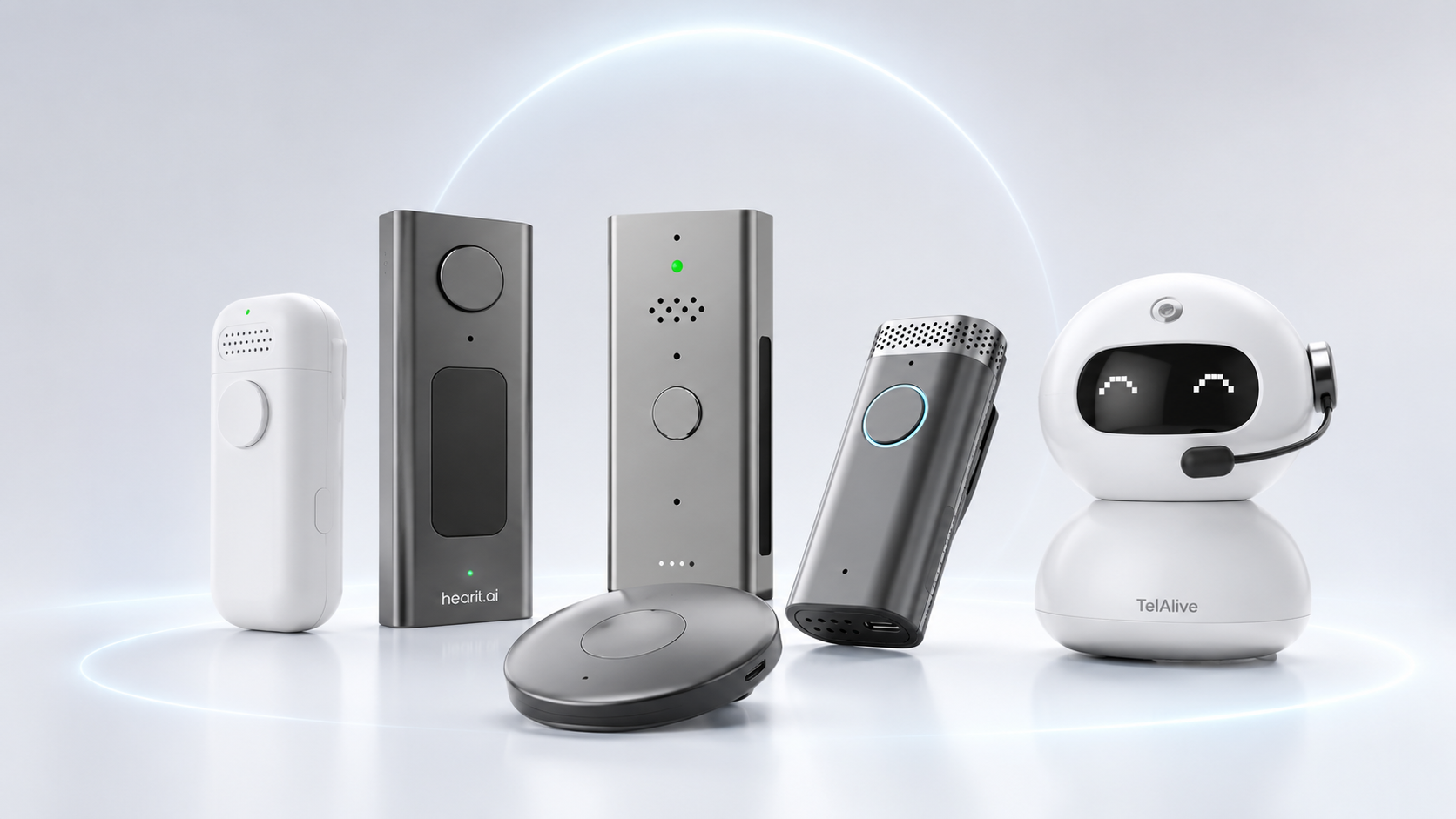
Voice AI hardware project planning requires more than selecting a microphone and connecting it to an application. Hardware architecture, firmware, acoustics, mechanical design, certification, sourcing, testing, and manufacturing all affect the project scope.
This guide explains how custom voice AI hardware projects are typically evaluated, what non-recurring engineering (NRE) and tooling may cover, how prototype and production quantities are determined, and what information helps an engineering team prepare a useful proposal. It is intended for AI software companies, product teams, and brands considering a dedicated voice device.
Every project is different. Costs, minimum order quantities, and schedules depend on the confirmed requirements, technical validation, component availability, target markets, and changes in scope. A project-specific assessment is therefore more reliable than a fixed online estimate.
Voice AI hardware project planning at a glance
In short: a custom voice AI hardware project should begin with a feasibility review that defines the use case, audio environment, connectivity, power, enclosure, AI workflow, target markets, and purchasing assumptions. NRE covers one-time engineering and validation work. MOQ depends on the product platform, customization, dedicated materials, tooling, and supplier requirements. Development plans remain subject to testing results, component availability, certification, and scope changes.
- Best way to reduce uncertainty: validate the highest-risk function before committing to a complete custom design.
- Best way to reduce NRE: reuse a proven hardware platform, enclosure, firmware foundation, or reference architecture where appropriate.
- Best way to obtain a useful quotation: provide the use case, required functions, integration needs, target markets, prototype needs, and purchasing assumptions.
1. What do NRE and tooling costs include?
NRE, or non-recurring engineering, covers the one-time development and validation work required for a specific product. Depending on the project, it may include:
- System architecture and component selection
- Schematic and PCB development
- Firmware customization and device control
- Audio tuning, noise reduction, echo control, or microphone-array work
- Bluetooth, Wi-Fi, USB, SDK, API, or cloud integration
- Mechanical and enclosure engineering
- Prototype builds and engineering validation
- Production test-fixture or test-process development
- Documentation and manufacturing handoff
Tooling costs primarily relate to custom enclosures and mechanical parts. Injection molds, fixtures, jigs, and other production tools are assessed separately according to the materials, geometry, finish, production process, and expected volume.
Using an existing hardware platform or enclosure can reduce both engineering work and tooling requirements. A fully custom product may require new electronics, firmware, acoustics, industrial design, mechanical design, and production tooling.
A proposal should clearly state which activities are included and whether prototypes, certification, third-party testing, packaging, or shipping are included or quoted separately.
2. How does a project move from concept to production?
A custom project normally progresses through a series of validation stages. The exact sequence depends on the level of customization and the risks that must be resolved.
| Stage | Primary purpose |
|---|---|
| Proof of Concept (PoC) | Confirm that the key function, architecture, or integration approach is technically feasible. |
| Prototype | Create testable devices for functional evaluation, software integration, and early user feedback. |
| Engineering Validation Test (EVT) | Validate the hardware, firmware, acoustics, power system, connectivity, and core performance. |
| Design Validation Test (DVT) | Validate the near-final design, mechanical construction, reliability, usability, and applicable pre-compliance requirements. |
| Production Validation Test (PVT) | Use a pilot build to validate production processes, fixtures, inspection criteria, test coverage, and yield. |
| Mass production | Proceed with material purchasing, manufacturing, quality control, packaging, and delivery after the required approvals. |
These stages are decision gates, not guaranteed calendar periods. A design may need another revision when testing identifies an acoustic, radio, power, mechanical, reliability, or manufacturing issue.
After the requirements and technical approach are reviewed, the project team can prepare an initial development plan that identifies stage objectives, expected deliverables, customer approval points, and major dependencies. That plan may be updated as testing progresses or requirements change.
3. What affects prototype quantity and production MOQ?
Prototype quantities are selected according to the work that must be completed. Engineering evaluation, firmware integration, application testing, acoustic testing, reliability work, certification, and stakeholder review may each require devices.
Production minimum order quantity (MOQ) depends on the cooperation model:
- Existing product with private labeling: MOQ depends on the selected model, branding, packaging, firmware requirements, and available inventory.
- Existing platform with customization: MOQ is evaluated according to the hardware, firmware, enclosure, accessory, and packaging changes.
- Fully custom development: MOQ also reflects dedicated components, tooling, manufacturing processes, supplier requirements, and purchasing plans.
The resulting proposal may separate sample costs, one-time engineering expenses, recommended production quantities, and reference pricing for defined quantity ranges. Final pricing depends on the confirmed specification, order quantity, and material conditions when the order is placed.
4. How do microphones, DSP, processors, batteries, and enclosures affect the project?
| Area | Important scope and cost drivers |
|---|---|
| Microphones | Microphone count, sensitivity, noise performance, array geometry, placement, acoustic structure, and test requirements. |
| DSP and audio processing | Noise reduction, acoustic echo cancellation, automatic gain control, voice activity detection, beamforming, algorithm licensing, and tuning effort. |
| Main processor | Required computing performance, memory, storage, interfaces, connectivity, security functions, and local AI processing. |
| Battery and power | Capacity, cell quality, charging method, protection circuits, thermal design, standby behavior, operating time, and safety testing. |
| Enclosure | Reuse or custom design, materials, dimensions, surface finish, ingress protection, mounting, microphone openings, assembly, and tooling. |
The appropriate configuration depends on the use case. A far-field meeting device, a close-range wearable recorder, and a two-way voice assistant have different acoustic, power, connectivity, and mechanical requirements.
Purchase volume, assembly complexity, production testing, quality requirements, accessories, and packaging also affect the commercial proposal.
5. What information should a customer prepare?
A complete engineering package is not required for an initial conversation. The following information helps the team determine whether an existing platform or a custom design is appropriate:
- Use case: Who uses the device, where it is used, and what problem it must solve.
- Core functions: Recording, real-time streaming, two-way voice, buttons, indicators, speakers, sensors, or local controls.
- Connectivity and integration: BLE, Wi-Fi, USB, mobile app, desktop software, SDK/API, or cloud interfaces.
- Performance goals: Capture distance, acoustic environment, audio quality, battery life, storage, size, and weight.
- AI workflow: Whether audio is stored, streamed, processed locally, or sent to a cloud service.
- Purchasing plan: Prototype needs, initial order assumptions, expected scale, and target commercial position.
- Markets and compliance: Sales regions, anticipated certification, privacy, security, and data-handling requirements.
- Brand and mechanical scope: Logo and packaging needs, existing industrial-design files, or responsibility for a new enclosure.
If the discussion involves sensitive technical or commercial information, the parties can put an NDA in place before detailed materials are exchanged. Responsibility for industrial design, mechanical design, application development, cloud integration, and certification should be confirmed before the project begins.
6. What does a typical quotation process look like?
- Requirement discussion: Review the use case, functions, integration needs, purchasing plan, commercial objectives, and target markets.
- Technical assessment: Compare existing-platform and custom-development approaches, define the current scope, and identify items that still require validation.
- Initial commercial proposal: Based on the available information, outline sample costs, reference production pricing, potential NRE and tooling, and an initial project plan. Unvalidated projects should not be treated as having a guaranteed development schedule.
- Prototype and solution validation: Test devices, complete system integration, review results, and confirm any required modifications.
- Final quotation and project confirmation: Confirm the product specification, purchase quantity, included work, stage plan, acceptance criteria, payment terms, and responsibilities of both parties.
- Development and production: Proceed through the agreed engineering, validation, pilot-production, and manufacturing activities.
The quotation should identify the applicable configuration and quantity, validity period, assumptions, exclusions, and whether certification, packaging, and shipping are included. Changes to the requirements or configuration may change the cost, commercial terms, or project plan.
7. How should companies choose between an existing platform and a fully custom design?
An existing platform may be suitable when the core hardware already meets the intended use case and differentiation can be achieved through branding, firmware, accessories, software integration, or packaging. This approach can reduce the amount of new engineering and technical uncertainty.
A fully custom design may be appropriate when the product needs a unique form factor, specialized microphone geometry, uncommon sensors, local AI processing, a specific battery architecture, proprietary connectivity, or other requirements that cannot be met by an existing platform.
The best starting point is a feasibility review that compares product requirements with available hardware platforms and identifies the areas that genuinely require new development.
How GMIC evaluates a voice AI hardware project
GMIC evaluates projects by connecting the intended user workflow to the hardware, firmware, acoustic, mechanical, validation, and manufacturing requirements. The assessment begins with the use case rather than a predetermined component list.
The engineering review typically examines microphone placement and capture distance, expected noise conditions, audio processing, processor and memory needs, connectivity, power consumption, charging, enclosure constraints, software interfaces, data handling, test coverage, target sales regions, and production assumptions. Open technical risks are identified as validation items instead of being presented as confirmed capabilities.
Recommendations and commercial estimates are based on the information available at the time of review. Component choices, compliance requirements, third-party services, and validation results should be confirmed in the applicable project documents. This approach helps separate verified requirements from assumptions and reduces avoidable changes later in development.
Frequently asked questions
Can GMIC provide a fixed development cost before reviewing the requirements?
A reliable fixed cost normally requires a confirmed scope. An initial proposal can identify expected engineering, prototype, tooling, testing, and production items, but unresolved technical requirements may remain assumptions or separately quoted work.
Can GMIC guarantee a development completion date?
A project plan can define stages, dependencies, deliverables, and customer approval points. Completion dates depend on requirement stability, technical validation, component availability, tooling, testing, certification, and the speed of required decisions.
Is a fully custom voice AI device always necessary?
No. If an existing platform already meets the acoustic, connectivity, power, mechanical, and integration requirements, platform customization may reduce new engineering. A fully custom design is more appropriate when the required differentiation cannot be achieved on an existing platform.
What is the first step for a voice AI hardware project?
Start with a feasibility review. Define the user, environment, audio workflow, required functions, software interfaces, physical constraints, target markets, and purchasing assumptions. The review can then compare existing-platform and custom-development paths.
Plan the project before committing to a hardware path
A useful proposal is built on confirmed requirements and clearly stated assumptions. It should separate one-time development work from prototype, tooling, certification, and production expenses, while explaining which technical and commercial items remain subject to validation.
GMIC works with AI companies and product teams on voice AI hardware, system integration, prototyping, and ODM/OEM development. Teams that already have a model, application, or workflow can use a feasibility review to determine the most appropriate hardware and manufacturing path.
Request a project feasibility review to discuss the use case, integration requirements, customization scope, and purchasing plan.
Any initial quotation or project plan is based on the information available at the time. It is not an unconditional commitment to final cost, production price, or completion date. Commercial terms and schedules are confirmed through the applicable quotation, development agreement, purchase order, and project approvals.