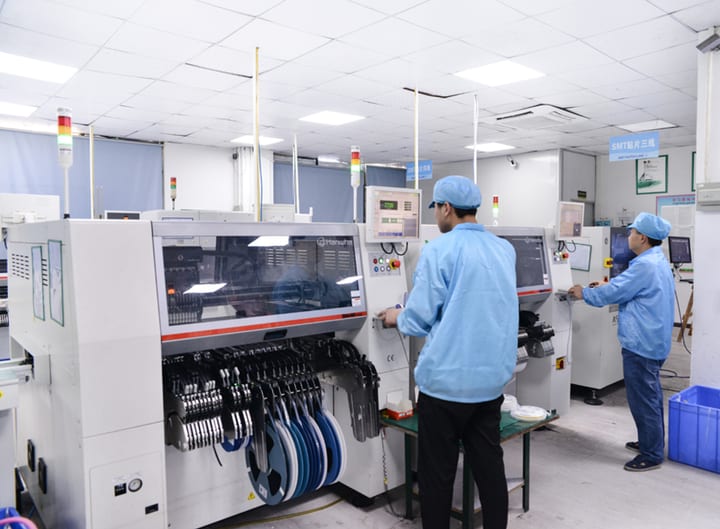
Adapt existing devices, validate prototypes, customize firmware, and plan private label or ODM/OEM production paths — starting from low risk.
A capability checklist — not a marketing brochure.
Clip-on mic, wearable, phone entry device, module-based hardware — adapted from existing products or scoped from a new brief.
Board-level adaptation for OEM or embedded communication projects. Start from a module or adapt an existing PCBA.
3D small-batch enclosure design, sample housing, ergonomic testing — from sketch to physical prototype.
Button logic, recording behavior, connectivity configuration, and device workflow customization.
Logo, color scheme, packaging direction, product naming, and market-ready presentation for OEM buyers.
Integration planning and data boundary definition — without overpromising AI scope or compliance assumptions.
Identify your starting point. Each path has different timelines, deliverables, and next steps.
You don't commit to production on day one. Here's how the prototype path works.
Define form factor, use case, connectivity needs, and constraints.
Engineering assessment of scope, constraints, and viable paths.
Choose the right base product or PCBA starting point.
Physical sample or 3D enclosure build for validation.
Button logic, recording behavior, and device flow testing.
Internal trial or channel validation check before scaling.
BOM, packaging, certification, and delivery path review.
Production planning and readiness review, not a vague manufacturing promise.
Confirm use case, quantity range, target region, and constraints before engineering begins.
Assess hardware, firmware, enclosure, and supply chain feasibility.
Prototype or small-batch build for physical and functional validation.
Enterprise internal trial or channel validation with defined success criteria.
BOM review, packaging, certification pathway, and delivery planning.
For OEM buyers, channel partners, and brand owners entering the AI communication device market.
Logo, color scheme, product naming, and market-ready identity applied to the device.
Box design, inserts, labeling, and documentation for retail or enterprise distribution.
Default behavior, button mapping, and connectivity settings aligned to your use case.
Prototype samples, spec sheets, and project documentation for internal sign-off or channel launch.
This clarity prevents misaligned expectations between hardware scope and AI workflow scope.
Use this checklist before entering an ODM/OEM engagement.
Deliverables may vary by project scope. These reflect typical outputs from an initial engagement.
Form factor, use case, connectivity, and constraint summary.
Engineering review of scope and known constraints.
Sample build scope, timeline estimate, and material notes.
Behavior spec, trigger logic, and test conditions.
BOM notes, packaging direction, certification path overview.
Tell us the device form, workflow, quantity range, and customization needs. GMIC.AI will help identify the right product, module, or prototype path.
hello@gmic.ai · Shenzhen + Anaheim