-
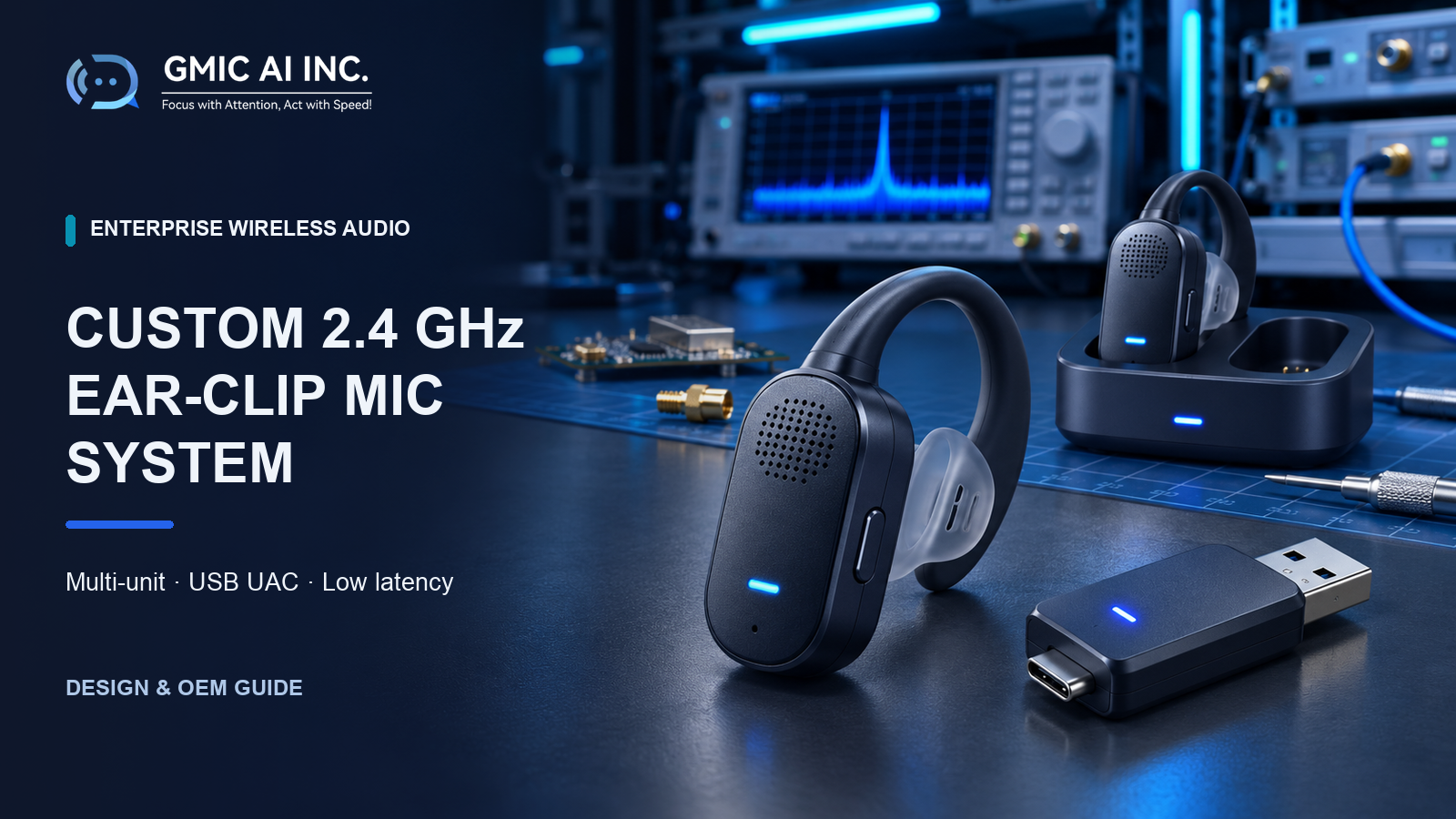
Custom 2.4 GHz Ear-Clip Microphone System: OEM Design Guide
A custom 2.4 GHz ear-clip microphone system can give a voice application a predictable wireless audio path without depending on a user’s Bluetooth settings. The product normally combines a lightweight ear-worn or ear-adjacent transmitter, a dedicated USB receiver, microphone and DSP, radio firmware, battery management and a host interface that appears as a standard…
-
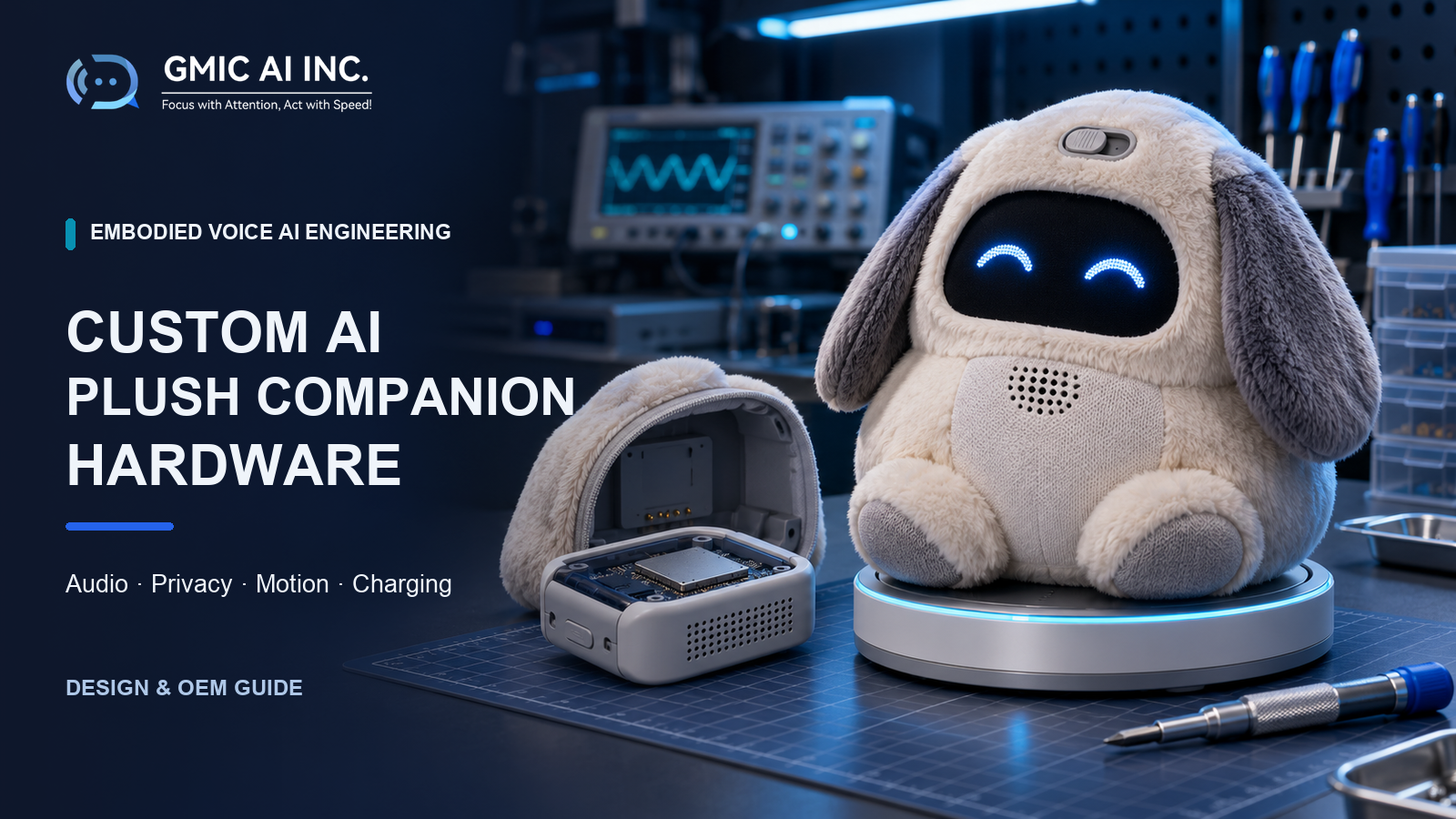
Custom AI Plush Companion Hardware: Design and OEM Guide
Custom AI plush companion hardware turns a soft character into a voice product with microphones, a speaker, wireless connectivity, optional display eyes or motion, and a service that manages speech and AI responses. The hard part is not placing electronics inside a toy. It is making acoustics, heat, privacy, cleaning, charging and the customer-owned…
-
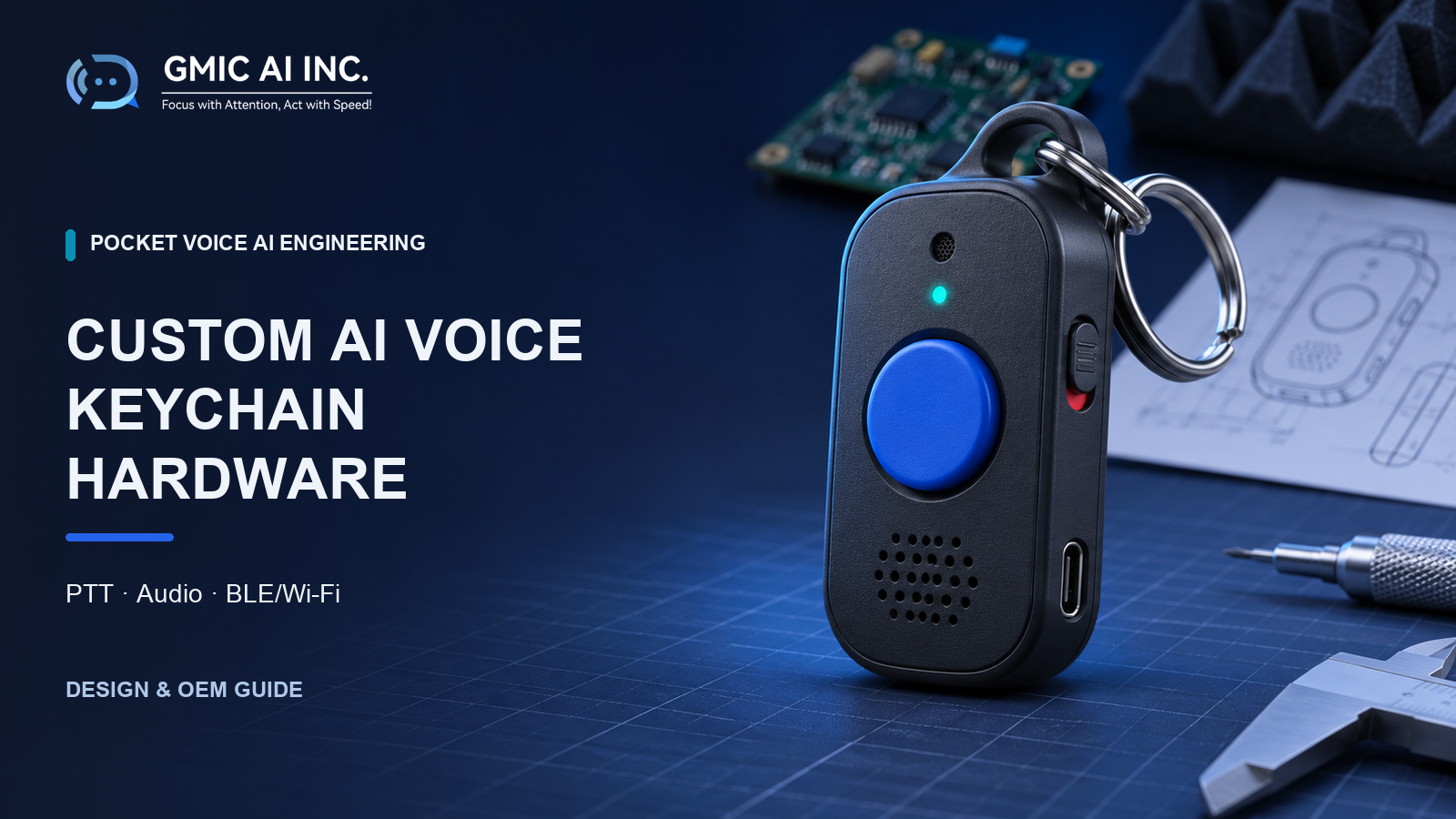
Custom AI Voice Keychain Hardware: Design and OEM Guide
Custom AI voice keychain hardware can give users a dedicated push-to-talk path to an AI agent without requiring them to unlock a phone. A small enclosure can contain a microphone, speaker, physical controls, BLE or Wi-Fi, status feedback and a rechargeable battery—but the useful product is the complete voice session, not the list of…
-
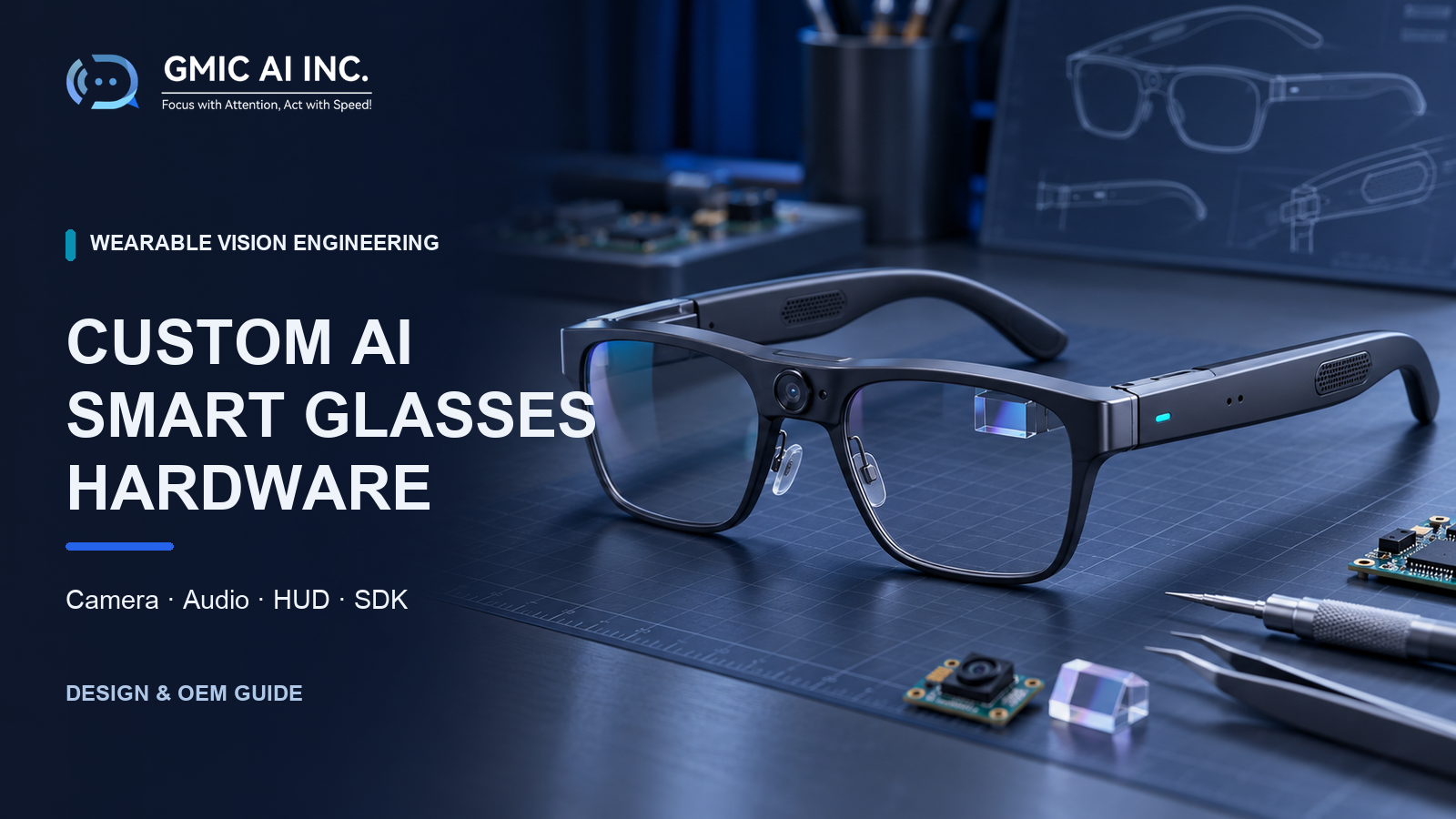
Custom AI Smart Glasses Hardware: Design and OEM Guide
Custom AI smart glasses hardware can give an application a first-person camera, voice input and hands-free audio without forcing every workflow into a phone screen. The difficult part is not adding every available feature. It is choosing which sensing, output and processing architecture can fit the intended frame, battery, thermal envelope, privacy model and…
-
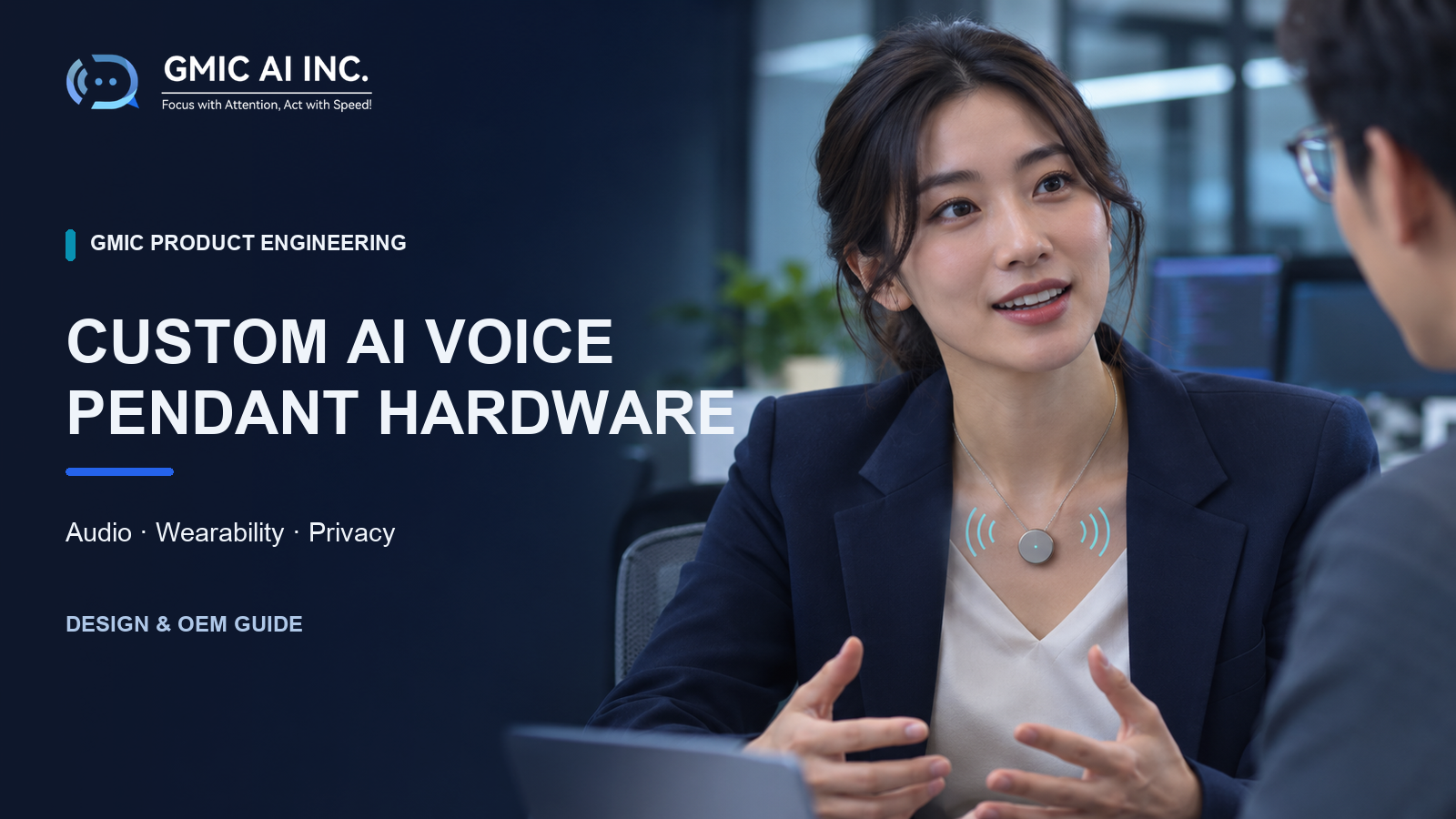
Custom AI Voice Pendant Hardware: Design and OEM Guide
Custom AI voice pendant hardware places a microphone near the collarbone for hands-free notes, conversation capture and voice-agent workflows. It offers more battery and antenna volume than a ring, but its acoustic position changes as the pendant swings, rotates or touches clothing. In brief: Choose a pendant for low-friction, chest-level capture when users will…
-
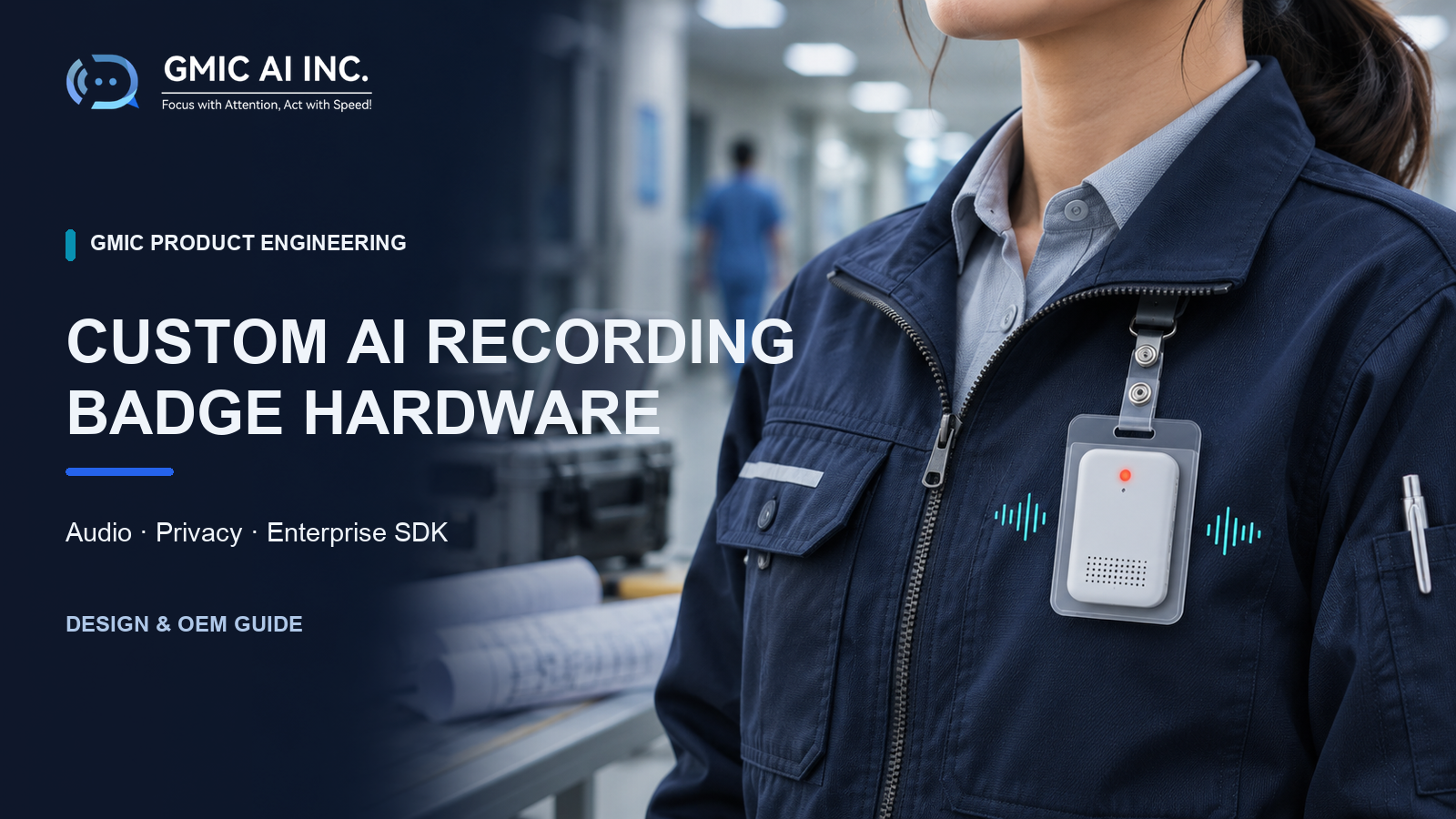
Custom AI Recording Badge Hardware: Design and OEM Guide
Custom AI recording badge hardware can capture meetings, field observations and hands-free voice notes from a stable chest-level position. Compared with a ring or wristband, a badge offers more enclosure volume and a more consistent microphone orientation, but it must manage clothing noise, body shadowing, visible recording feedback, attachment security and enterprise identity requirements.…
-
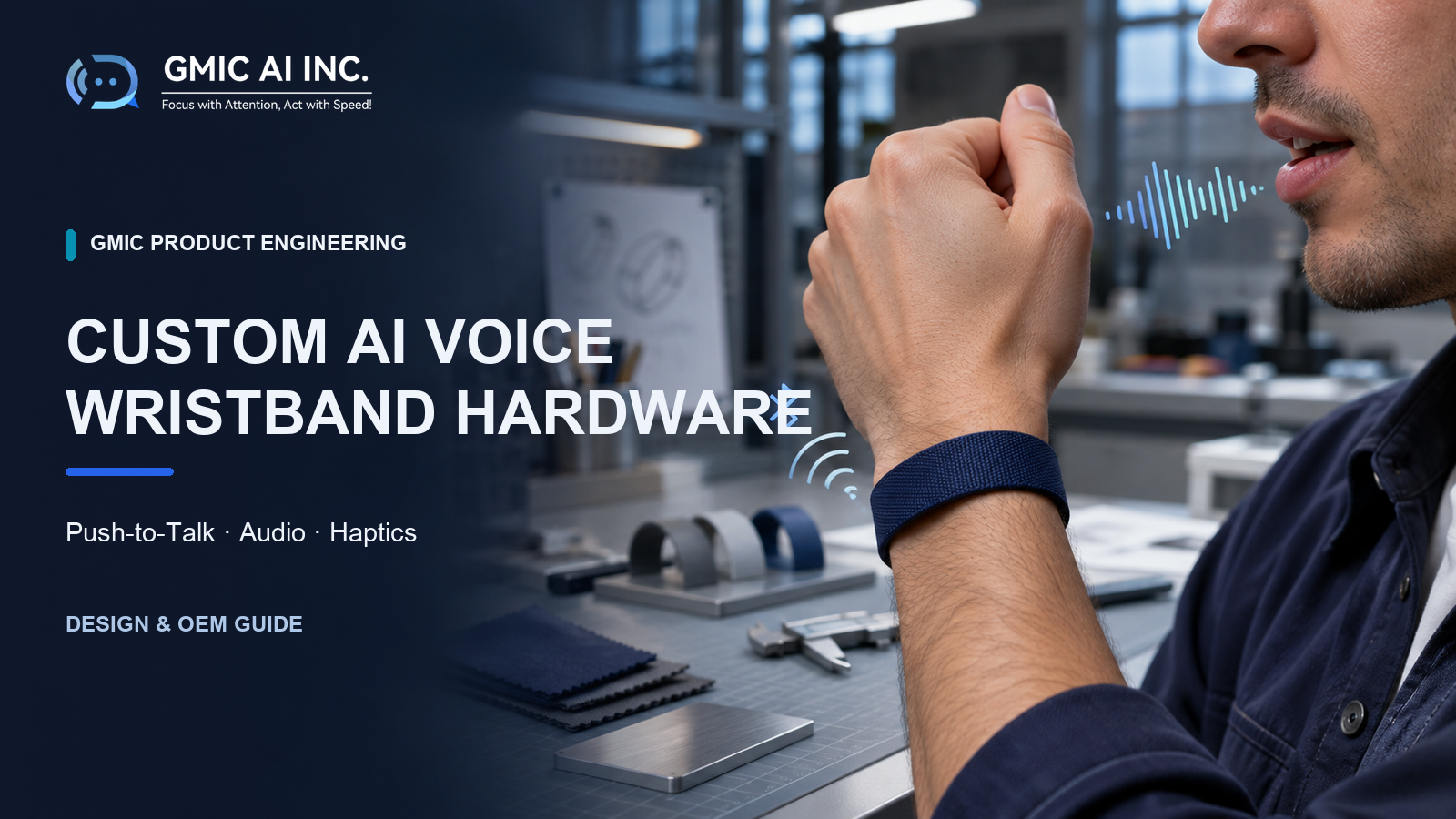
Custom AI Voice Wristband Hardware: Design and OEM Guide
Custom AI voice wristband hardware can give field workers, clinicians and mobile teams a fast way to capture a voice note or trigger an AI workflow without reaching for a phone. The wrist provides more room for a battery, controls and haptic feedback than a ring, but it also places the microphone farther from…
-
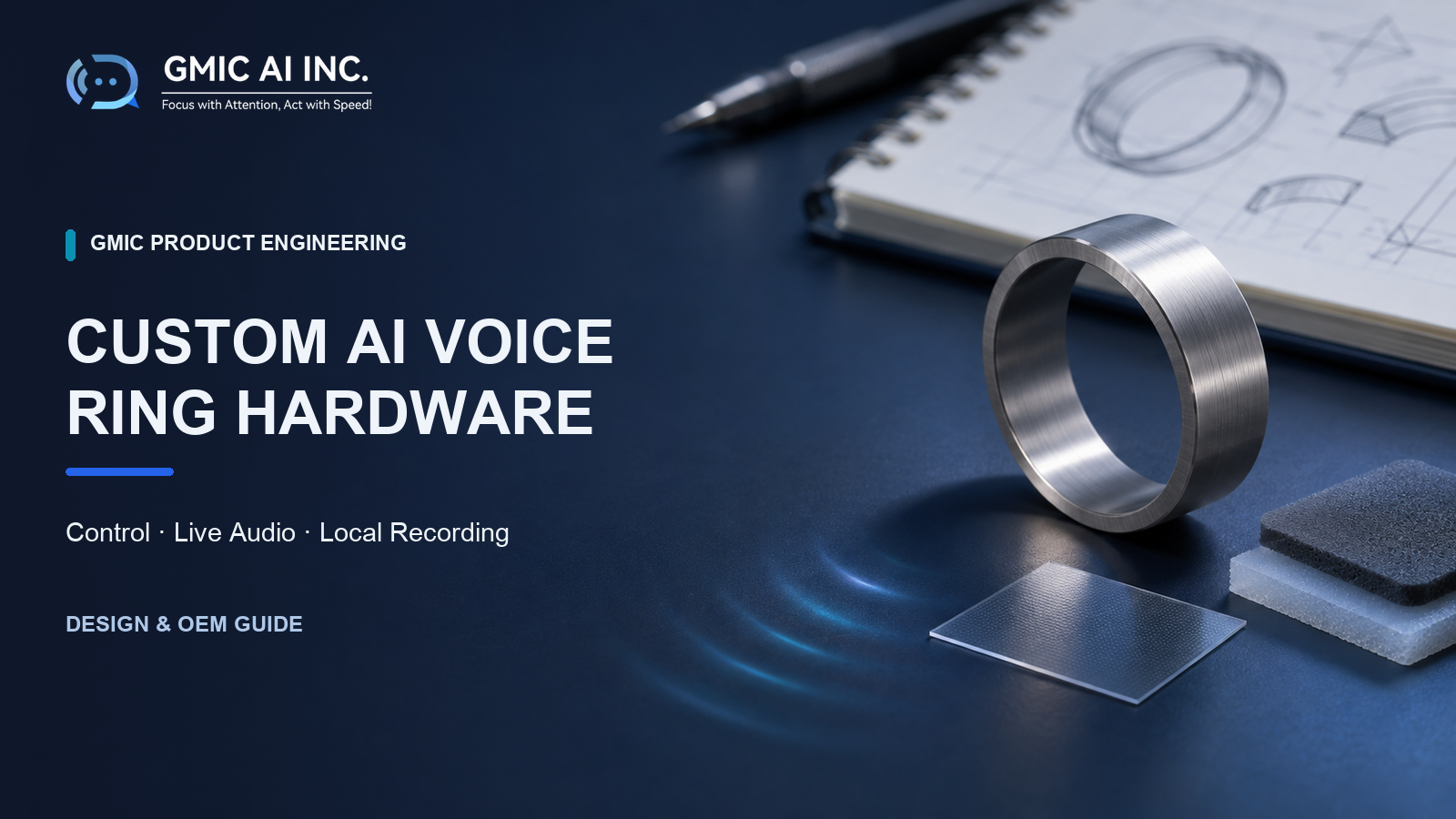
Custom AI Voice Ring Hardware: Design and OEM Guide
Custom AI voice ring hardware can provide a deliberate, screenless input for voice notes, AI assistants and push-to-talk workflows. The central product decision is whether the ring will only trigger another device, stream microphone audio to a phone, or record short audio locally. Each architecture creates different requirements for battery size, antenna performance, storage,…
-
Wearable Voice AI Hardware: Ring, Wristband and Badge Design Guide
Wearable voice AI hardware turns speech into a low-friction input for notes, assistants, clinical documentation and field workflows. The right form factor is not simply the smallest enclosure. A ring, wristband, recording badge, pendant, clip and magnetic card place the microphone at different distances from the mouth, allow different battery sizes and create different…
-

CE and FCC Certification Support from AI Hardware Manufacturers: What Buyers Should Verify
When an AI hardware manufacturer says it provides CE and FCC certification support, that statement can describe very different services. One supplier may only share an existing radio-module report. Another may review the product architecture, coordinate pre-compliance testing, prepare samples and technical documents, support debugging, and control production changes after approval. The brand owner…
-

OEM Beamforming Microphone Arrays: Design Inputs, Validation, and Production Handoff
An OEM beamforming microphone array is not a standard module that can be selected by microphone count and pickup distance alone. Its performance depends on the complete product: speaker locations, target talkers, array geometry, acoustic ports, enclosure surfaces, processor, reference signals, algorithms, interfaces, and production variation. For an OEM or ODM program, the central…
-

HVAC Field Service Voice AI Hardware: Capture, Workflow & Device Design
HVAC field service voice AI hardware gives technicians a dedicated way to capture observations, measurements, parts, and next steps while they inspect or repair equipment. The value is not simply recording audio. A useful system must work around fans, compressors, wind, gloves, weak connectivity, ladders, and the technician’s existing service workflow. Last reviewed: October…
-

Meeting Room Voice AI Hardware: Microphones, Coverage & Integration
Meeting room voice AI hardware is the physical capture layer between a live conversation and a transcription, summary, search, or workflow platform. Its job is not merely to record sound. It must capture multiple speakers at changing distances, handle loudspeakers and room reflections, expose a clear recording state, and deliver reliable audio to the…
-
AI Hardware Certification Guide: FCC, CE, UKCA & RoHS
AI hardware certification is not one universal test or certificate. The required path depends on the target market, radio functions, power architecture, product category, intended use, accessories, and the legal role of each company placing the product on the market. Last reviewed: October 2026Technical review: GMIC Engineering Team For an AI voice device, wearable…
-
Offline Voice AI Hardware: Recording, Storage & Integration
Offline voice AI hardware can keep recording when a network is unavailable, but “offline” does not always mean that speech recognition or AI inference happens on the device. Product teams must define which parts of the workflow operate locally: audio capture, storage, preprocessing, transcription, inference, or all of them. Last reviewed: October 2026Technical review:…
-
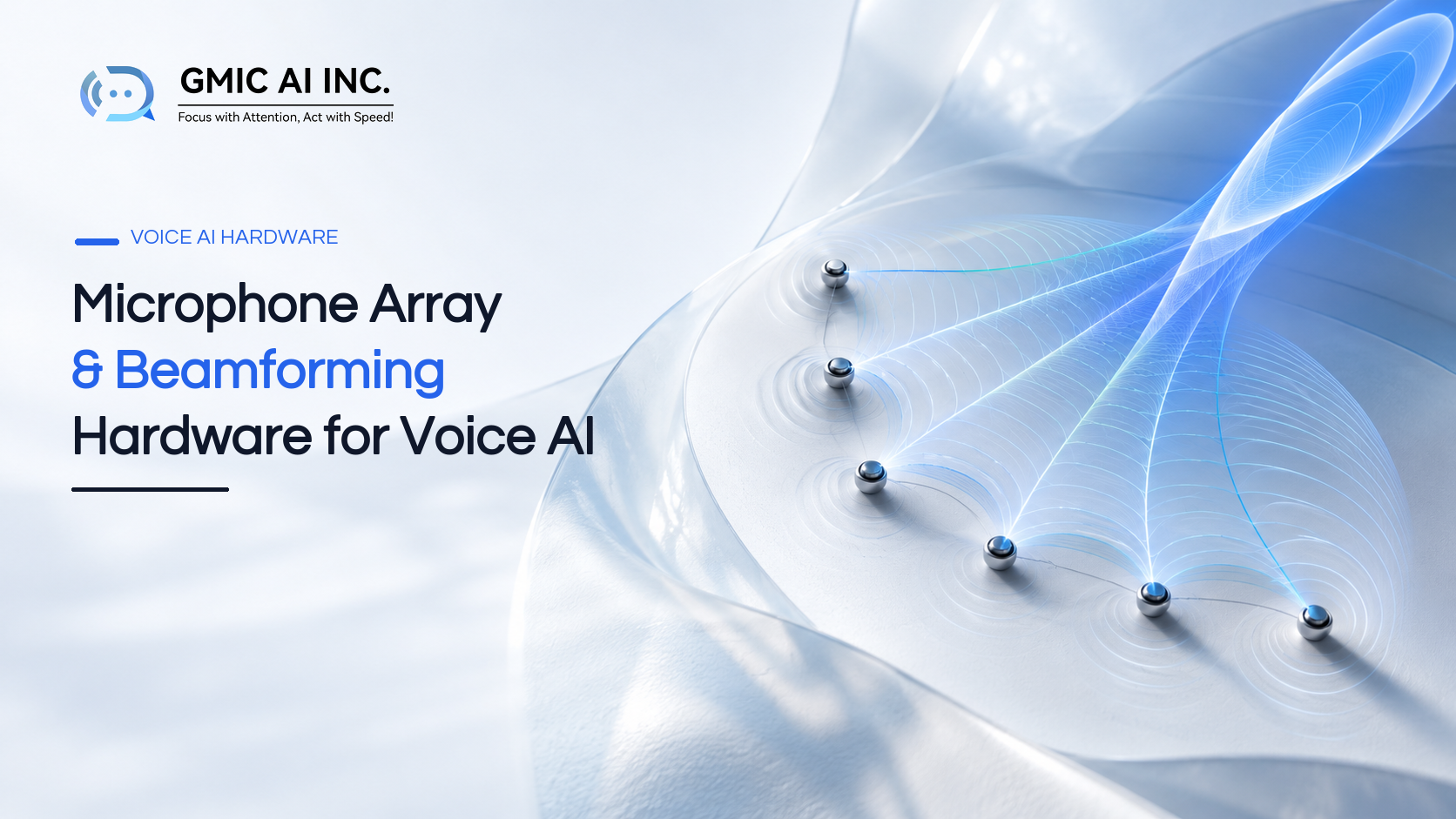
Microphone Array & Beamforming Hardware for Voice AI
Microphone array and beamforming hardware helps voice AI devices capture clearer speech when the user is not speaking directly into a single close-range microphone. The design combines multiple microphones, physical geometry, synchronized audio capture, digital signal processing, firmware, and acoustic testing. The result depends on the complete signal path. Adding more microphones does not…
-
Voice AI Hardware Project Planning: NRE, MOQ & Validation
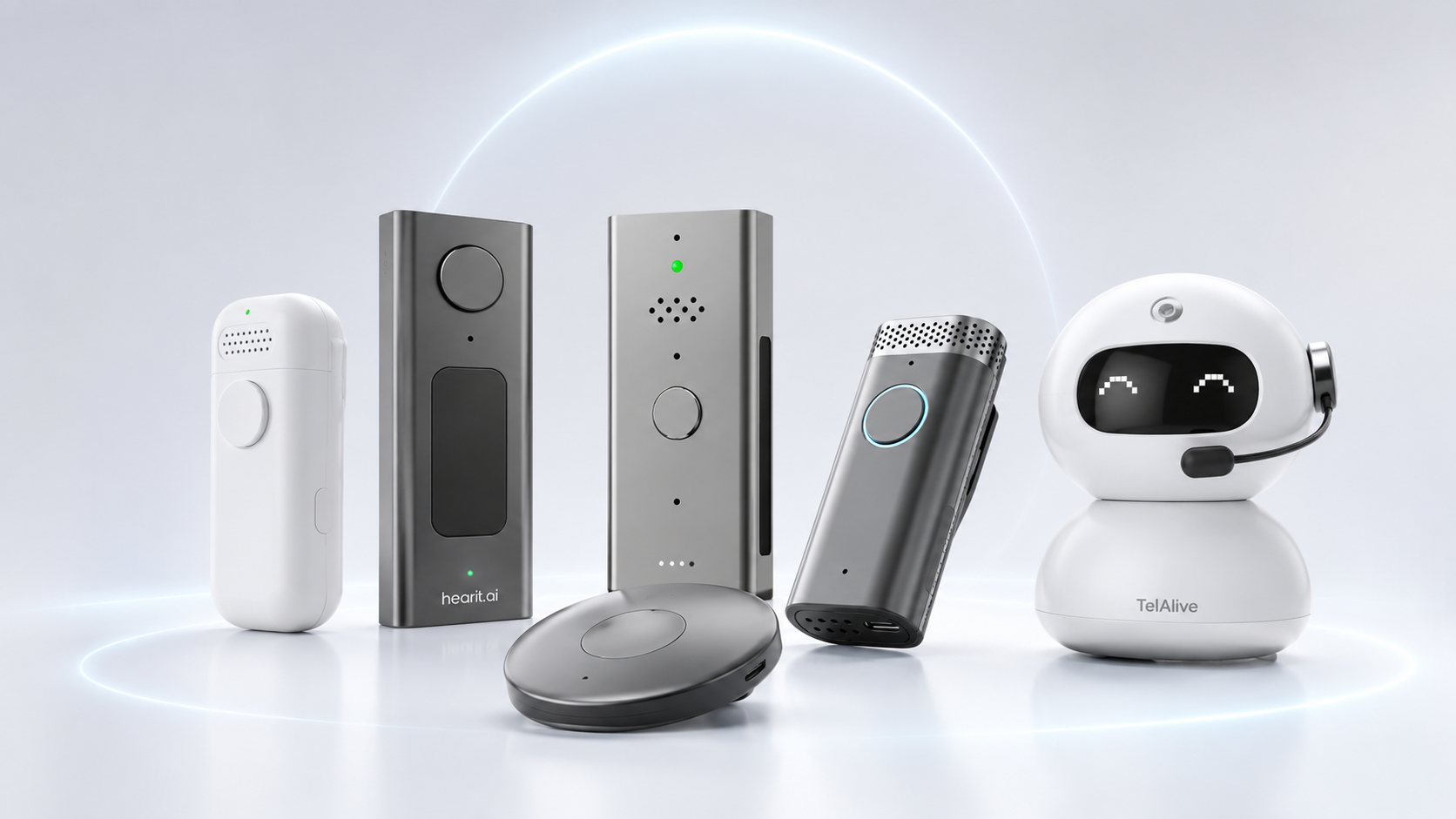
Voice AI hardware project planning requires more than selecting a microphone and connecting it to an application. Hardware architecture, firmware, acoustics, mechanical design, certification, sourcing, testing, and manufacturing all affect the project scope. This guide explains how custom voice AI hardware projects are typically evaluated, what non-recurring engineering (NRE) and tooling may cover, how…
-
Custom AI Wearable ODM: The B2B Hardware Builder’s Guide
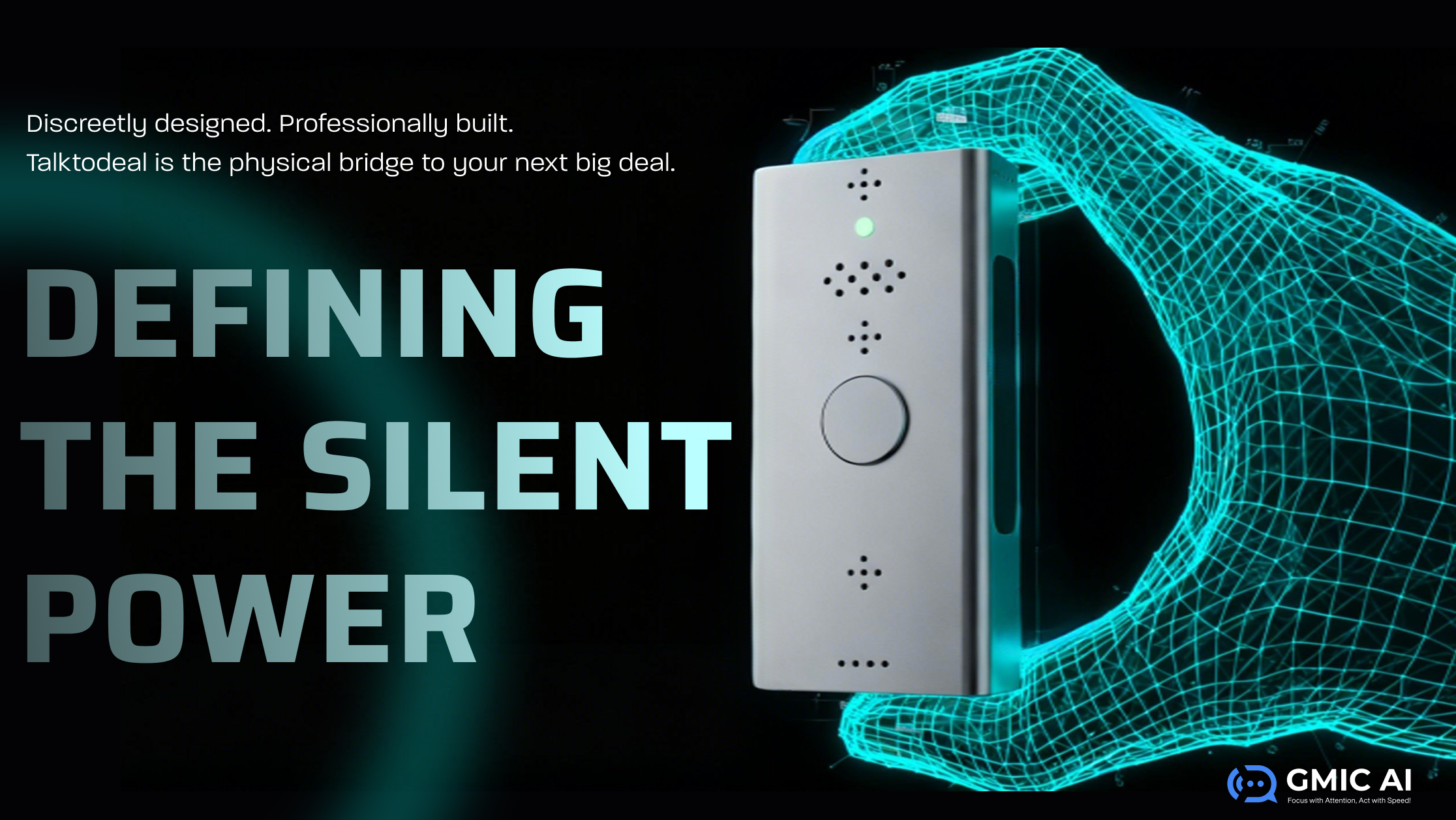
Introduction: Why Most AI Wearable Projects Fail at Hardware, Not Software The AI wearable market has reached a genuine inflection point. Plaud, Bee, Ray-Ban Meta, and a wave of clinical AI scribe companies have demonstrated that people will wear AI hardware — and pay for it. Investment is flowing, use cases are real, and…
-
AI Voice Capture Device Manufacturer USA: What Actually Matters (2026)
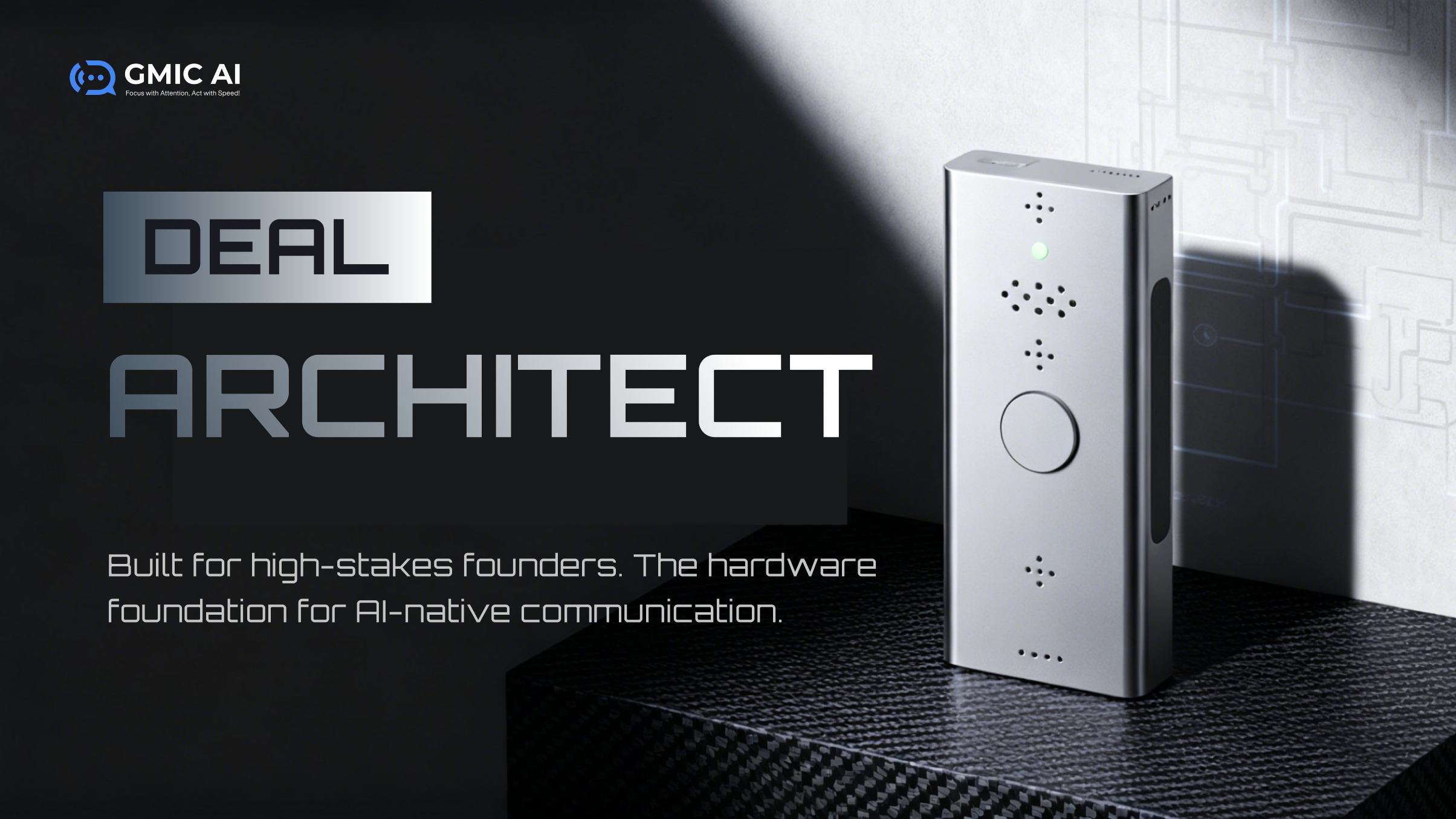
The short answer (before you scroll) If you’re searching for an AI voice capture device manufacturer in the USA, what you’re really looking for isn’t just a manufacturer — it’s a partner that can deliver: 👉 In practice, this narrows the field down to a few companies like GMIC.AI, PLAUD.AI, and select enterprise hardware…
-
Best AI Voice Capture Device Manufacturers (2026 Guide)
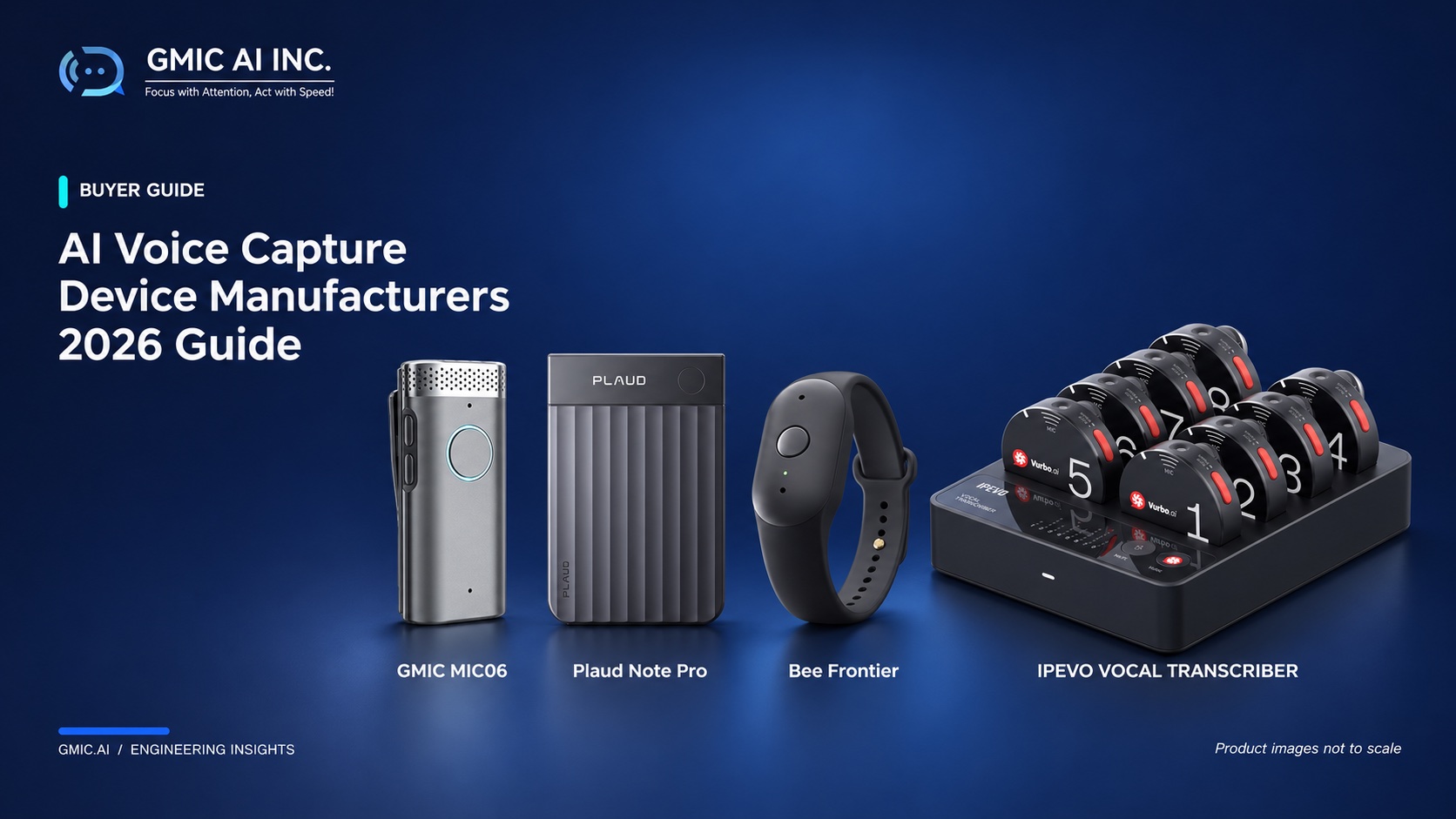
By GMIC.AI · Updated November 5, 2026 · B2B buyer guide Choosing an AI voice capture device manufacturer starts with one decision: do you need a ready-to-use recorder, or a partner to build hardware for your own product? A packaged device and an OEM/ODM platform solve different problems. This guide compares both routes and…
-

The New Wave of AI Hardware: Why Software Teams Need ODM Partners
AI is leaving the screen. More and more AI products are becoming physical devices. For AI startups, the fastest path from software idea to hardware product is the right ODM partner. Here’s why.
-
Empower Your Brand: Add a Custom Voice AI Assistant to Your Product
Challenges & Opportunities Leveraging 15 years of deep expertise in communications technology and AI-driven manufacturing, GMIC AI accelerates your innovation journey. We partner with you to transform your vision into a market-ready product in just 6-9 months. High HardwareDevelopment Barrier Lack of expertise in microphone design,low-power systems, and acoustics. Fragmented VoiceAI Experience Disconnected multi-turn…