The Screenless AI Device Era: What OpenAI’s AI Companion Device Signals for Hardware
For most of the personal-computing era, every major technology shift has introduced another screen. Desktop computers placed screens on desks. Smartphones put them in our pockets. Smartwatches moved them onto our wrists. Smart glasses are now attempting to place digital information directly in front of our eyes. The next major AI device may move…
AI Hardware Architecture: A Complete Guide to Designing Intelligent Devices
Artificial intelligence has become dramatically more capable over the past few years, but even the most advanced AI models depend on one thing to interact with the real world: hardware. Whether it’s an AI voice recorder capturing conversations in a noisy hospital, smart glasses assisting field technicians, or wearable devices supporting enterprise workflows, the…

AI Hardware Integration: The Complete Guide to Building Intelligent Devices
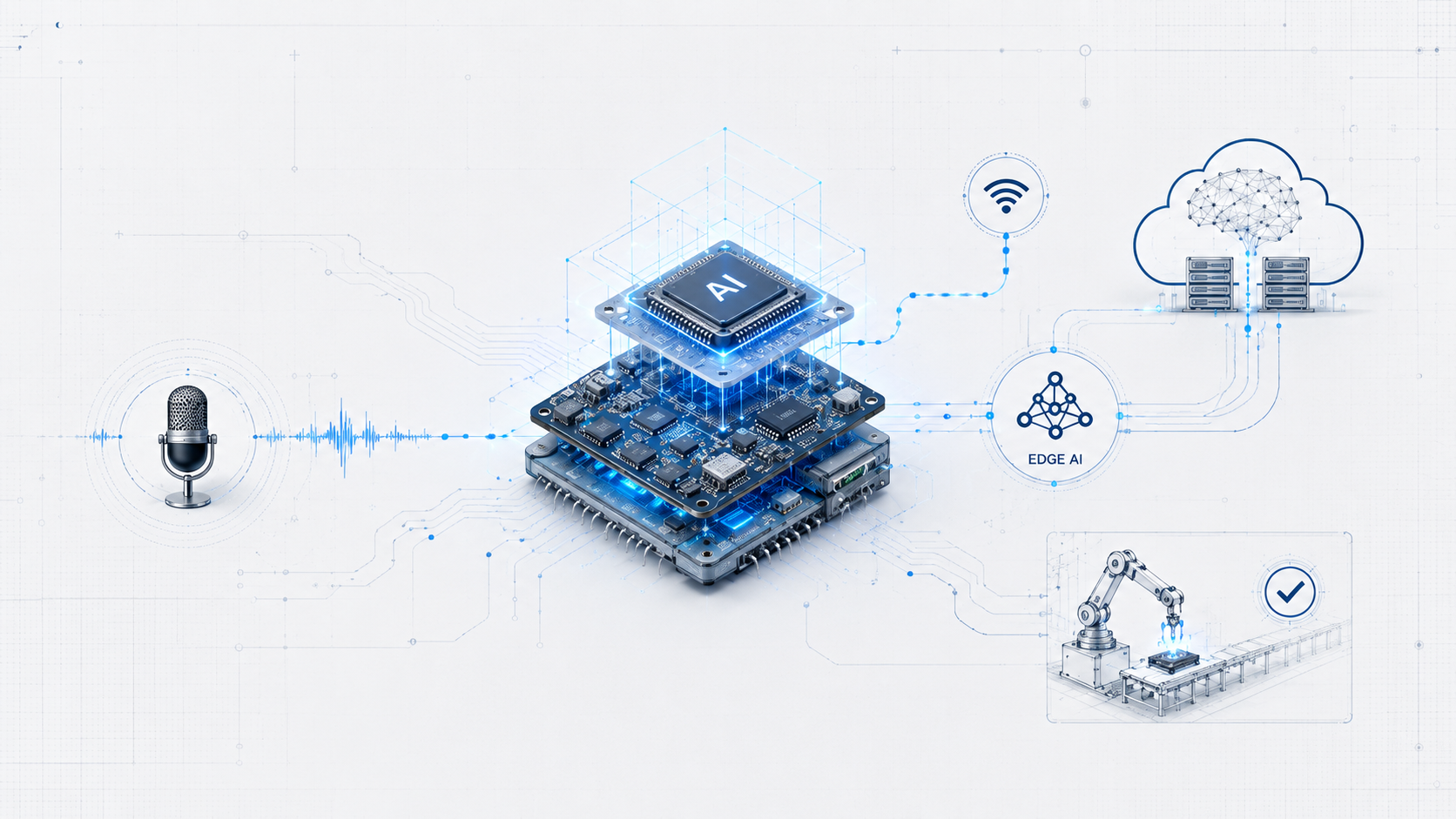
Artificial intelligence has moved far beyond chatbots and cloud-based applications. Today’s AI products increasingly depend on specialized hardware that captures data, processes information, and interacts with the physical world in real time. From AI-powered meeting assistants and wearable voice recorders to smart glasses and industrial inspection devices, hardware has become the bridge between AI…

CLINMIC V7: Clinical Memory for the Fastest Moments in Care
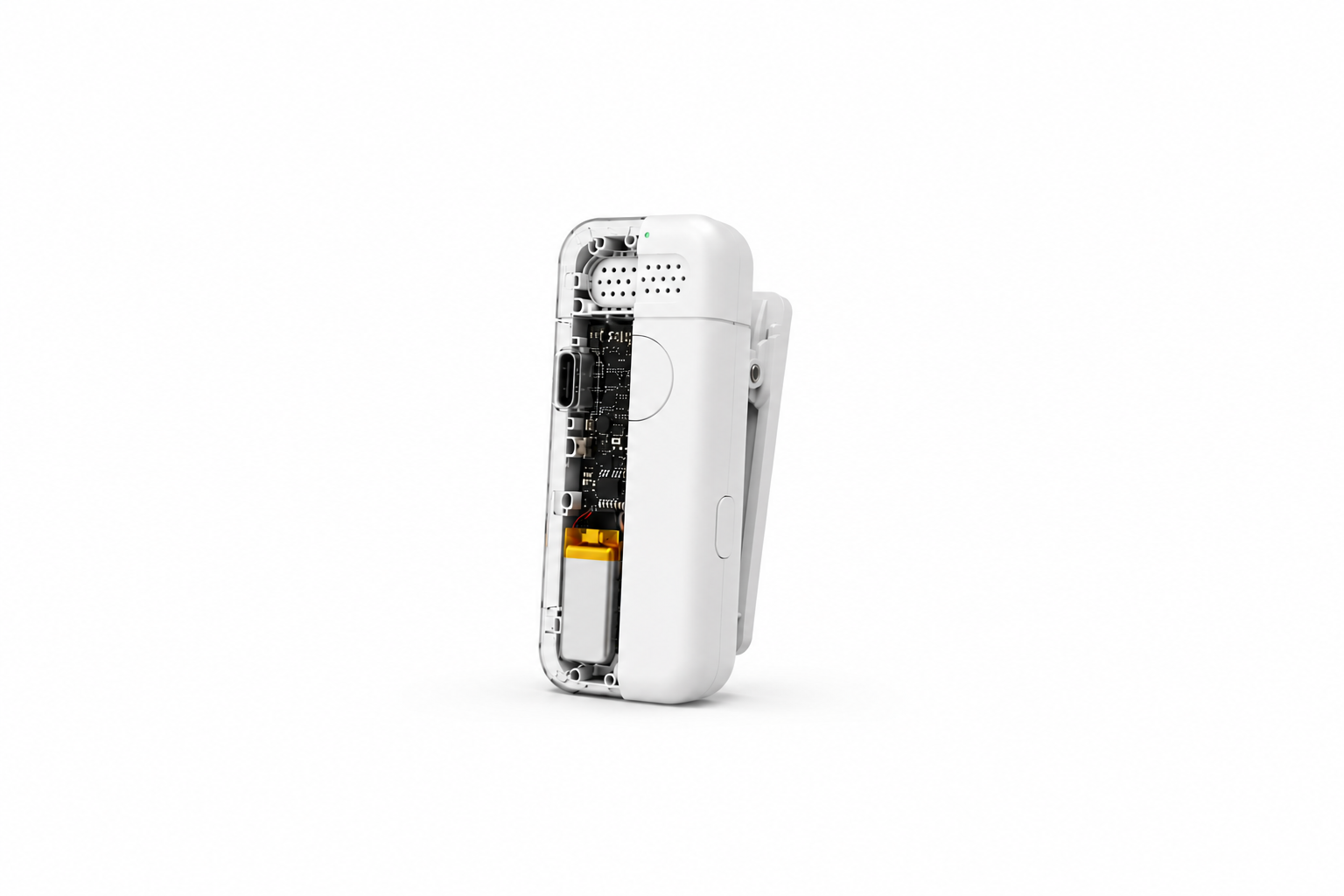
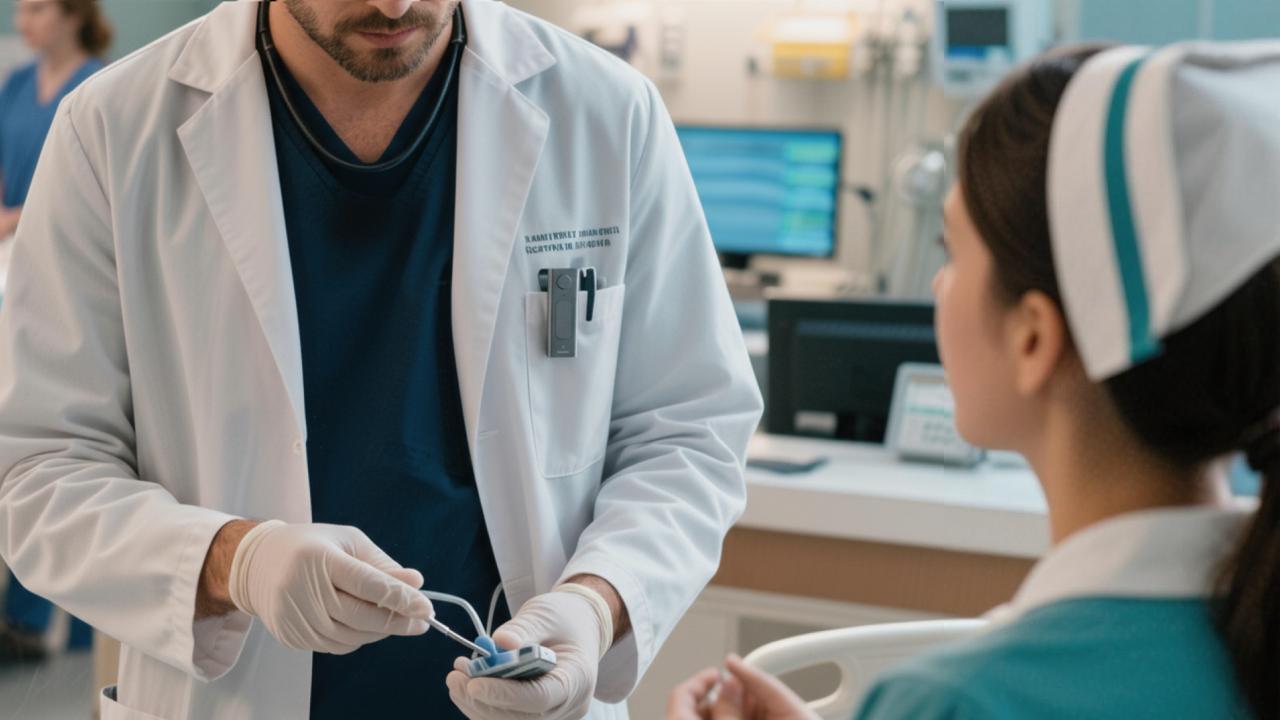
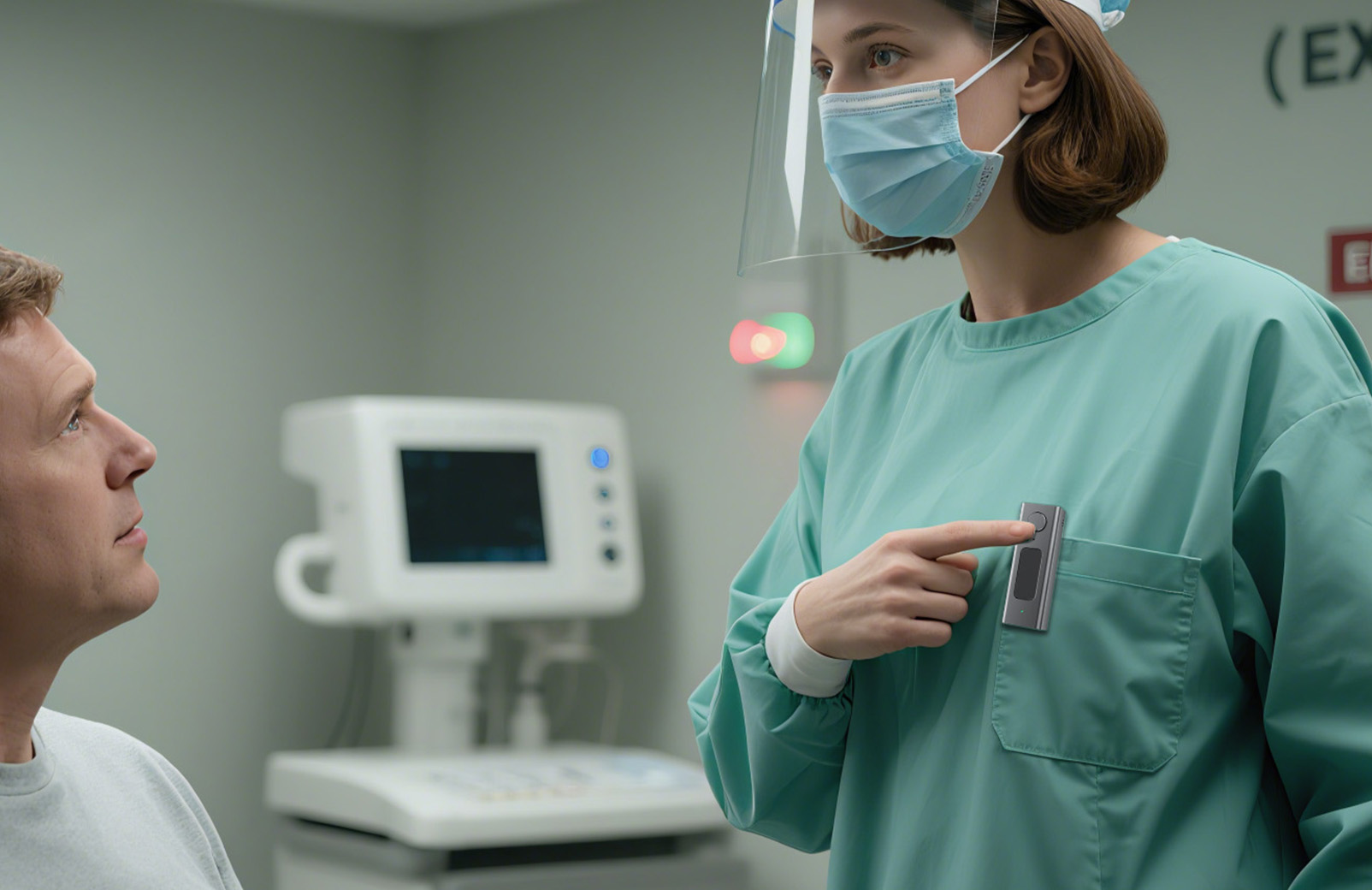
CLINMIC V7 is GMIC AI’s concept for a privacy-first wearable clinical memory layer designed for emergency care, bedside care, rounds, and handoff.
When Every Device Has a Microphone, Who Decides What Gets Executed?
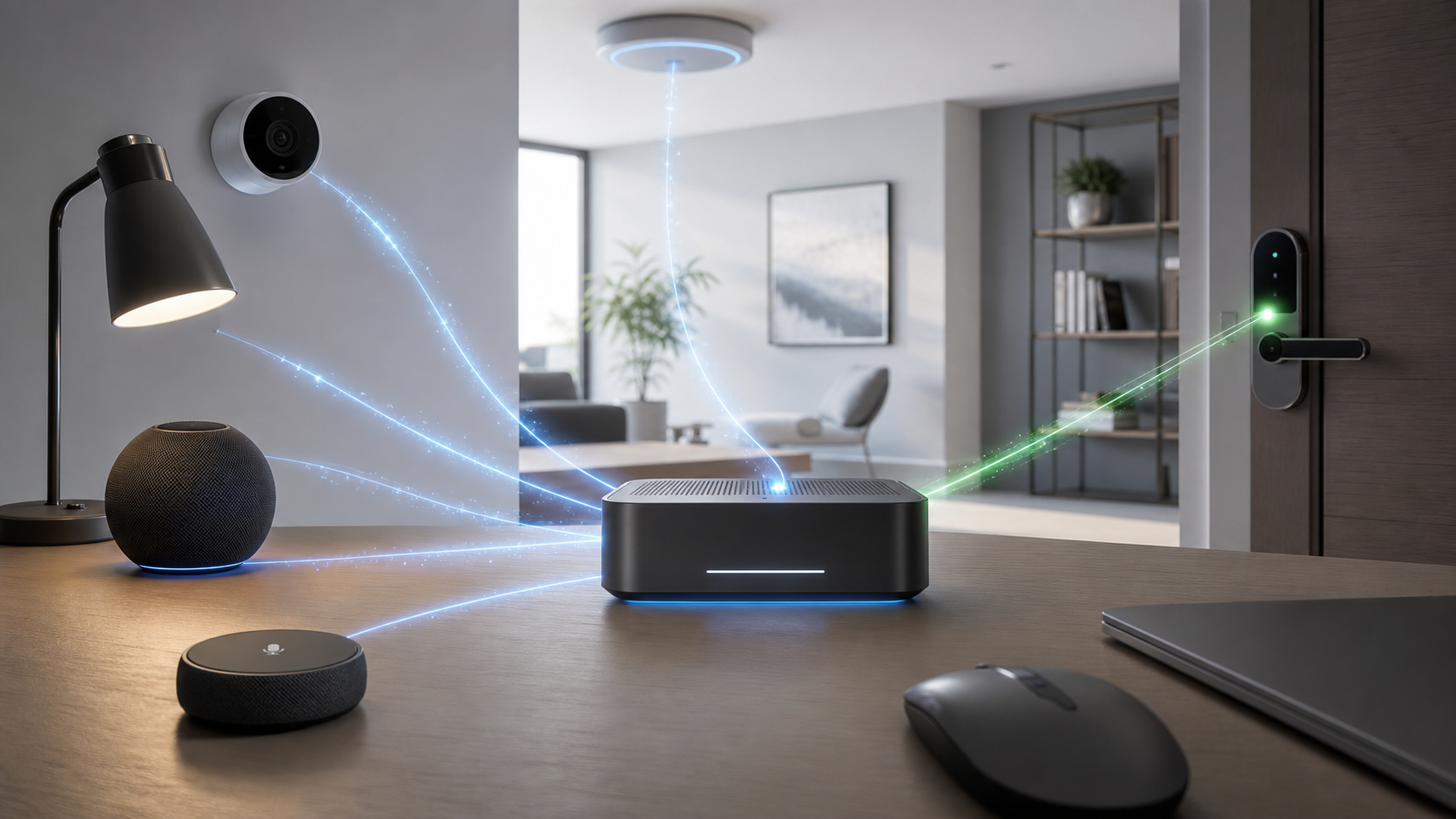
When every device in a room can hear, the scarce resource is no longer hearing — it is adjudication. The next infrastructure layer for smart spaces is not another smart speaker. It is a Voice Control Plane: many ears, one judge, many executors. For efficiency-obsessed households this is a huge help, and a huge…

Custom AI Wearable ODM: The B2B Hardware Builder’s Guide
Introduction: Why Most AI Wearable Projects Fail at Hardware, Not Software The AI wearable market has reached a genuine inflection point. Plaud, Bee, Ray-Ban Meta, and a wave of clinical AI scribe companies have demonstrated that people will wear AI hardware — and pay for it. Investment is flowing, use cases are real, and…
The Next AI Battle Is Memory
AI receptionists are improving fast. But the real shift is bigger: turning every business conversation into structured memory that drives revenue.
The Best Part of AI Is Silence
AI phone agents are improving fast. But the real shift is bigger: capturing every business conversation and turning it into memory, action, and time back.
The Night Your Business Stops Ringing You
AI receptionists are rising fast. But the real win for SMBs is deeper: capturing every conversation so owners can finally reclaim evenings and weekends.
Dictation Device Speech-to-Text: A Complete Guide for Modern Professionals (2026)
Dictation Device Speech-to-Text: A Complete Guide for Modern Professionals (2026) What is a Dictation Device with Speech-to-Text? A dictation device with speech-to-text is a tool that records your voice and automatically converts it into written text in real time or after recording. Unlike traditional voice recorders, modern dictation devices combine: This makes them especially…
The Next AI Shift Is Business Memory
AI receptionists are rising fast, but the bigger shift is Enterprise Memory: capturing every business conversation and turning it into revenue.

AI Voice Capture Device Manufacturer USA: What Actually Matters (2026)
The short answer (before you scroll) If you’re searching for an AI voice capture device manufacturer in the USA, what you’re really looking for isn’t just a manufacturer — it’s a partner that can deliver: 👉 In practice, this narrows the field down to a few companies like GMIC.AI, PLAUD.AI, and select enterprise hardware…

Best AI Voice Capture Device Manufacturers (2026 Guide)
If you’re looking for the best AI voice capture device manufacturer, here’s the short answer first: Top manufacturers right now: What Defines a “Best” AI Voice Capture Manufacturer? AI voice capture devices today are no longer just recorders. They are full-stack conversation intelligence systems that include: When choosing a manufacturer, the key factors are:…
Real-Time Speech Processing for Logistics Ops
This article explains why logistics operations are driven more by real-time conversations than by spreadsheets alone. It positions GMIC MIC06 as the execution layer that captures voice-based operational signals and turns them into timely actions, updates, and workflows.
The Real AI Race Isn’t Another Paper
The Google paper controversy misses the bigger shift in AI: business value comes from turning voice into reasoning and execution, not papers alone.
MIC06V2 and Low-Friction AI for Business
MIC06V2 wasn’t born from AI hype. It came from a failed voice workflow that taught us a harder lesson: small businesses don’t need more dashboards. They need a low-friction way to capture conversations, turn them into structured records, and make sure the next action actually happens.
AI Audio Front-End: MIC06V2 Explained
AI audio front-end technology helps AI capture real-world conversations. See how MIC06V2 turns speech into usable workflows and insights.
Below is the internal project awareness document for the MIC06V2 project, aimed
Below is the internal project awareness document for the MIC06V2 project, aimed at aligning the team’s understanding. — # MIC06V2 Project Internal Awareness Document ## We are not creating a recording device, but a new work entry point. ## I. Let’s make it clear in one sentence. **MIC06V2 is a Voice-Driven Work Companion.** In…
AI Lead Capture for Better Marketing Efficiency
Most small businesses don’t have a traffic problem. They have an attribution problem. AI revenue recovery starts when calls and in-person conversations become trackable events instead of forgotten moments.
Wearable Voice Device Business Starts With a Mic
Why microphones are becoming a primary AI interface—and why selective edge audio processing matters before sending anything upstream.
AI Recording Devices and Reality Memory Infrastructure
This article argues that AI recording devices are becoming a major infrastructure layer not because recording hardware is novel, but because continuous audio can provide the real-world context AI has been missing. It also explains why privacy, IM integration, memory systems, and trustworthy execution matter more than hardware miniaturization alone.
Voice AI Customer Data: Privacy by Bounded Memory
AI recording devices won’t become a real market because they capture more audio. They’ll matter because the best systems can prove their boundaries: consent, minimal retention, revocation, and auditability. This is what turns raw voice into usable, trusted memory.
Wearable Voice Device Business Needs Boundaries
AI recording devices won’t matter because they save audio. They’ll matter if they become bounded memory tools: capturing the right conversations, turning them into useful notes and actions, and respecting human limits from the start.
Wearable Voice Device Business: The Next AI Wave
Wearable AI recording devices are turning everyday conversations into searchable, structured knowledge. Powered by advances in speech recognition, low-power hardware, and large language models, they are becoming a critical infrastructure layer for ambient intelligence.
The New Wave of AI Hardware: Why Software Teams Need ODM Partners
AI is leaving the screen. More and more AI products are becoming physical devices. For AI startups, the fastest path from software idea to hardware product is the right ODM partner. Here’s why.
Wearable Voice Device Business: Recorder or Interface?
A wearable AI mic only matters when a real conversation turns into a callback, a task, or a follow-up your team can actually use. Here’s where shops get it wrong — and what fixed it.

What the 2026 Winter Olympics Reveal About Communication
Estimated reading time: 8–10 minutes Key takeaways Table of contents The 2:47 a.m. problem—and why it matters It’s 2:47 a.m. on the East Coast. Your phone is dimmed. The house is quiet. But you’re wide awake—because the biggest event of the winter is happening live in Italy. You’re trying not to miss a single…
How AI Investments Shape the Future of Business Calls
Estimated reading time: 8 minutes Key takeaways Table of contents It’s 9:07 a.m. on a Monday. The phone starts ringing while your inbox fills up. A customer wants an update. A lead asks for pricing. A vendor calls back “in five minutes.” You pick up one call, then miss another. You try to write…

Navigating Tax Filing Changes with Wearable AI
Estimated reading time: 8–10 minutes Key takeaways Table of contents With Direct File discontinued: the workflow lesson behind the tax-season shift It’s a weeknight in January. You finally sit down to deal with taxes. You open your laptop, ready to file the “simple way” you used last year—then you see the news: With Direct…
Small Wins in Work: The Case for Wearable AI Microphones
Estimated reading time: 8–10 minutes Key takeaways Table of contents From a $3 streaming deal to daily “small wins” at work It’s Friday night. You finally sit down on the couch after a long day. You open your phone to find something easy to watch. Then you see it: “please use the following news:…
India’s Surge in Google AI for Education
Estimated reading time: 8–10 minutes Key takeaways Table of contents India is becoming a major market for Google’s AI in education, leading global usage of Gemini for learning purposes—and what it signals for wearable AI microphones A student in Delhi sits at a small desk late at night. The room is quiet except for…
What Airlines Teach Us About Wearable AI in Healthcare
Estimated reading time: 9–11 minutes Key takeaways Table of contents An airline’s revised boarding policy, aimed at improving efficiency: what it teaches us about wearable AI microphones in healthcare and beyond Picture this: you’re standing in a boarding line that barely moves. People shuffle, bags bump, announcements repeat, and the clock keeps ticking. Everyone…
What the 2026 Winter Olympics Teach Us About Wearable AI Microphones
Estimated reading time: 10–12 minutes Key takeaways Table of contents It’s 6:10 a.m. in the U.S. Your coffee is still brewing. The house is quiet. You open Peacock and catch a live final from Italy—snow flying, blades carving, commentators talking fast, and medals on the line. And you think: How is all of this…
Measles Cases Surge—How Wearable AI Enhances Clinical Efficiency
Estimated reading time: 8–10 minutes Key takeaways Table of contents A busy clinic, a measles headline, and a documentation problem Measles surge + wastewater surveillance: why early detection increases the need for fast, accurate notes Sources for deeper reading The simple problem: clinicians can’t type as fast as care happens What is a wearable…
Evaluating Value: Disney+ and Wearable AI Microphones
Estimated reading time: 8–10 minutes Key takeaways Table of contents It’s a weeknight, and you’re trying to “save a little” without giving up what you enjoy. You see a headline and think, Finally—something cheaper. Please use the following news: New and eligible returning subscribers can access the Disney+ and Hulu bundle for $10 a…
Impact of Tesla’s Optimus on Wearable AI in Healthcare
Estimated reading time: 9–11 minutes Key takeaways Table of contents Elon Musk, Optimus, and the real healthcare “robot” already working today Picture a normal morning in a busy hospital. A doctor walks fast from room to room. A nurse is juggling vitals, meds, and questions from families. Everyone is doing real work—yet the laptop…
Exploring Apple’s Wearable AI Pin for Healthcare
Estimated reading time: 8–10 minutes Key takeaways Table of contents A voice-first morning: why this matters now You’re walking into work with your hands full. A coffee in one hand. A laptop bag in the other. Your phone is buzzing. You’re already behind on notes, messages, and tasks—and you haven’t even sat down yet.…
How DJI’s Mic Mini Enhances Audio for Healthcare Teams
Estimated reading time: 9–11 minutes Key takeaways Table of contents It’s 7:42 a.m. and the day is already loud A nurse calls out a room number. A patient asks a question. A clinician tries to capture a key detail—meds, symptoms, timing—while walking to the next exam room. The phone notes app is open, but…
The Mixed Impact of AI Coding on Healthcare Solutions
Estimated reading time ~7 minutes Key takeaways Table of contents A loud hallway, a familiar problem It’s 7:12 a.m. and the hallway is already loud. A clinician walks fast between rooms. A patient has questions. A nurse needs an order clarified. The EHR is open, but there’s no time to sit and type. The…
How Is AI Hardware Entering Its Next Real-World Phase?
For years, artificial intelligence has evolved primarily through software. Models became larger, faster, and more capable — yet the way humans interacted with AI barely changed. Today, that gap is closing. AI is no longer confined to screens and keyboards. It is becoming physical, ambient, and embedded into everyday workflows — and hardware is…

Telalive: Turning Every Business Call into Actionable Intelligence
For many small and mid-sized businesses, phone calls are still the highest-intent customer touchpoint.Yet they are also the most unstructured, untracked, and underutilized. Telalive, built by GMIC.AI, is designed to change that — by transforming traditional landline calls into AI-ready, data-driven business assets. Below are the most common questions business owners and AI partners…
2026 Outlook: Why “Intelligence + Hardware” Will Finally Converge
Industry insights on the shift from abstract AI to practical, device-based intelligence — and the quiet role companies like GMIC play behind the scenes. For years, the conversation around AI centered on models, benchmarks, and breakthroughs in software. But the real turning point — the moment when intelligent systems become woven into everyday workflows…
AI Voice × AI Wearables: How GMIC AI Is Powering the Next Interface Era
I. When Speaking Becomes the New Way to Work For decades, our lives revolved around screens. We typed, tapped, and swiped to communicate with technology.But human communication has always been speech-first—and AI Voice is finally catching up. Today’s voice technology allows people to complete tasks in seconds simply by speaking, not typing.Real-time transcription, semantic…
Why Are AI Wearables Becoming the Next Big Interface for Daily Intelligence?
What Are AI Wearables? AI wearables are smart, sensor-rich devices—like badges, mics, earbuds, or glasses—that continuously listen, learn, and respond. They transform daily routines by bringing AI out of screens and into the physical world. Instead of typing a command, you simply speak. Instead of checking a screen, you get instant contextual feedback. How…
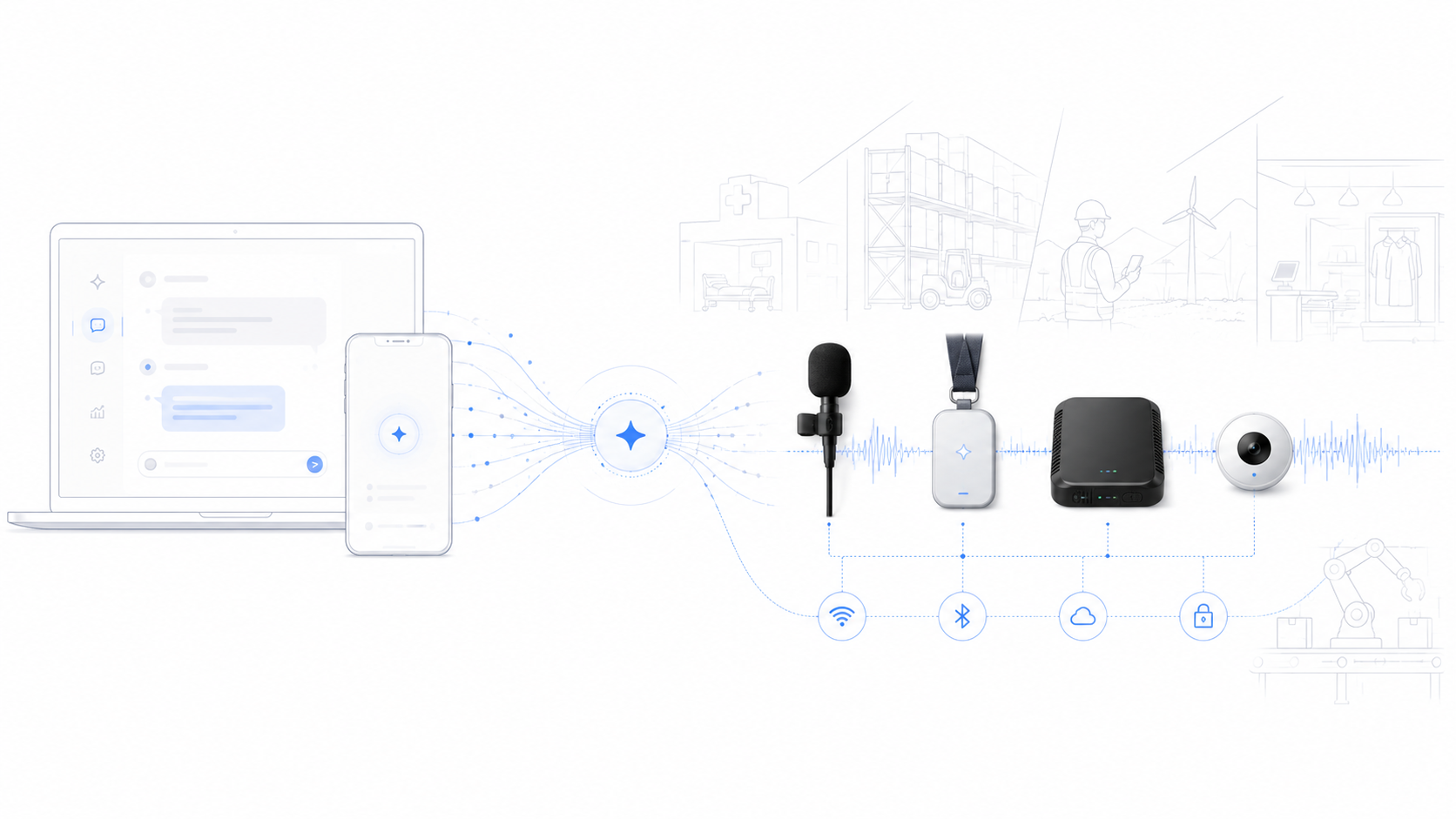
How Is AI Voice Hardware Shaping the Future of Human–Machine Interaction?
What Is AI Voice Hardware and Why Does It Matter? AI voice hardware refers to physical devices—microphones, wearable recorders, telephony gateways, and embedded modules—designed to capture, process, and transmit human speech intelligently. Unlike traditional mics, these systems integrate on-device AI, enabling real-time voice enhancement, wake-word detection, and low-latency data transmission. Voice is the most…
The Benefits of AI Wearable Devices: How Intelligent Hardware Enhances Daily Life and Work
Artificial Intelligence is no longer confined to software or data centers — it’s now living on our wrists, clipped to our collars, or built into the tools we use every day. AI wearable devices are bringing intelligence closer to the human body, transforming how we monitor health, communicate, and interact with the world. From…
How AI Wearable Devices Are Transforming the Way Doctors Work
Over the past decade, artificial intelligence (AI) has reshaped healthcare — from diagnostic algorithms to predictive imaging. But a new wave of innovation is happening at the edge: AI-powered wearable devices. These small yet intelligent tools are changing how doctors capture, process, and act on information, freeing them from repetitive tasks and helping them…

Maximize Microsoft Teams Efficiency with MIC05 AI Noise Reduction Recorder
Unlocking the Full Potential of Microsoft Teams with MIC05 As a enterprise productivity consultant focusing on meeting efficiency and compliance, I have been closely monitoring Microsoft’s recent announcement. Microsoft recently launched Microsoft Teams, aiming to solve a significant operational challenge in workplace communication and collaboration. This strategic move has resonated across the technology industry,…
Boost On-The-Go Productivity: Mic05 AI Meeting Recorder, Your Essential Tool
Introduction As mobile productivity advisors with vast experience in wearable tech, we understand the challenges faced by writers, journalists, and students in capturing fleeting ideas while commuting or travelling. We’ve tackled this issue with Mic05, an AI meeting recorder that streamlines this process with features such as hands-free voice capture, noise cancellation, real-time transcription…
Seamless Cross-Platform Integration: Let Your Tools Work for You
What’s the most frustrating part of modern productivity? It’s not the tools themselves—it’s how they don’t talk to each other. You take notes in one app, schedule meetings in another, manage projects in a third, and somehow, none of it feels connected. The result? Wasted time, lost focus, and endless app-switching. Hearit.ai, powered by…
Seamless AI for Everyday Life: Your New Best Friend That Talks Back
Let’s be real: life is busy, and we’ve all wished for an invisible assistant at some point—one that doesn’t need coffee breaks or complain about your messy schedule. Enter MIC01, powered by Hearit.ai, your tiny, AI-powered buddy that’s always there, ready to help. With continuous AI interaction that feels less like yelling at a…

Revolutionizing Office Reception with Telalive AI: Ultimate Efficiency and Visitor Experience
An Overview of AI Office Reception Solutions Streamlining office administrative processes is a critical part of enhancing efficiency in today’s fast-paced working environments. As experts in AI-powered reception solutions, we understand the power this technology packs in revolutionizing visitor management structures. In this article, we delve into how Telalive AI receptionist, an AI receptionist…

“AI-Driven Audio Capture: A Game-Changer in Healthcare Documentation and Workflows”
In today’s healthcare landscape, effective and efficient patient care hinges on the seamless flow of accurate and accessible patient information. This necessitates a dynamic shift from traditional methods to advanced technologies like AI-driven audio capture. This blog elucidates how our product, a trailblazing healthcare voice documentation tool, is leading the charge in transforming clinical…
Clinmic Enhances Documentation Accuracy Amid Rising Intracranial Hemorrhage Risks in Older Adults
As fall-related head injuries in older adults increasingly demand precise clinical documentation, Clinmic wearable AI scribe hardware offers a reliable solution for real-time voice capture and transcription. Summary A recent meta-analysis of 17 observational studies involving over 22,000 patients aged 65 and older found that nearly 7% of older adults presenting to emergency departments…
Clinmic Enhances Clinical Documentation Amid Evolving Plasma Donation Guidelines in Australia
Clinmic wearable AI scribe hardware supports clinicians by streamlining voice capture and transcription in dynamic healthcare settings. Summary Recent changes by the Australian Blood Service have removed sexual activity wait times for most plasma donors, including gay and bisexual men, transgender individuals, and men taking PrEP. This policy update reflects advances in HIV testing,…
Smarter Clinical Notes: Wearable AI Devices for Medical Dictation
Every doctor understands the burden of medical paperwork. Hours are spent typing into Electronic Health Records (EHR), often after long clinic days. This is not only exhausting—it’s also a leading cause of physician burnout. The solution lies in combining wearable AI devices with AI transcription technology to create a smarter way of working. From…
Avoiding Phone Use for AI Scribe — Hardware Options for Doctors
Most AI scribe solutions today run on mobile apps or laptops. While this works for early adopters, many doctors and hospitals quickly realize that relying on a phone for medical dictation is not practical, not secure, and not hands-free. That’s why the future of clinical documentation is moving toward dedicated AI hardware—specialized devices built…
Medical Dictation Wearable Devices with AI Transcription: Transforming Doctor-Patient Care
Every doctor knows the challenge: too much time typing, not enough time talking. Electronic Health Records (EHRs) have made documentation more important than ever, but they also take away precious minutes from patient interaction. That’s why the demand for medical dictation wearable devices with AI transcription is rising—making documentation seamless, accurate, and hands-free. The…
Medical Dictation Wearable Device with AI Transcription: The Future of AI Hardware in Healthcare
In recent months, the tech world has been buzzing with news that Apple is preparing to launch its own AI hardware devices. This confirms a trend we’ve already seen in healthcare: the shift toward dedicated AI hardware that combines software intelligence with purpose-built devices. One of the clearest examples of this transformation is the…
AI Scribe Hardware for Surgeons: Documentation Without Distraction
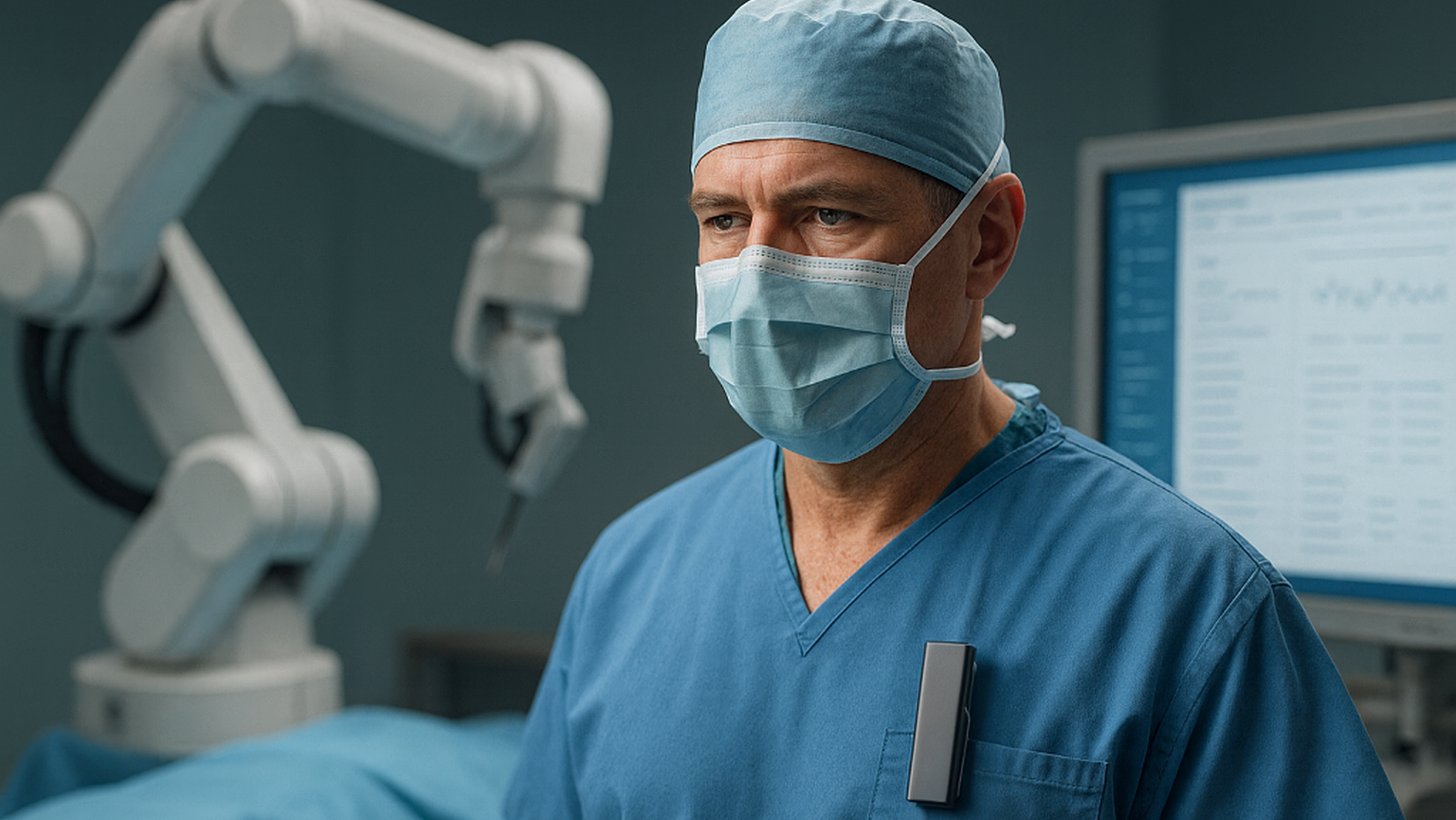
Surgeons face one of the most demanding jobs in healthcare. Every second in the operating room matters, and stopping to type notes or interact with a screen is simply not an option. Yet, documentation remains essential. This is where a hands-free AI scribe for surgeons makes a real impact. Why Surgeons Need Hands-free AI…
Medical Dictation Wearable Device with AI Transcription
Doctors and nurses spend a huge amount of time typing medical notes into electronic health records (EHR). This slows down patient care and often leads to frustration. A new solution is changing the game: medical dictation wearable devices with AI transcription. These devices allow doctors to speak naturally during patient visits, while the AI…
How Wearable AI Dictation Devices Help Doctors Talk Instead of Type
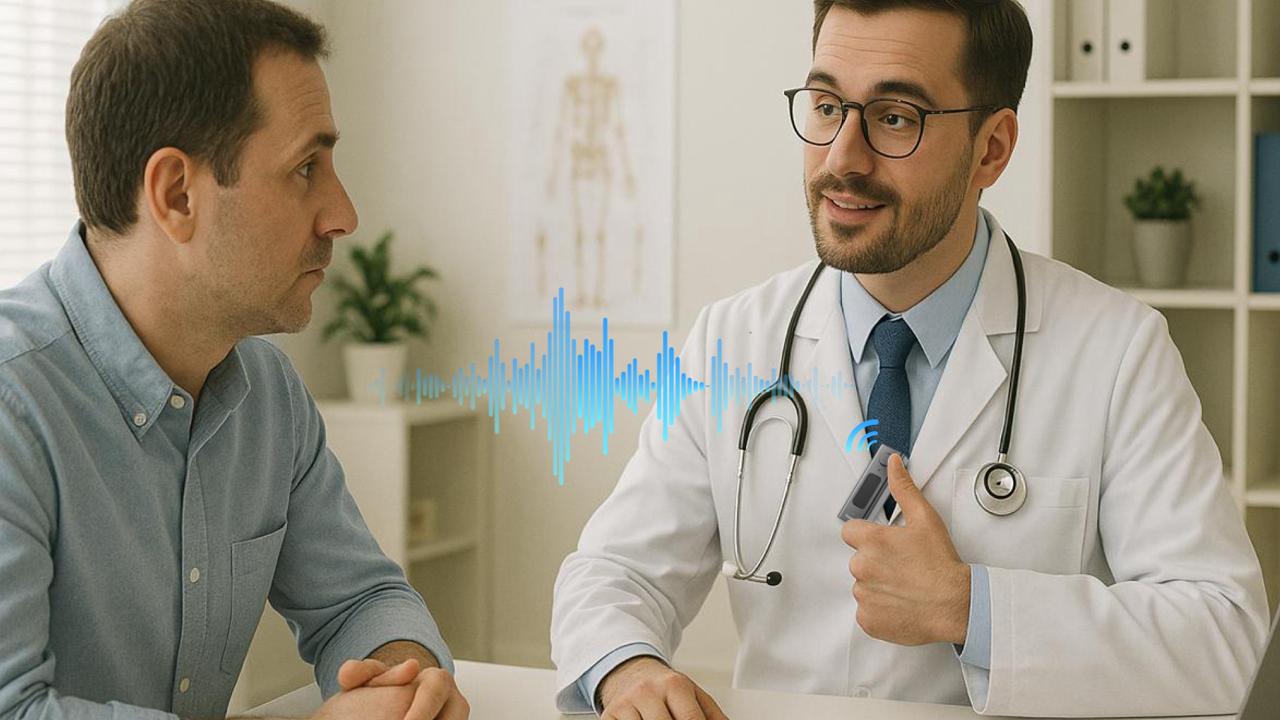
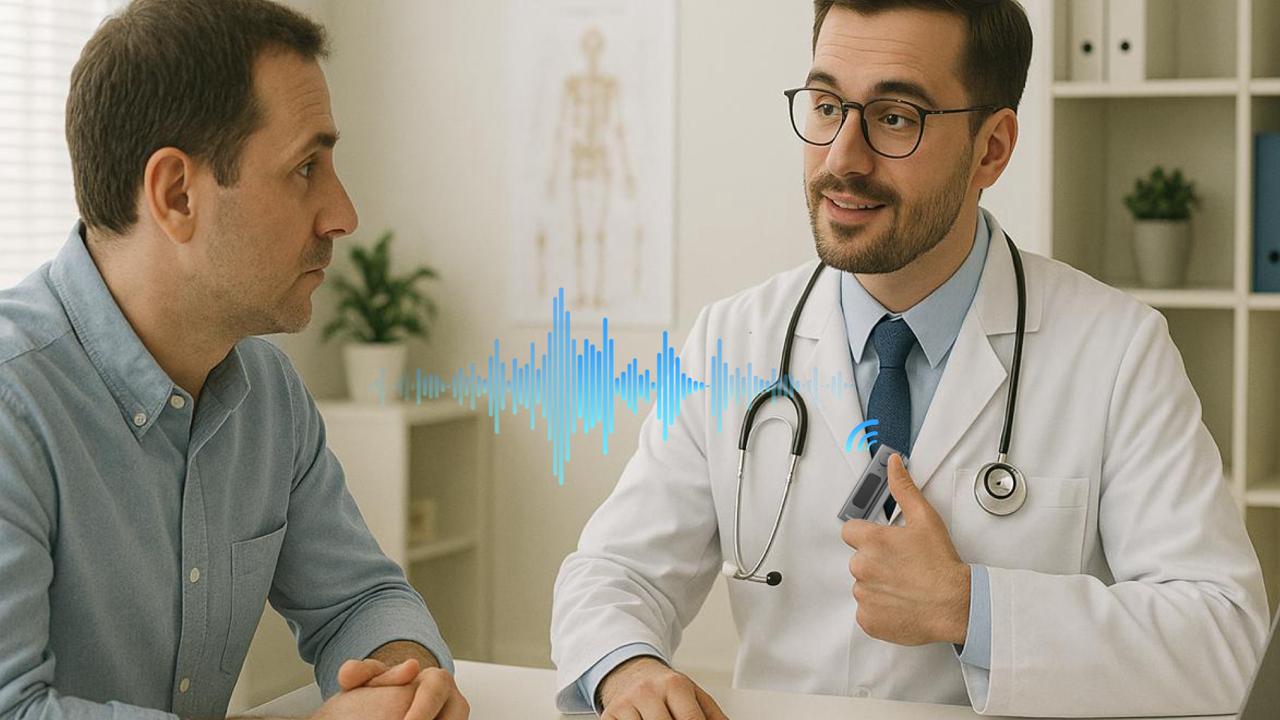
Imagine this: You’re sitting in a doctor’s office, sharing your symptoms. Instead of typing on a computer, your doctor is looking at you, listening closely, and speaking naturally. On their shirt is a small clip-on microphone. As they talk, their words turn into notes instantly—no typing, no laptop screen between you. That’s the promise…
Enhancing Medical Documentation with Voice AI Technology
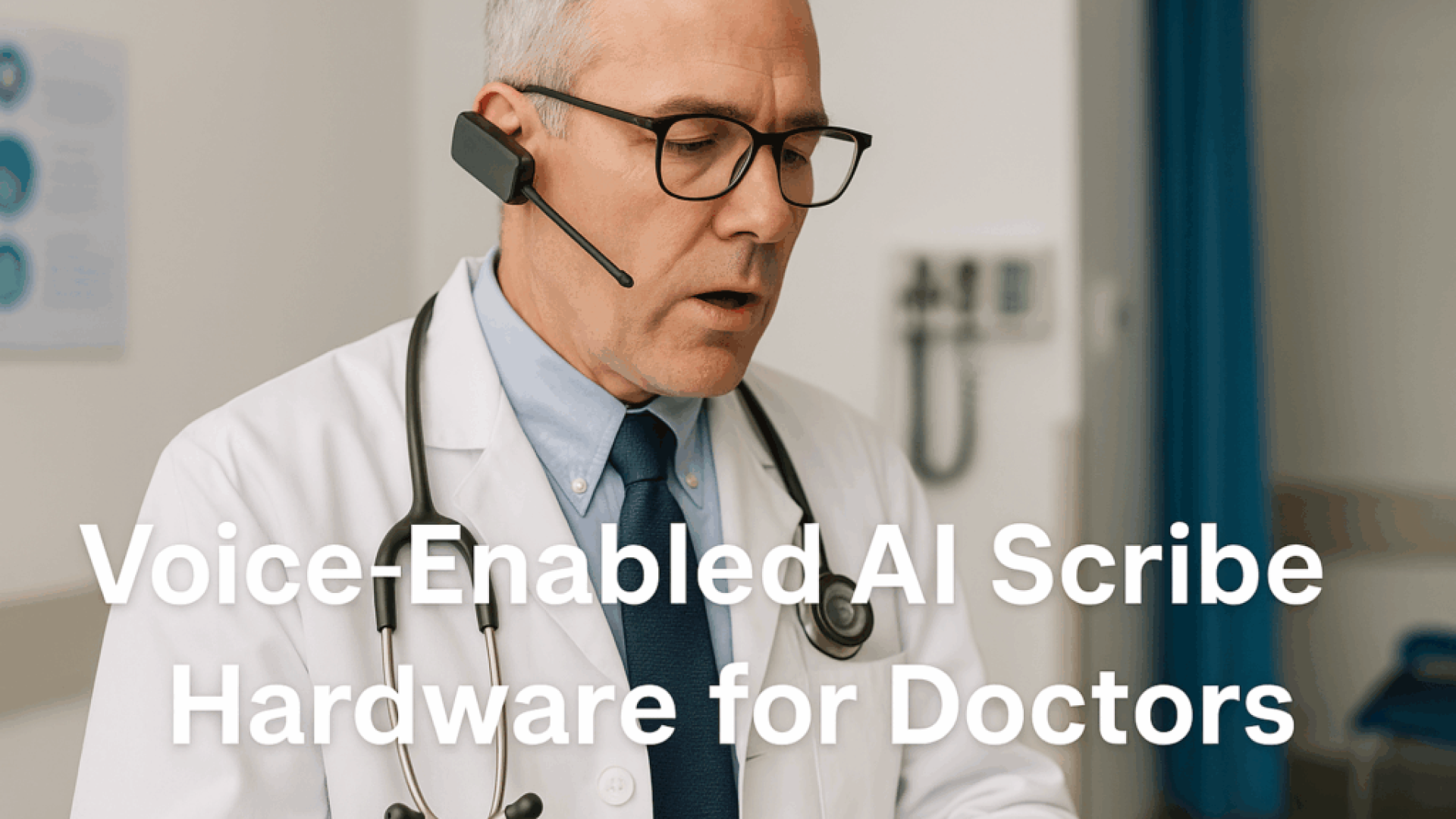
Voice-Enabled AI Scribe Hardware for Doctors: Revolutionizing Medical Documentation with GMIC AI INC Estimated Reading Time: 5 minutes Enhance patient engagement with time-efficient documentation Leverage high-quality audio capture with BLE microphones Integrate seamlessly with existing Electronic Health Record systems Monitor and improve documentation accuracy Prepare for the future with ongoing advancements in AI technology…

Clinmic and the Rise of Autonomous Surgical Robotics: Enhancing Clinical Documentation
As autonomous robotic surgery advances, Clinmic wearable AI scribe hardware offers clinicians a reliable solution for hands-free, accurate voice capture in complex medical environments. Summary Recent research demonstrated a robotic system capable of performing portions of gallbladder removal surgery without human assistance. Using a hierarchical AI framework trained on surgical videos, the robot successfully…

Clinmic Perspective: Rapid Care Access Improves Outcomes in HIV
Recent research on rapid care pathways in HIV treatment has highlighted important clinical workflow considerations where Clinmic wearable AI scribe hardware can support efficient and accurate documentation. Summary A study conducted at an HIV clinic in Miami compared outcomes for patients who received rapid-acting antiretroviral therapy with those who received traditional standard-of-care treatment. Those…
Voice-enabled AI Scribe Hardware for Doctors – Built by GMIC AI INC
Doctors today face a common challenge: too much time spent typing notes into electronic health record (EHR) systems and not enough time focusing on patients. Voice-enabled AI scribes are changing this by allowing medical professionals to capture every word of a consultation automatically. But for these solutions to work seamlessly in real clinical settings,…

Enhancing Real Estate Communication with BLE Microphones
How GMIC Can Serve the Real Estate Field with Advanced BLE Microphone Technology Estimated reading time: 5 minutes Wireless convenience for dynamic property tours. Superior audio quality enhancing client interactions. Data collection and analysis that tailors strategies. Streamlined internal meetings and training sessions. Automation of administrative tasks for increased efficiency. Table of Contents The…
Voice-enabled AI scribe hardware: the future helper of doctors
In today’s healthcare system, one of the most pressing challenges physicians face is not just treating patients—but documenting every interaction accurately. Electronic Health Records (EHRs) have become an indispensable part of clinical practice, yet the burden of manual data entry continues to overwhelm doctors, consuming valuable time that could otherwise be devoted to patient…
Voice-Enabled AI Scribe Hardware for Doctors: Restoring Human Connection in Healthcare
In modern medicine, one of the greatest challenges doctors face is balancing clinical documentation with meaningful patient interaction. Patients often feel their doctors spend more time staring at screens than listening to them. This is not a reflection of physicians’ intentions, but of a healthcare system overloaded with paperwork. AI scribe software has been…

Voice-Enabled AI Scribe Hardware for Doctors: Bringing Clinical Efficiency to the Next Level
For decades, medical professionals have faced a common dilemma: how to keep up with ever-increasing documentation demands without sacrificing patient care. While AI-powered medical scribe software has become a helpful ally, the true breakthrough comes when software intelligence is paired with dedicated hardware designed for doctors. At GMIC AI INC, we believe hardware is…
Voice-Enabled AI Scribe Hardware for Doctors: Transforming Clinical Documentation
In today’s healthcare environment, physicians are under immense pressure to balance quality patient care with the burden of clinical documentation. Traditional note-taking methods—typing or dictating into a mobile device—take valuable time away from patient interaction and often lead to burnout. That’s where an AI dictation wearable for doctors comes in. Unlike regular apps or…
Voice-Enabled AI Scribe Hardware for Doctors: Freeing Hands, Capturing Accuracy
The Doctor’s Real-World Challenge Doctors today spend over a third of their time on clinical documentation rather than patient care. AI scribe software promises relief, but the capture point — how doctors’ voices are recorded in noisy, fast-moving environments — is often overlooked. A hospital isn’t a quiet office. It’s an ER full of…
Wearable AI Medical Scribe Hardware for Hospitals: Turning AI Into Practical, Hands-Free Documentation
Why Hardware Matters Beyond Software In today’s healthcare environment, most AI scribe solutions are positioned as purely software-driven — APIs, SaaS subscriptions, or integrations into EHR systems. While these models are powerful, they often assume clinicians already have the perfect recording setup: quiet spaces, dedicated devices, and flawless connectivity. This assumption creates a gap.…
Why AI Scribe Hardware Beats Phones for Medical Transcription
In healthcare, time and attention are two of the most valuable resources. Clinicians need to capture accurate patient notes while maintaining focus on the patient in front of them. Many AI medical transcription solutions today rely on smartphones for audio capture — but in clinical settings, this approach often introduces inefficiencies, security concerns, and…
Implementation of Wearable AI Medical Scribe Hardware to Enhance Clinical Documentation in Hospitals
Abstract Clinical documentation is a cornerstone of modern healthcare, influencing both patient outcomes and operational efficiency. However, manual note-taking and transcription often consume significant time and introduce risks of error. This paper explores the implementation of wearable AI medical scribe hardware in hospital environments, evaluating its technical capabilities, integration pathways, and potential to improve…
Wearable AI Medical Scribe Hardware for Hospitals: Boosting Accuracy and Efficiency in Clinical Documentation
In modern healthcare, documentation quality directly impacts patient safety, compliance, and workflow efficiency. While AI-powered medical scribe SaaS platforms have transformed the way clinicians record notes, the audio capture hardware used in this process often determines the actual accuracy and usability of the final transcript. For hospitals, the difference between consumer-grade audio capture (e.g.,…
ai-scribe-hardware
wearable-ai-medical-scribe-hardware-for-hospitalsvoice-enabled-ai-scribe-hardware-for-doctorsmedical-dictation-wearable-ai-transcriptionavoiding-phone-use-hardware-optionshands-free-ai-scribe-for-surgeonsal-scribe-hardware-for-noisy-clinic-environmentsai-medical-scribe-hardware(link to the Definitive Guide below)
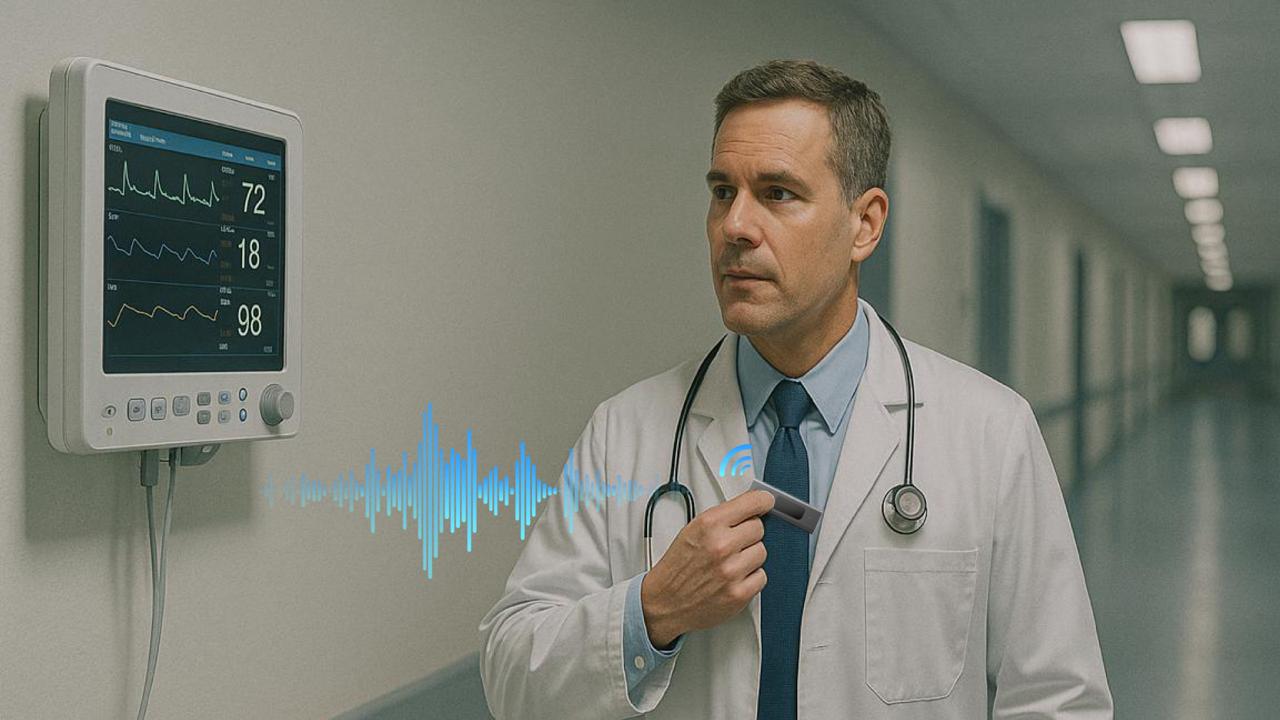
Between the beeps of monitors and the urgency of traumabays, technology should be as invisible as air—yet vital inevery breath. That is why Clinic exists: one touch, instant insight, noscreens, no wake words.Attention returns to the patient; Al handles the rest. Al-Powered Healthcare A Major Transformationin Healthcare Our Mission Revolutionizing Healthcare Al Seamless Interaction,Lightning…
Bizmic – Capture Every Word. Close Every Deal.
Powerful Features for Sales Professionals Our AI-powered platform offers everything you need to enhance your sales conversations and close more deals. Live Chat Transcript Automatically capture and transcribe your sales conversations in real-time with high accuracy. Real-time Translation Break language barriers with instant translation in over 100 languages during your conversations. Meeting Summaries Get…
Empower Your Brand: Add a Custom Voice AI Assistant to Your Product
Challenges & Opportunities Leveraging 15 years of deep expertise in communications technology and AI-driven manufacturing, GMIC AI accelerates your innovation journey. We partner with you to transform your vision into a market-ready product in just 6-9 months. High HardwareDevelopment Barrier Lack of expertise in microphone design,low-power systems, and acoustics. Fragmented VoiceAI Experience Disconnected multi-turn…
Voice-First Healthcare Documentation Solution
AI-POWERED HEALTHCARE Transforming Patient Carewith Voice AI Technology Book a Demo EFFICIENCY MEETS CARE Save 1+ Hour DailyFocus More on Patients Learn More SEAMLESS INTEGRATION Voice-First HealthcareDocumentation Solution Request Info ❮❯ Measurable Quantitative Benefits 15% + Clinical documentation time reduced by 15% saving up to 2 minutes per round. 20% + Patient satisfaction improved…