-

GDPR-Compliant On-Device AI Hardware: An OEM/ODM Checklist
On-device AI can reduce privacy risk, but it does not make a product GDPR-compliant by itself. A voice device may keep inference local while still uploading diagnostics, storing raw audio too long, exposing transcripts through an app, or accepting unsigned firmware. For an OEM or ODM program, privacy therefore has to be translated into…
-
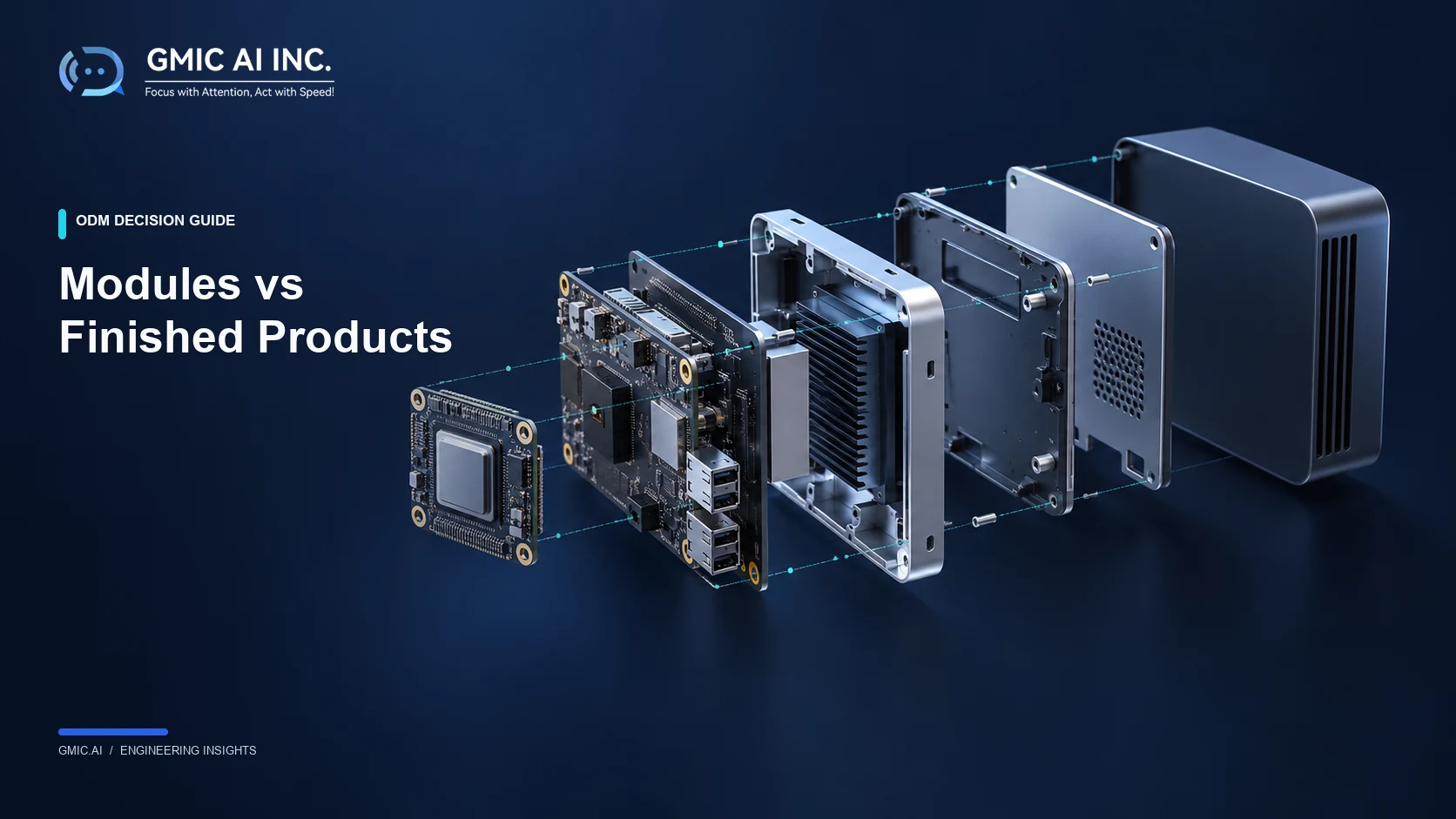
Custom AI Hardware Modules vs Finished Products: Choosing the Right ODM Scope
A custom AI hardware module and a finished AI product solve different parts of the same problem. A module can accelerate compute, audio, sensing, or connectivity integration. A finished product must also prove the carrier board, power system, enclosure, thermal design, antennas, firmware, user controls, manufacturing tests, certification path, packaging, and field support. For…
-
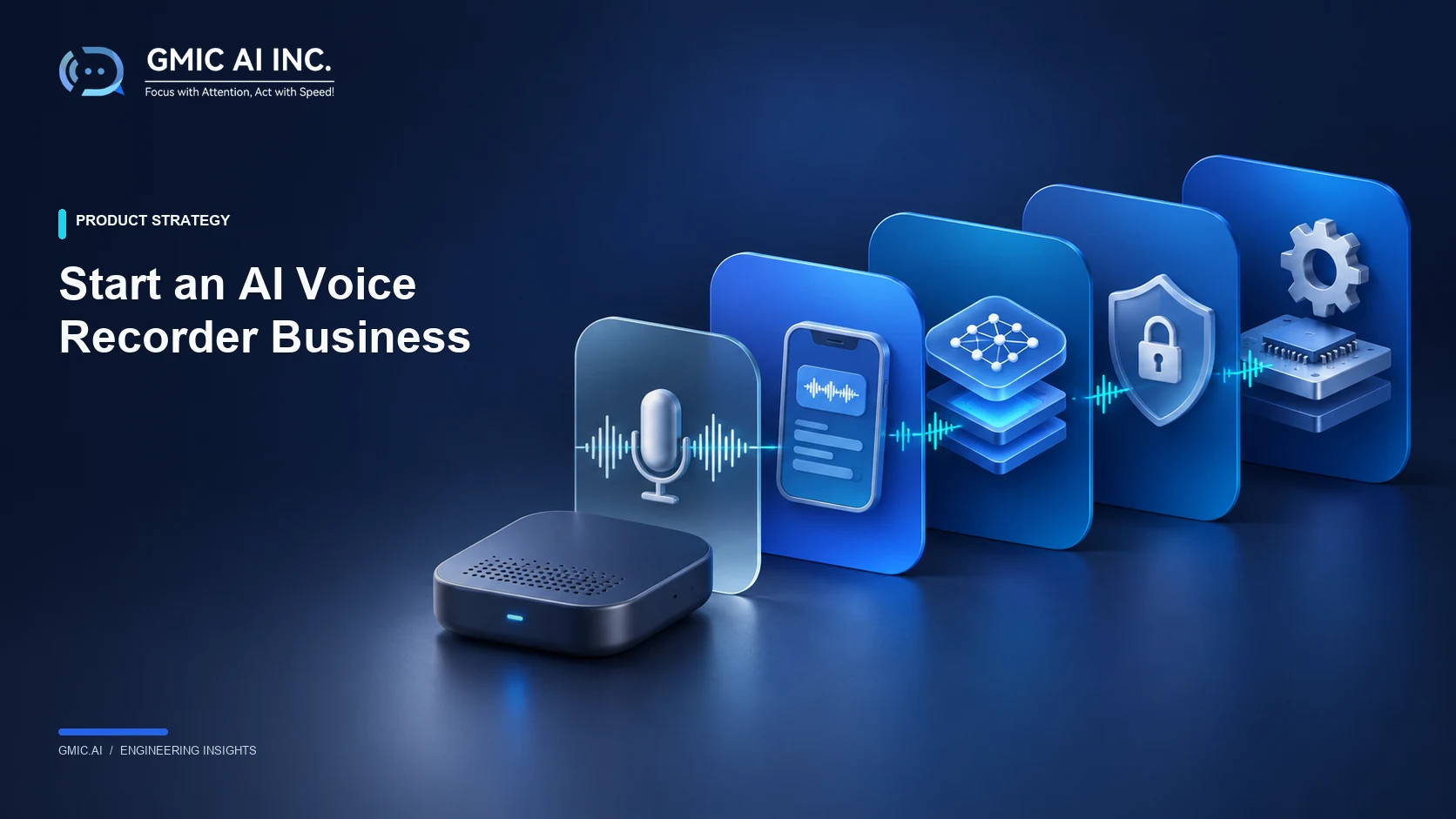
How to Start an AI Voice Recorder Business: Product, Privacy, Hardware & Manufacturing
Starting an AI voice recorder business is not mainly a microphone project. It is a system-design business that combines a capture workflow, hardware, firmware, mobile or desktop software, AI services, privacy controls, manufacturing, and a recurring support model. The first strategic question is not “Which recorder should we private-label?” It is: Which spoken-workflow problem…
-
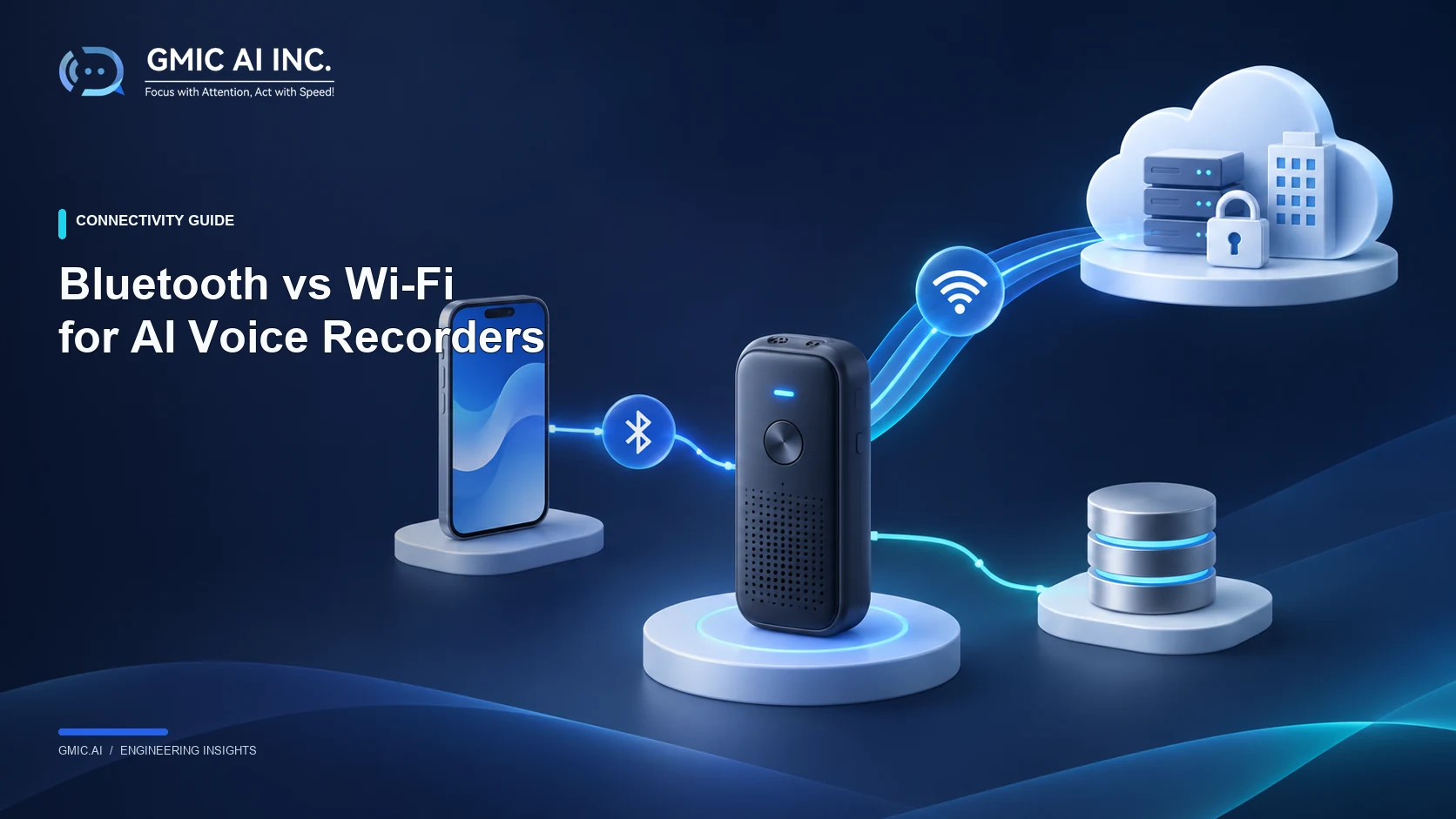
Bluetooth vs Wi-Fi for AI Voice Recorders: Architecture, Sync & Offline Design
Bluetooth and Wi-Fi solve different problems inside an AI voice recorder. Bluetooth Low Energy is commonly used for discovery, pairing, status, commands, and phone-assisted workflows. Wi-Fi is better suited to moving larger recording files or connecting a device directly to cloud or enterprise infrastructure. Local storage keeps capture reliable when neither connection is available.…
-
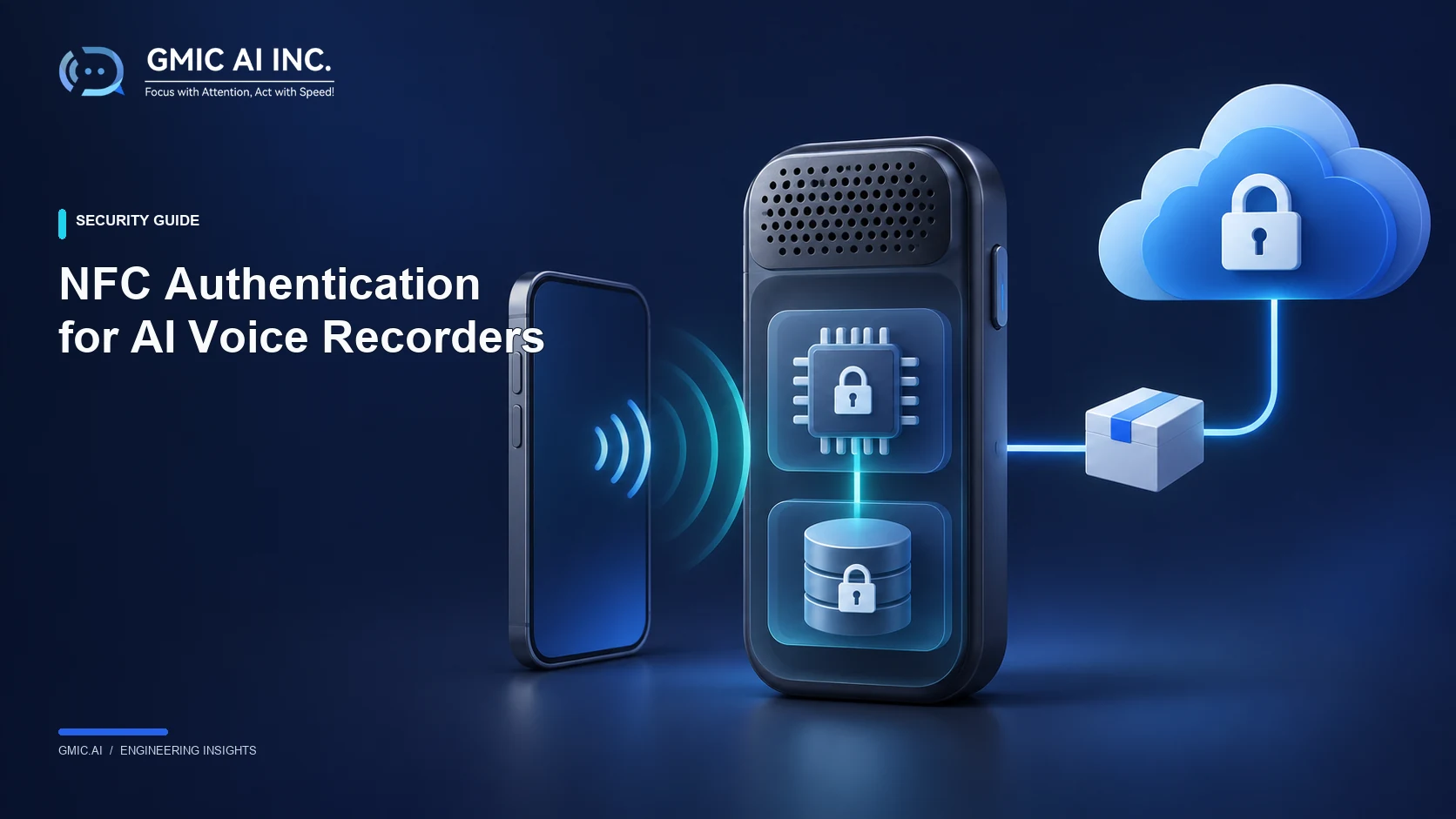
NFC Authentication in AI Voice Recorders: Device Identity, Firmware Security & Enterprise Access
An enterprise AI voice recorder is secure only when the device, user, firmware, app, and backend can establish the right trust at the right moment. NFC authentication in AI voice recorders can make identity checks or workflow authorization intentional and convenient, but NFC alone does not secure recordings, prove firmware integrity, protect cloud credentials,…
-
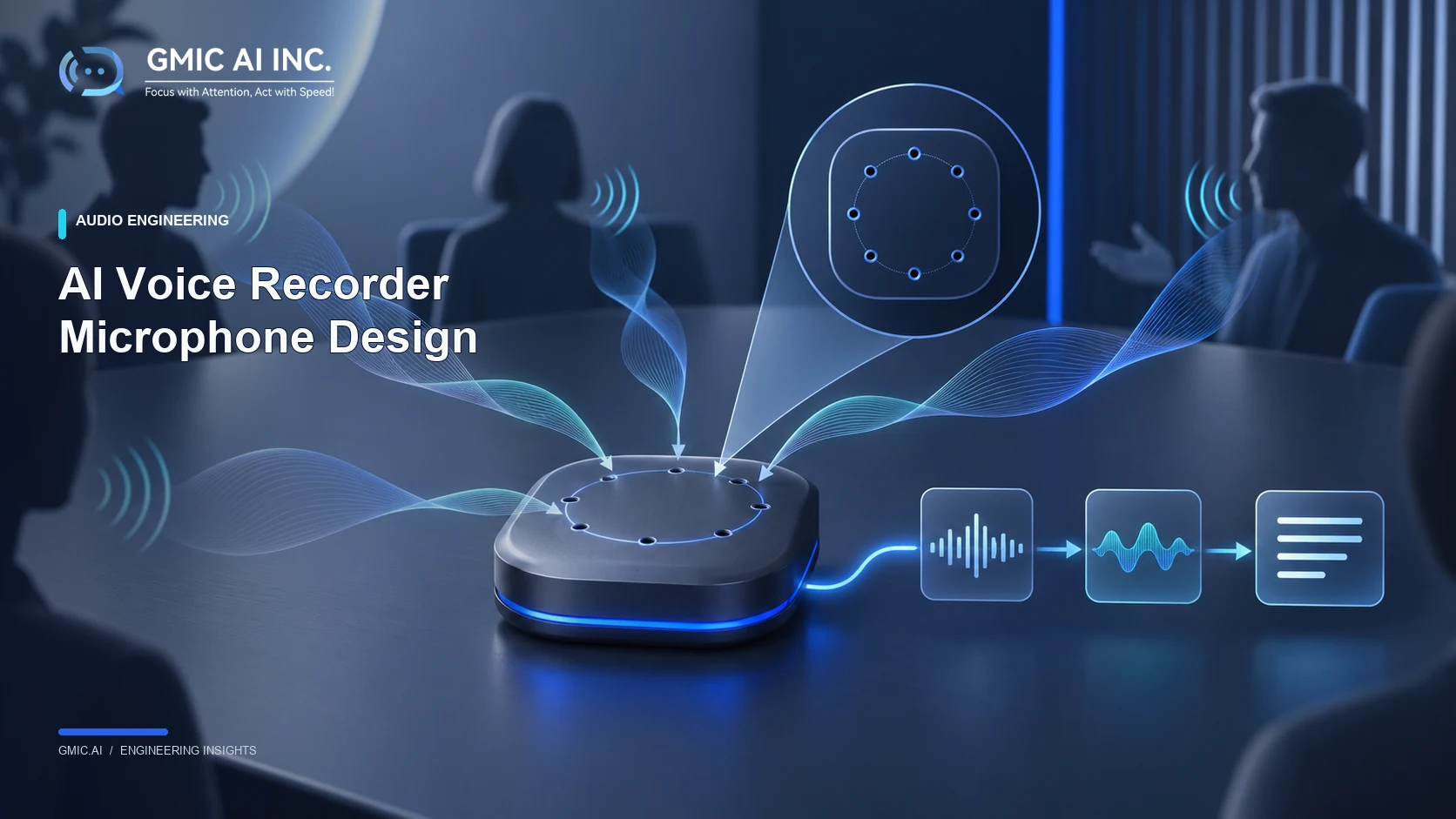
Microphone Design for AI Voice Recorders: SNR, Pickup Distance & Noise Reduction
Short answer: A reliable AI voice recorder is not defined by microphone count alone. Speech capture quality depends on the complete audio path: the intended speaking distance, room noise and reverberation, microphone sensitivity and signal-to-noise ratio (SNR), enclosure acoustics, channel synchronization, gain control, noise reduction, and the speech model used downstream. For an ODM…
-

CE and FCC Certification Support from AI Hardware Manufacturers: What Buyers Should Verify
When an AI hardware manufacturer says it provides CE and FCC certification support, that statement can describe very different services. One supplier may only share an existing radio-module report. Another may review the product architecture, coordinate pre-compliance testing, prepare samples and technical documents, support debugging, and control production changes after approval. The brand owner…
-

OEM Beamforming Microphone Arrays: Design Inputs, Validation, and Production Handoff
An OEM beamforming microphone array is not a standard module that can be selected by microphone count and pickup distance alone. Its performance depends on the complete product: speaker locations, target talkers, array geometry, acoustic ports, enclosure surfaces, processor, reference signals, algorithms, interfaces, and production variation. For an OEM or ODM program, the central…
-

Microphone Array Development Kits: What to Prototype Before Custom Hardware
A microphone array development kit can prove that synchronized multi-channel capture, beamforming, direction finding, or acoustic echo cancellation is technically feasible. It cannot prove that the same performance will survive a smaller enclosure, different microphone spacing, production tolerances, fan noise, loudspeaker vibration, or a new processor. The best use of a development kit is…
-
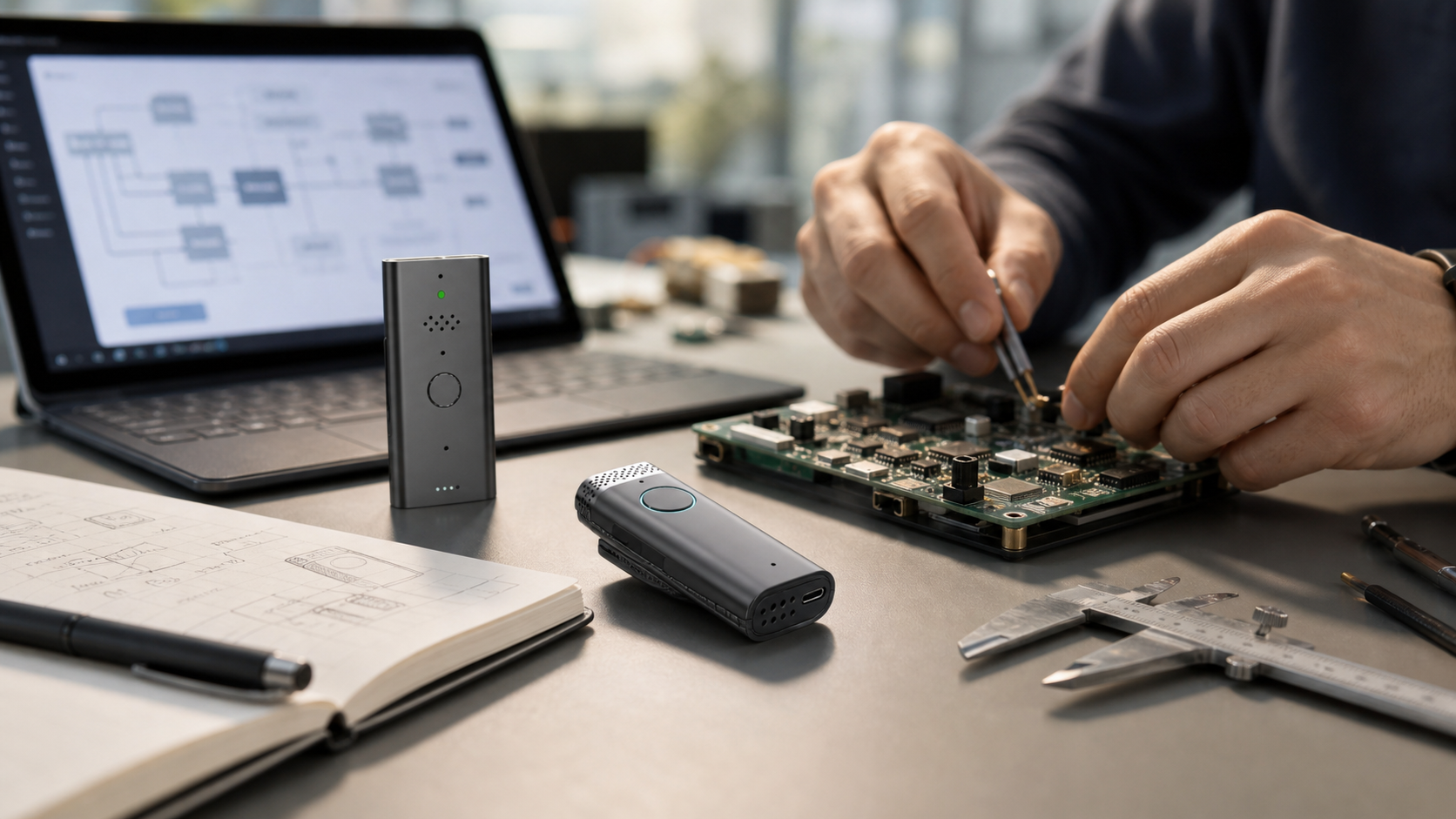
Building Trusted Physical AI Hardware for the U.S. Market
Physical AI is moving artificial intelligence beyond screens and software applications and into devices that can perceive, understand, and interact with the real world. These systems may include robots, wearable AI devices, smart cameras, autonomous machines, sensor terminals, industrial equipment, and AI-enabled environments. What they share is a combination of physical sensors, AI models,…
-
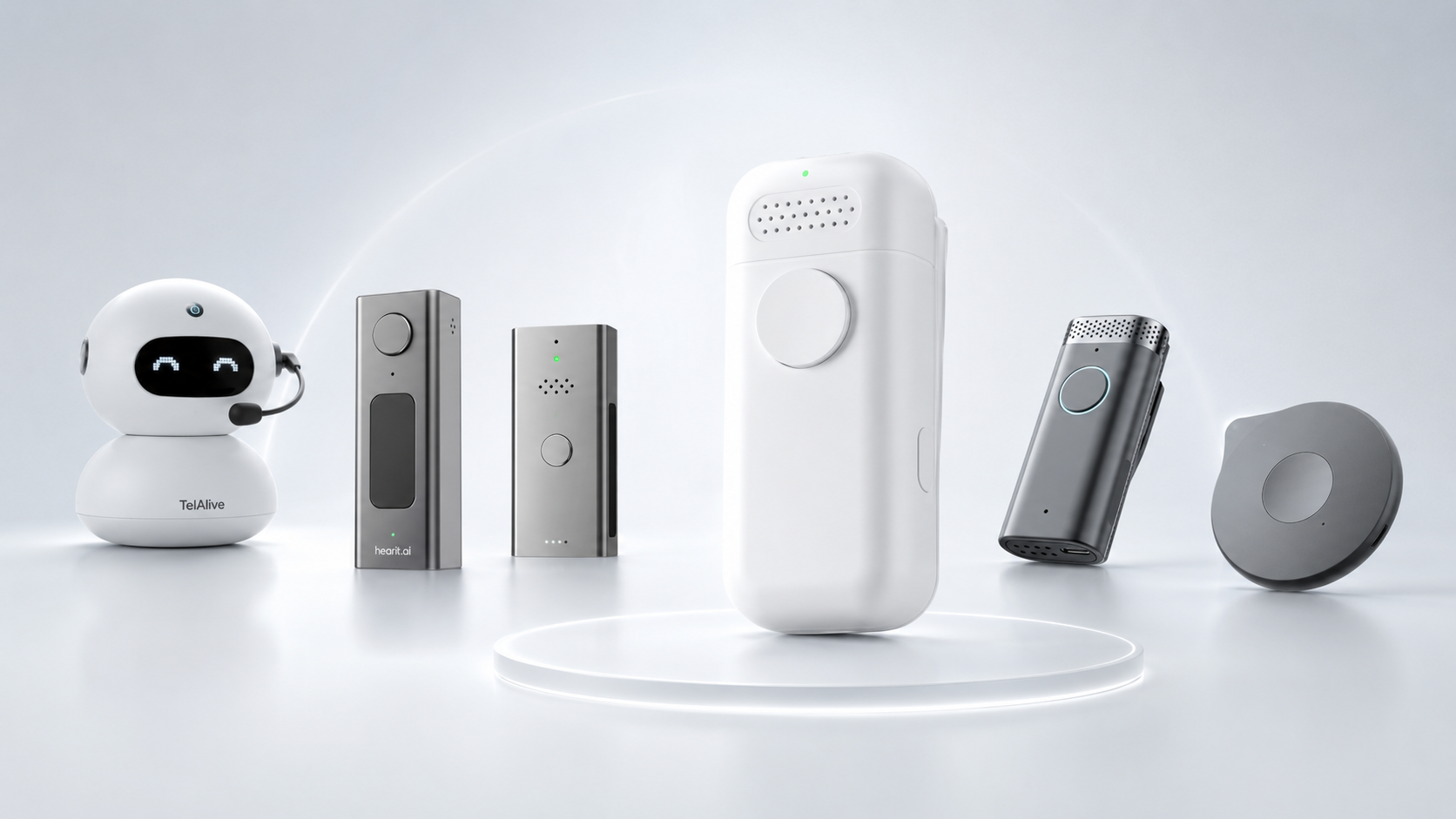
Custom AI Voice Hardware for Enterprise Meetings: From Prototype to Production
Enterprise AI software is becoming increasingly capable of transcribing conversations, separating speakers, generating summaries, identifying action items, and turning spoken information into structured business data. However, the quality of these AI outputs still depends on one essential input: reliable audio. Smartphones and laptops can support initial testing, but they are not always designed for…
-
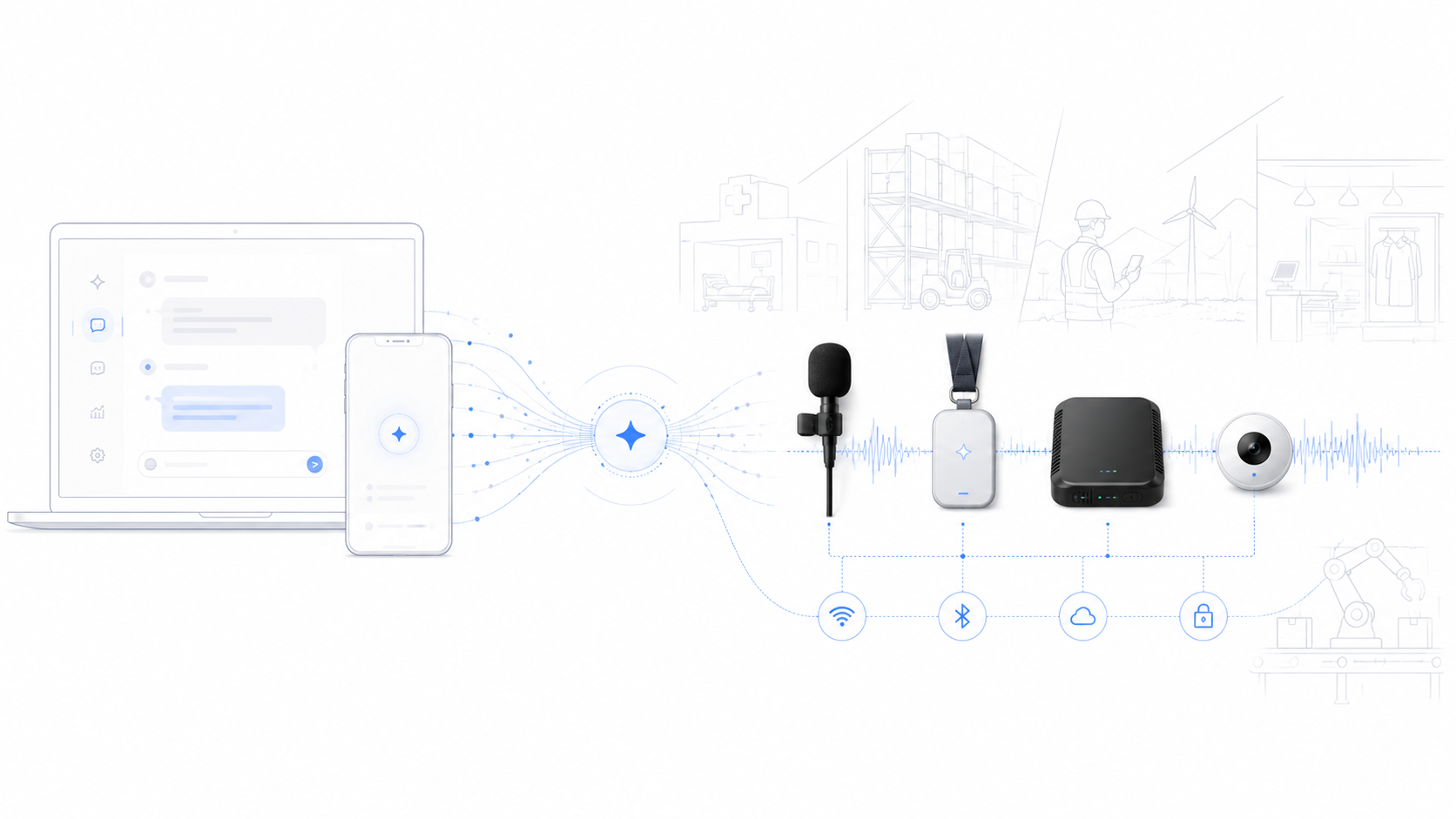
The Screenless AI Device Era: What OpenAI’s AI Companion Device Signals for Hardware
For most of the personal-computing era, every major technology shift has introduced another screen. Desktop computers placed screens on desks. Smartphones put them in our pockets. Smartwatches moved them onto our wrists. Smart glasses are now attempting to place digital information directly in front of our eyes. The next major AI device may move…
-
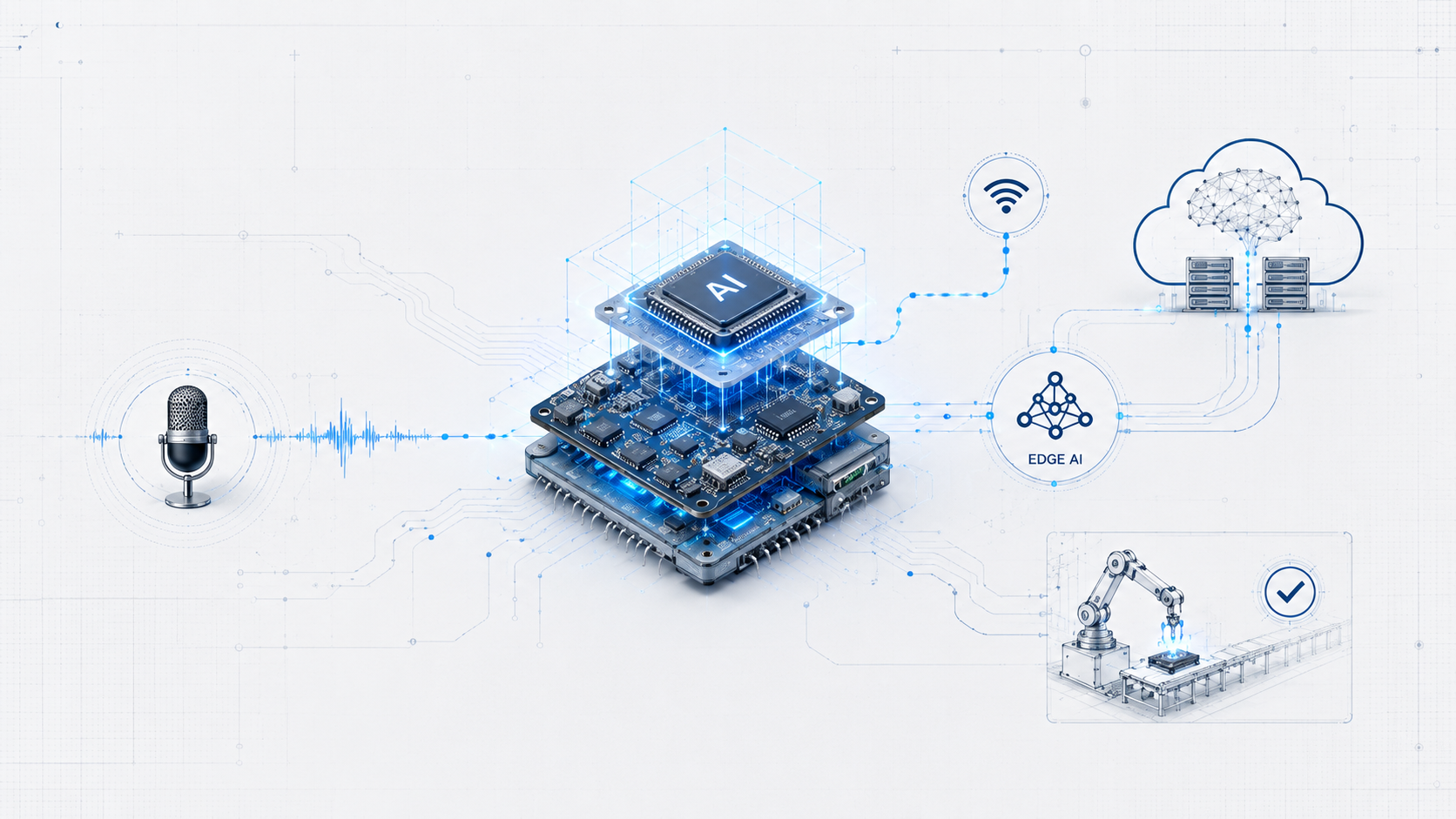
AI Hardware Architecture: A Complete Guide to Designing Intelligent Devices
Artificial intelligence has become dramatically more capable over the past few years, but even the most advanced AI models depend on one thing to interact with the real world: hardware. Whether it’s an AI voice recorder capturing conversations in a noisy hospital, smart glasses assisting field technicians, or wearable devices supporting enterprise workflows, the…
-

When Every Device Has a Microphone, Who Decides What Gets Executed?
When every device in a room can hear, the scarce resource is no longer hearing — it is adjudication. The next infrastructure layer for smart spaces is not another smart speaker. It is a Voice Control Plane: many ears, one judge, many executors. For efficiency-obsessed households this is a huge help, and a huge…
-

The Real AI Race Isn’t Another Paper
The Google paper controversy misses the bigger shift in AI: business value comes from turning voice into reasoning and execution, not papers alone.
-

How AI Investments Shape the Future of Business Calls
Estimated reading time: 8 minutes Key takeaways Table of contents It’s 9:07 a.m. on a Monday. The phone starts ringing while your inbox fills up. A customer wants an update. A lead asks for pricing. A vendor calls back “in five minutes.” You pick up one call, then miss another. You try to write…
-

Navigating Tax Filing Changes with Wearable AI
Estimated reading time: 8–10 minutes Key takeaways Table of contents With Direct File discontinued: the workflow lesson behind the tax-season shift It’s a weeknight in January. You finally sit down to deal with taxes. You open your laptop, ready to file the “simple way” you used last year—then you see the news: With Direct…
-

India’s Surge in Google AI for Education
Estimated reading time: 8–10 minutes Key takeaways Table of contents India is becoming a major market for Google’s AI in education, leading global usage of Gemini for learning purposes—and what it signals for wearable AI microphones A student in Delhi sits at a small desk late at night. The room is quiet except for…
-

What Airlines Teach Us About Wearable AI in Healthcare
Estimated reading time: 9–11 minutes Key takeaways Table of contents An airline’s revised boarding policy, aimed at improving efficiency: what it teaches us about wearable AI microphones in healthcare and beyond Picture this: you’re standing in a boarding line that barely moves. People shuffle, bags bump, announcements repeat, and the clock keeps ticking. Everyone…
-

What the 2026 Winter Olympics Teach Us About Wearable AI Microphones
Estimated reading time: 10–12 minutes Key takeaways Table of contents It’s 6:10 a.m. in the U.S. Your coffee is still brewing. The house is quiet. You open Peacock and catch a live final from Italy—snow flying, blades carving, commentators talking fast, and medals on the line. And you think: How is all of this…
-

Impact of Tesla’s Optimus on Wearable AI in Healthcare
Estimated reading time: 9–11 minutes Key takeaways Table of contents Elon Musk, Optimus, and the real healthcare “robot” already working today Picture a normal morning in a busy hospital. A doctor walks fast from room to room. A nurse is juggling vitals, meds, and questions from families. Everyone is doing real work—yet the laptop…
-

Exploring Apple’s Wearable AI Pin for Healthcare
Estimated reading time: 8–10 minutes Key takeaways Table of contents A voice-first morning: why this matters now You’re walking into work with your hands full. A coffee in one hand. A laptop bag in the other. Your phone is buzzing. You’re already behind on notes, messages, and tasks—and you haven’t even sat down yet.…
-

How DJI’s Mic Mini Enhances Audio for Healthcare Teams
Estimated reading time: 9–11 minutes Key takeaways Table of contents It’s 7:42 a.m. and the day is already loud A nurse calls out a room number. A patient asks a question. A clinician tries to capture a key detail—meds, symptoms, timing—while walking to the next exam room. The phone notes app is open, but…
-

The Mixed Impact of AI Coding on Healthcare Solutions
Estimated reading time ~7 minutes Key takeaways Table of contents A loud hallway, a familiar problem It’s 7:12 a.m. and the hallway is already loud. A clinician walks fast between rooms. A patient has questions. A nurse needs an order clarified. The EHR is open, but there’s no time to sit and type. The…
-

How Is AI Hardware Entering Its Next Real-World Phase?
For years, artificial intelligence has evolved primarily through software. Models became larger, faster, and more capable — yet the way humans interacted with AI barely changed. Today, that gap is closing. AI is no longer confined to screens and keyboards. It is becoming physical, ambient, and embedded into everyday workflows — and hardware is…
-

2026 Outlook: Why “Intelligence + Hardware” Will Finally Converge
Industry insights on the shift from abstract AI to practical, device-based intelligence — and the quiet role companies like GMIC play behind the scenes. For years, the conversation around AI centered on models, benchmarks, and breakthroughs in software. But the real turning point — the moment when intelligent systems become woven into everyday workflows…
-

Why Are AI Wearables Becoming the Next Big Interface for Daily Intelligence?
What Are AI Wearables? AI wearables are smart, sensor-rich devices—like badges, mics, earbuds, or glasses—that continuously listen, learn, and respond. They transform daily routines by bringing AI out of screens and into the physical world. Instead of typing a command, you simply speak. Instead of checking a screen, you get instant contextual feedback. How…
-

How Is AI Voice Hardware Shaping the Future of Human–Machine Interaction?
What Is AI Voice Hardware and Why Does It Matter? AI voice hardware refers to physical devices—microphones, wearable recorders, telephony gateways, and embedded modules—designed to capture, process, and transmit human speech intelligently. Unlike traditional mics, these systems integrate on-device AI, enabling real-time voice enhancement, wake-word detection, and low-latency data transmission. Voice is the most…
-

The Benefits of AI Wearable Devices: How Intelligent Hardware Enhances Daily Life and Work
Artificial Intelligence is no longer confined to software or data centers — it’s now living on our wrists, clipped to our collars, or built into the tools we use every day. AI wearable devices are bringing intelligence closer to the human body, transforming how we monitor health, communicate, and interact with the world. From…
-

Seamless Cross-Platform Integration: Let Your Tools Work for You
What’s the most frustrating part of modern productivity? It’s not the tools themselves—it’s how they don’t talk to each other. You take notes in one app, schedule meetings in another, manage projects in a third, and somehow, none of it feels connected. The result? Wasted time, lost focus, and endless app-switching. Hearit.ai, powered by…
-

Seamless AI for Everyday Life: Your New Best Friend That Talks Back
Let’s be real: life is busy, and we’ve all wished for an invisible assistant at some point—one that doesn’t need coffee breaks or complain about your messy schedule. Enter MIC01, powered by Hearit.ai, your tiny, AI-powered buddy that’s always there, ready to help. With continuous AI interaction that feels less like yelling at a…