Clinmic Enhances Documentation Accuracy Amid Rising Intracranial Hemorrhage Risks in Older Adults
As fall-related head injuries in older adults increasingly demand precise clinical documentation, Clinmic wearable AI scribe hardware offers a reliable solution for real-time voice capture and transcription. Summary A recent meta-analysis of 17 observational studies involving over 22,000 patients aged 65 and older found that nearly 7% of older adults presenting to emergency departments…
Clinmic Enhances Clinical Documentation Amid Evolving Plasma Donation Guidelines in Australia
Clinmic wearable AI scribe hardware supports clinicians by streamlining voice capture and transcription in dynamic healthcare settings. Summary Recent changes by the Australian Blood Service have removed sexual activity wait times for most plasma donors, including gay and bisexual men, transgender individuals, and men taking PrEP. This policy update reflects advances in HIV testing,…

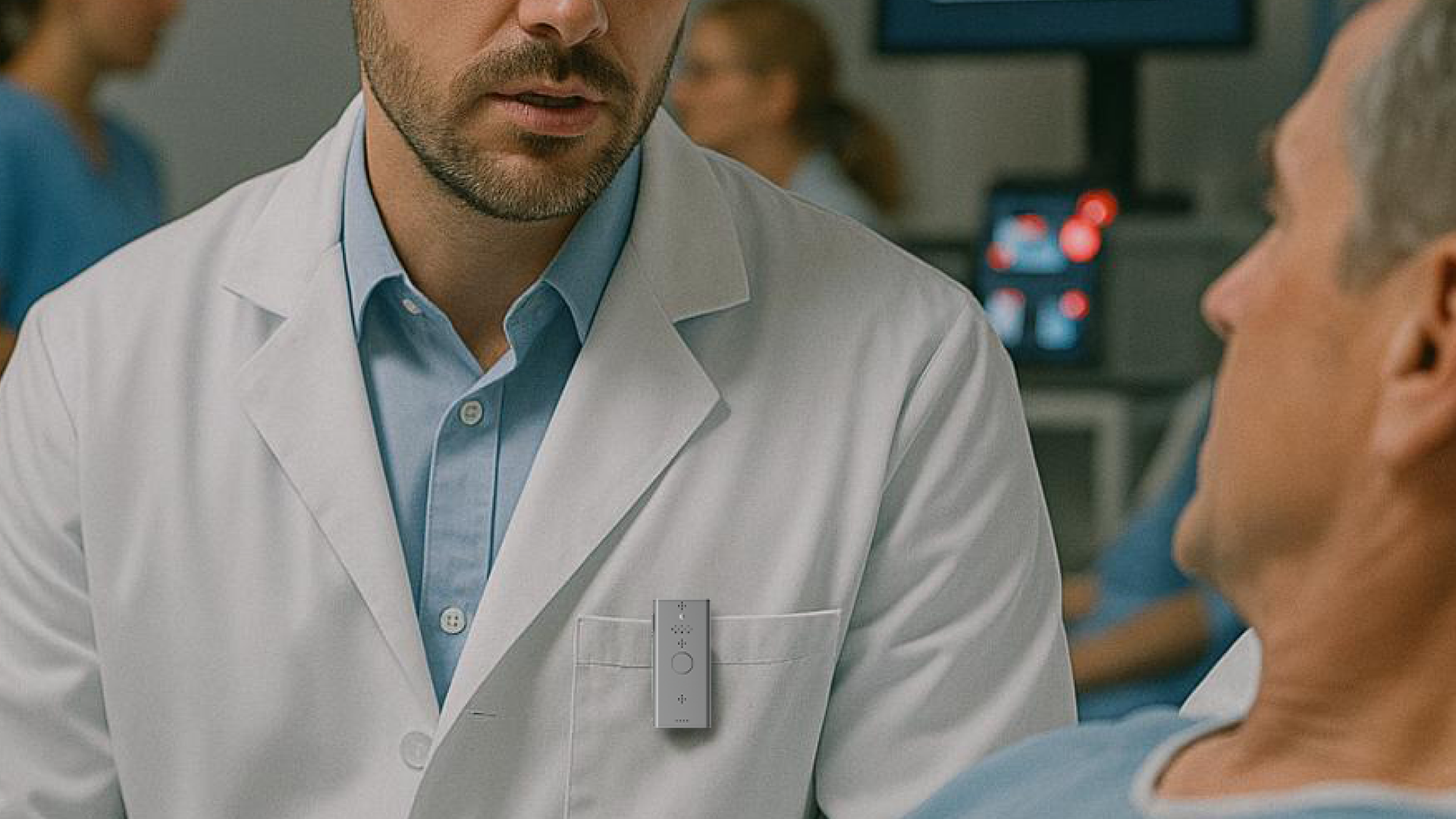
Medical Dictation Wearable Devices with AI Transcription: Transforming Doctor-Patient Care
Every doctor knows the challenge: too much time typing, not enough time talking. Electronic Health Records (EHRs) have made documentation more important than ever, but they also take away precious minutes from patient interaction. That’s why the demand for medical dictation wearable devices with AI transcription is rising—making documentation seamless, accurate, and hands-free. The…

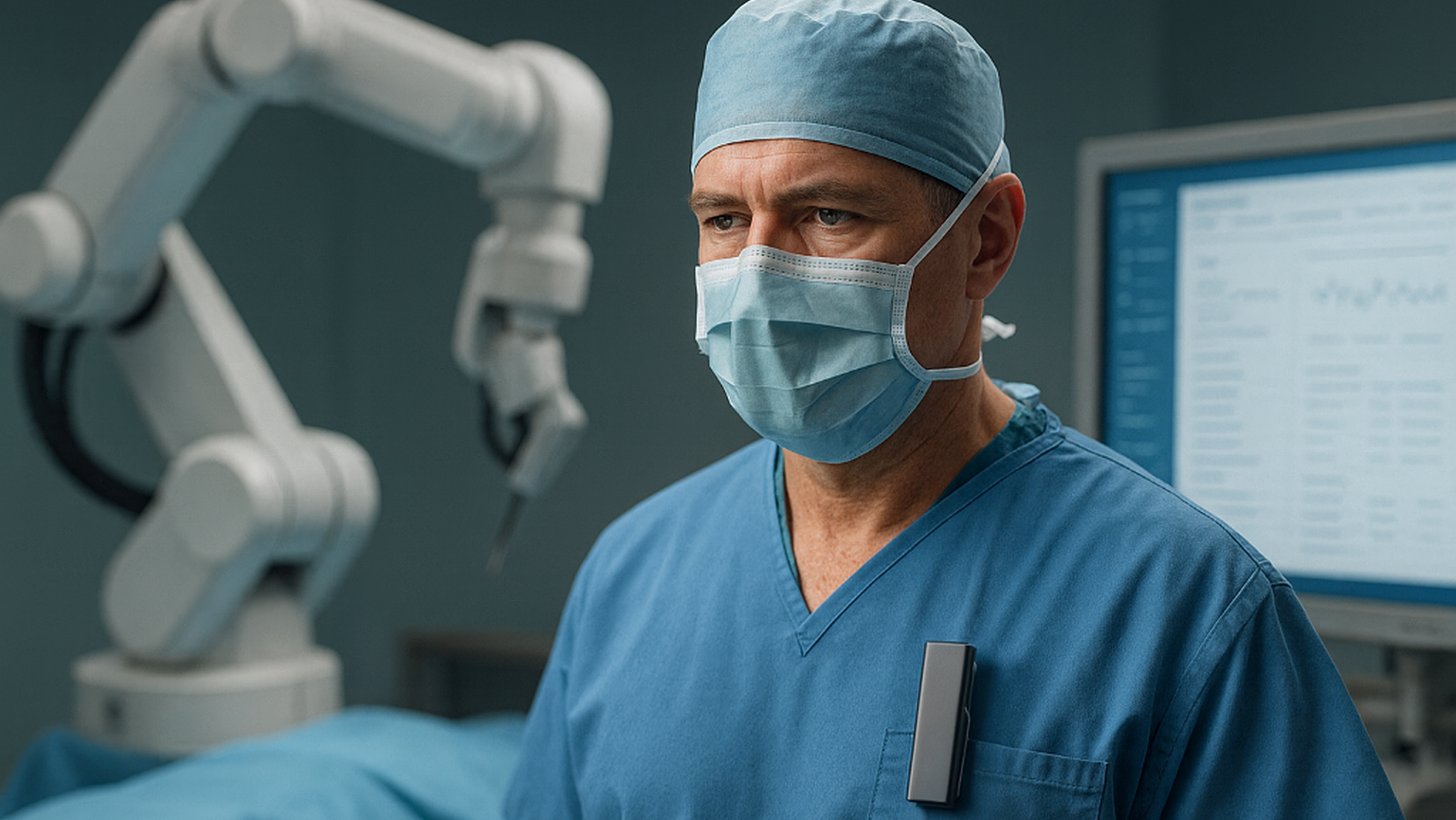
Clinmic and the Rise of Autonomous Surgical Robotics: Enhancing Clinical Documentation
As autonomous robotic surgery advances, Clinmic wearable AI scribe hardware offers clinicians a reliable solution for hands-free, accurate voice capture in complex medical environments. Summary Recent research demonstrated a robotic system capable of performing portions of gallbladder removal surgery without human assistance. Using a hierarchical AI framework trained on surgical videos, the robot successfully…
Voice-Enabled AI Scribe Hardware for Doctors: Transforming Clinical Documentation
In today’s healthcare environment, physicians are under immense pressure to balance quality patient care with the burden of clinical documentation. Traditional note-taking methods—typing or dictating into a mobile device—take valuable time away from patient interaction and often lead to burnout. That’s where an AI dictation wearable for doctors comes in. Unlike regular apps or…

Wearable AI Medical Scribe Hardware for Hospitals: Turning AI Into Practical, Hands-Free Documentation
Why Hardware Matters Beyond Software In today’s healthcare environment, most AI scribe solutions are positioned as purely software-driven — APIs, SaaS subscriptions, or integrations into EHR systems. While these models are powerful, they often assume clinicians already have the perfect recording setup: quiet spaces, dedicated devices, and flawless connectivity. This assumption creates a gap.…
Implementation of Wearable AI Medical Scribe Hardware to Enhance Clinical Documentation in Hospitals
Abstract Clinical documentation is a cornerstone of modern healthcare, influencing both patient outcomes and operational efficiency. However, manual note-taking and transcription often consume significant time and introduce risks of error. This paper explores the implementation of wearable AI medical scribe hardware in hospital environments, evaluating its technical capabilities, integration pathways, and potential to improve…
Wearable AI Medical Scribe Hardware for Hospitals: Boosting Accuracy and Efficiency in Clinical Documentation
In modern healthcare, documentation quality directly impacts patient safety, compliance, and workflow efficiency. While AI-powered medical scribe SaaS platforms have transformed the way clinicians record notes, the audio capture hardware used in this process often determines the actual accuracy and usability of the final transcript. For hospitals, the difference between consumer-grade audio capture (e.g.,…