/ ROBOTICS PRODUCT DEVELOPMENT

Robotics Prototyping & Hardware Product Development

Turn a working robotics prototype into integrated, testable and manufacturable hardware — from architecture and custom electronics through EVT, DVT, PVT, pilot production and scale.
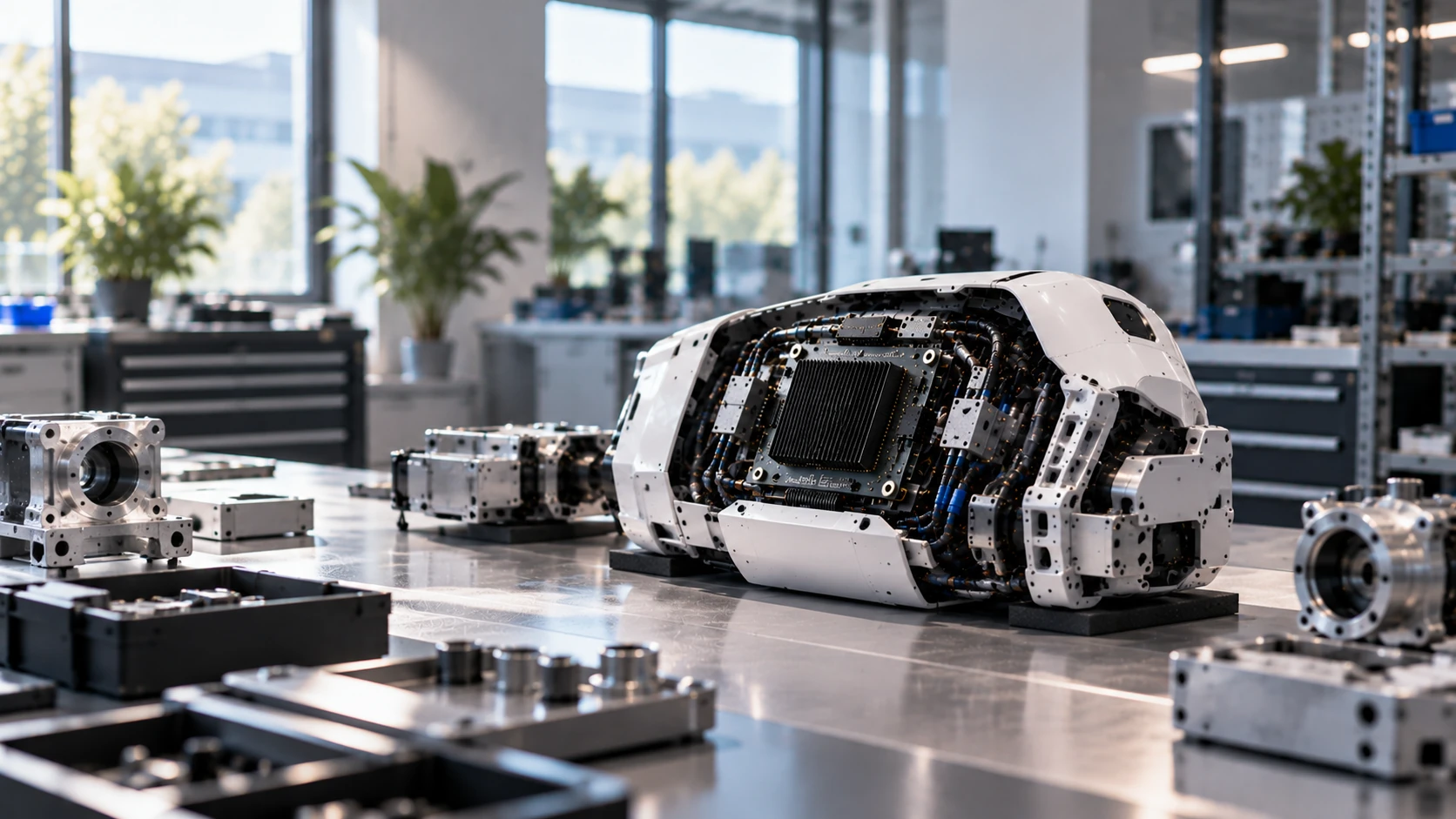

Robotics prototyping and hardware product development: integrated electronics, firmware, validation builds and production
/ THE PROBLEM

Close the Gap Between "It Works" and "We Can Manufacture It"

Robotics teams often prove the core software and autonomy with development boards, off-the-shelf cameras, USB peripherals, external radios and temporary power systems. Production requires those pieces to become a defined hardware architecture with stable interfaces, test criteria, sourcing and repeatable assembly.

/ CAPABILITIES

What We Help Productize

Compute & Controller Architecture

Define the embedded compute and controller architecture for the target product.

Sensor and Audio Interfaces

Integrate cameras, microphones, IMUs, environmental sensors and audio hardware.

Connectivity

Architect Wi-Fi, BLE, Ethernet, USB or cellular connections for the product.

Firmware and Device Logic

Implement firmware, device state, OTA, APIs and integration with the robotics software stack.

PCB / PCBA and Power

Move from development boards to custom production electronics with defined power architecture.

Enclosure / Interface Coordination

Coordinate the embedded hardware with mechanical interfaces within the agreed scope.

/ PROCESS

From Prototype to Production

Development
Validation
Production
/ COMPARISON

What Changes From a Dev Kit to Production Hardware

Multiple dev boards Integrated PCB / PCBA
Temporary cables Defined connectors / harness interfaces
Bench power Product power architecture
Manual flashing Controlled firmware / OTA path
Ad-hoc testing Functional test criteria / fixtures
Single-source parts Sourcing and BOM strategy
3D-print only Production-intent mechanical interface
One unit works Repeatable pilot and production process
/ VALIDATION

EVT, DVT and PVT Reduce Different Types of Risk

EVT

Engineering Validation

Prove electronics, firmware and mechanical interfaces work together.

DVT

Design Validation

Verify the production-intent design against product requirements and required testing/certification scope.

PVT

Production Validation

Prove the factory process, production tooling, test flow and quality controls can build the design repeatedly.

Timing and unit counts vary by project scope and product complexity.

/ MANUFACTURING

Design the Prototype With the Factory in Mind

DFM / DFA

BOM Cost and Availability

Second-Source Planning

Production Test Strategy

Assembly Sequence

QC Checkpoints

Packaging / Logistics

/ VERTICALS

Built for Different Robotics Verticals

/ FAQ

Robotics Prototyping FAQs

Robotics prototyping is the process of building and validating an early physical system so a team can test the core electronics, sensors, compute, firmware and software interfaces before committing to production-intent design.

A proof of concept proves a technical idea. An engineering prototype starts integrating the components, interfaces and form factor in a way that can be measured against product requirements and refined toward production.

Yes. A common starting point is a working robotics or AI prototype that already demonstrates the software. GMIC can review the embedded architecture and define the path toward integrated electronics, firmware, validation and manufacturing.

Usually not. Production hardware typically passes through additional engineering and validation stages such as EVT, DVT, PVT and a pilot build before full scale.

Begin

Already Have a Working Robotics Prototype?

Share the current architecture, interfaces, target environment and expected volume. We can help identify what has to change before the hardware is ready for pilot and production.

Review Your Prototype