/ INDUSTRIES — HEALTHCARE ROBOTICS

Hardware Development for Healthcare Robotics

Develop the voice, sensing, connectivity, firmware and embedded electronics behind healthcare robots and patient-facing physical AI systems — from prototype integration through production.

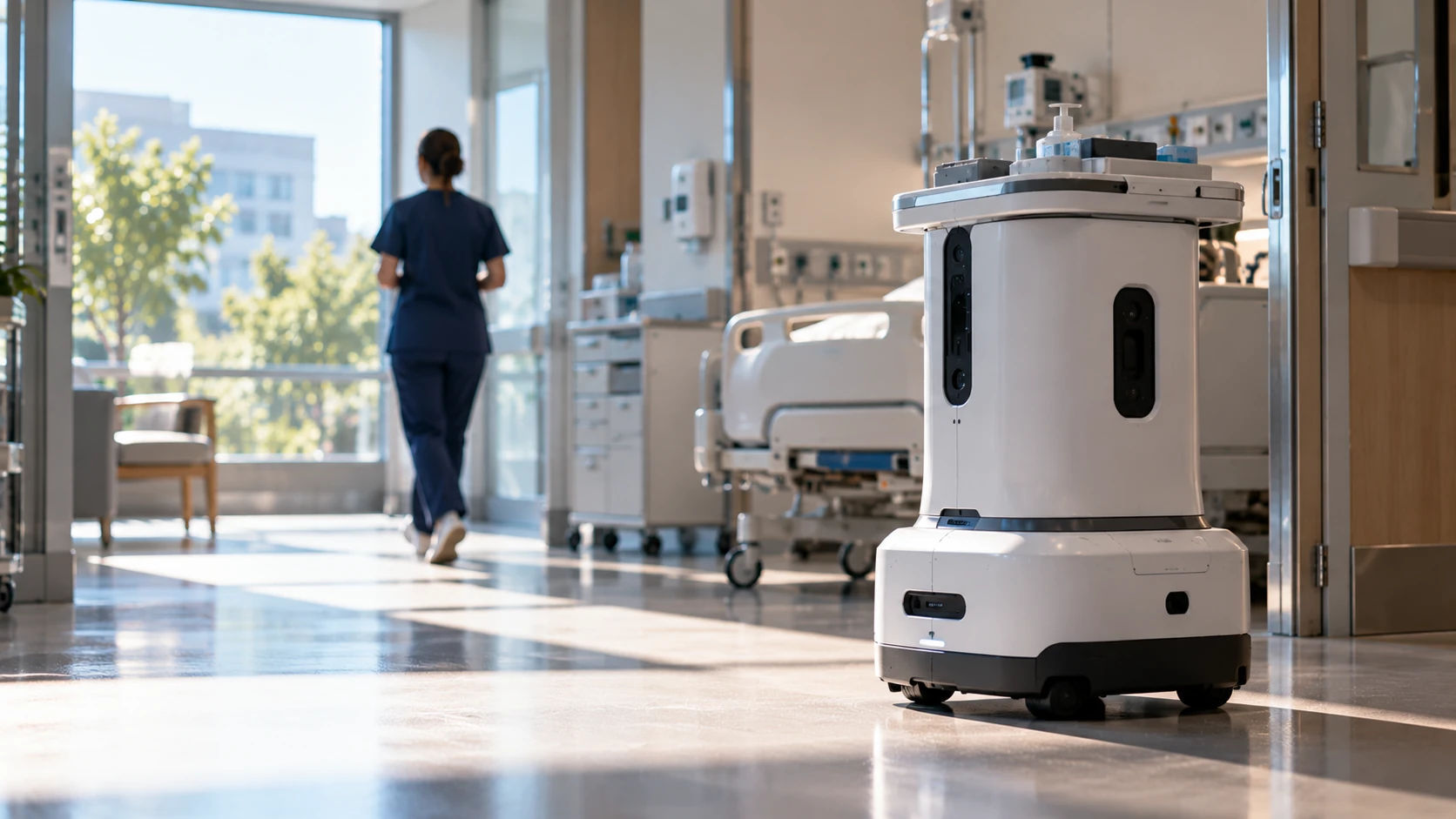
Healthcare robotics hardware: clinical voice and audio, sensors, embedded compute, connectivity and production electronics
/ CLINICAL INTERACTION

Build Hardware Around the Patient and Clinician Workflow

A healthcare robot may need to communicate with patients, capture clinician speech, connect to hospital systems, operate on variable networks and remain understandable to users who are not robotics engineers.

GMIC brings existing experience in healthcare voice hardware, audio DSP, firmware and AI integration into the embedded hardware layer around those robotics workflows.

/ HARDWARE STACK

Voice, Sensors and Connected Hardware for Care Environments

Clinical Voice & Audio

Microphones, speakers, arrays and DSP for patient/clinician conversation, voice commands and two-way interaction.

Sensor Interfaces

Integrate camera, IMU, proximity, environmental and other sensing inputs required by the healthcare robotics application.

Edge / Embedded Compute

Support local processing, low-latency functions and offline-resilient device behavior with MCU, SoC or edge compute.

Connectivity

Architect Wi-Fi, BLE, Ethernet, USB or cellular connections between the robot, cloud, apps and facility systems.

Firmware & Device Logic

Implement capture, state, authentication, buffering, recovery, OTA and device-side workflows around the application.

Custom Electronics

Move from development kits and modules to production-intent PCB/PCBA designed around power, interfaces, enclosure constraints and manufacturing.

/ APPLICATIONS

Embedded Hardware for Different Healthcare Robotics Workflows

Clinical Assistant Robots

Voice, sensing and connected hardware for robots assisting staff with information, documentation or interaction workflows.

Voice AISensorsConnectivityClinical

Hospital Service Robots

Embedded electronics and connectivity around robots supporting facility logistics, delivery or non-clinical service tasks.

EmbeddedConnectivityLogisticsAutomation

Patient Interaction Robots

Audio, display, sensing and device interfaces for patient-facing communication and assistance.

AudioDisplaySensorsInteraction

Remote Care & Telepresence

Cameras, microphones, speakers, network interfaces and firmware for remote-presence and connected-care devices.

CameraAudioNetworkStreaming

Facility-Based Elder Care Robotics

Voice, sensing and connectivity hardware for assisted-living, senior-care or provider-operated robotics systems.

VoiceSensorsConnectivityCare
/ VOICE & AUDIO

Robots Need Clean Audio Before Clinical AI Can Use It

Healthcare environments introduce distance, overlapping speakers, room reflections, alarms, carts, ventilation and the robot's own speaker output. Audio capture should be designed as a complete microphone–enclosure–DSP system around the real environment.

Not every DSP function is required in every product; the chain should be selected and tuned against the actual form factor and environment.

/ INTEGRATION

Keep Your Clinical AI and Workflow Systems

The hardware should fit the system the customer already owns. GMIC can support firmware, SDK/API and connectivity integration so device data moves into the customer's cloud, AI pipeline, private server or application architecture.

GMIC does not provide EHR software or clinical AI.

/ VALIDATION

Validate in the Care Environment Before Scaling

/ PRODUCTION

From Validated Electronics to Repeatable Production

GMIC can support DFM, BOM management, sourcing, PCB/PCBA, assembly planning, production testing and QC for the agreed hardware scope, with certification planning based on product and market requirements.

DFM

BOM Management

Sourcing

PCB / PCBA

Assembly Planning

Production Testing

QA / QC

Certification Planning

/ REQUIREMENTS

Healthcare Robotics Requirements Depend on Intended Use

A healthcare robot used for facility service is not automatically regulated the same way as a medical device. Intended use, claims, connectivity and system function determine the applicable requirements.

If the product is a medical device or contains regulated device functions, regulatory and cybersecurity requirements should be defined early with the appropriate specialists.

For U.S.-market products using radio-frequency functions such as Wi-Fi or Bluetooth, certification planning should be defined against the applicable FCC equipment-authorization requirements for the final product architecture.

FCC equipment authorization requirements
/ WHY GMIC

Why Healthcare Robotics Teams Work With GMIC

01

Clinical Voice & Audio Experience

Existing experience in healthcare voice capture, DSP, noise reduction and clinical audio integration.

02

Built Around Your Clinical AI

Integrate hardware around your speech, AI, and clinical workflow systems.

03

No Need to Build Every Hardware Function In-House

Add embedded, audio, firmware, and production capabilities without building every function internally.

04

Prototype to Production

Support the path from prototype through EVT, DVT, PVT, pilot, and manufacturing.

05

Custom Hardware When Needed

Move from off-the-shelf components to integrated production electronics.

06

One Engineering-to-Manufacturing Partner

Reduce handoffs between hardware engineering, sourcing, validation, and production.

/ FAQ

Healthcare Robotics Hardware FAQs

GMIC focuses on the embedded hardware layer, including voice/audio, sensing interfaces, edge compute, connectivity, firmware, custom electronics and production support for clinical assistant, hospital service, patient-interaction and remote-care systems.

Yes. The integration scope can include device firmware, authentication, data transport, APIs and SDK coordination so the robot hardware works with the customer's existing backend or AI pipeline.

No. Classification depends on intended use, claims and function. A hospital logistics robot and a regulated medical device can face very different requirements. Regulatory scope should be established early for the specific product and market.

Provider-, facility- and clinically oriented elder-care robotics belongs here. Consumer and family-oriented in-home companion products belong under AI Companion & Home Robotics.

Begin

Building a Robotics Product for Healthcare?

Tell us how the robot interacts with patients or clinicians, what software stack already exists and what hardware needs to be productized. We can help define the embedded hardware path from prototype through production.

Discuss Your Healthcare Robotics Project