Build the audio, sensing, embedded computing, connectivity, firmware, and electronics that connect your robot intelligence to the physical world.
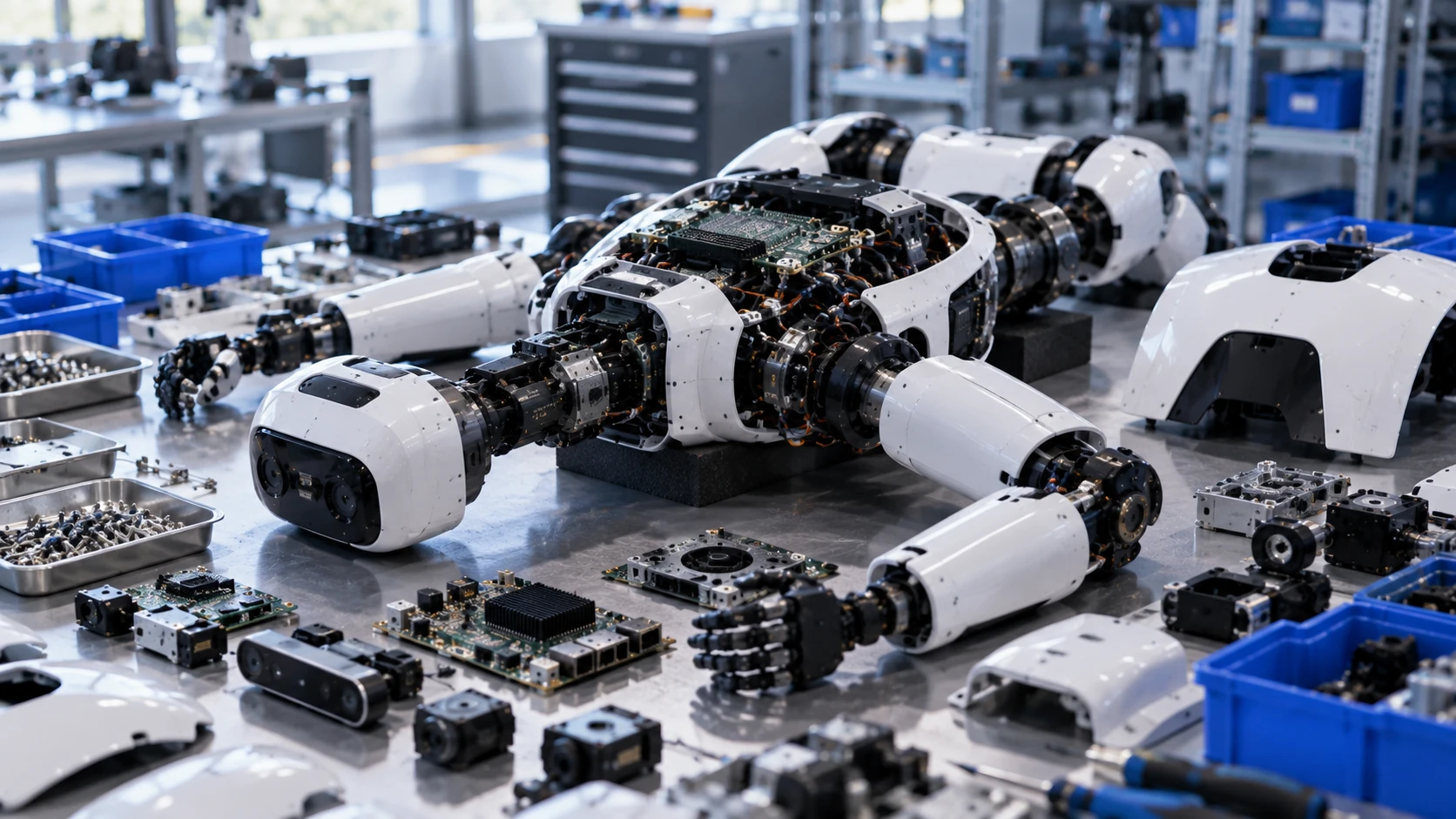
Humanoid and service robots need more than intelligence. To interact naturally with people, they need hardware that can reliably sense, hear, process, communicate, and connect in real-world environments.
Cameras and sensors capture information from the physical environment.
Microphones and audio systems capture human speech and surrounding sound.
Edge or cloud AI processes voice, vision, and sensor inputs.
Speakers and voice interfaces enable natural two-way interaction.
Wi-Fi, Bluetooth, wired interfaces, and cloud connectivity keep systems connected.
Voice interaction in robotics becomes difficult when microphones must capture speech around motors, fans, speakers, movement, and environmental noise. GMIC helps build and tune the audio hardware around your voice AI pipeline.
Capture speech across practical interaction distances using microphones and microphone-array architectures designed for real-world environments.
Reduce environmental, fan, motor, and background noise before audio reaches the speech or AI pipeline.
Help the robot continue listening while its own speaker is actively playing speech or sound.
Support beamforming, gain control, preprocessing, and speech-focused audio signal processing.
Integrate speakers and audio output for clear two-way human-robot communication.
Connect audio hardware to edge or cloud speech recognition, conversational AI, LLM, and voice-agent pipelines.
You build the robot intelligence. We help build the hardware around it.
Whether your robotics platform uses a VLA, VLM, AI agent, speech model, computer vision system, or proprietary software stack, GMIC helps integrate the electronics required to bring that intelligence into a deployable product.
Your Robot Intelligence
GMIC Hardware Layer
GMICMicrophones, microphone arrays, speakers, DSP, AEC, noise reduction, and voice-interface hardware.
Integrate cameras, IMUs, environmental sensors, microphones, and additional device inputs.
Integrate MCU, SoC, and edge-computing platforms for local processing and low-latency operation.
Connect robots to cloud platforms, mobile applications, and local systems using Wi-Fi, BLE, USB, Ethernet, or cellular.
Connect device firmware, APIs, SDKs, OTA updates, and AI pipelines with the existing robotics software stack.
Move from development boards to integrated PCB and PCBA solutions optimized for size, power, reliability, cost, and manufacturing.
A robotics prototype can work with development boards, external sensors, USB microphones, loose wiring, and 3D-printed parts. Turning that system into a reliable product requires a different level of hardware integration and production engineering.
GMIC helps productize the electronics around your existing humanoid or service robotics platform.
Already have a working robotics prototype? We can help turn it into manufacturable hardware.
Discuss Your PrototypeGMIC supports service robots that interact with customers, employees, visitors, and users across commercial environments.
Voice and interaction hardware for robots designed to assist, answer questions, guide users, and communicate with customers.
Connected sensing and interaction hardware for robots operating in stores, showrooms, and other retail environments.
Voice, embedded electronics, and connectivity for service robots used in hotels, restaurants, and hospitality environments.
Audio, sensing, and communication hardware for reception, navigation, visitor assistance, and guided-interaction applications.
Humanoid robotics companies often begin with powerful AI and robotics platforms, but production systems still require integrated sensing, audio, computing, connectivity, firmware, and electronics.
GMIC helps develop and integrate this hardware layer around existing humanoid robotics platforms, from early prototypes through production-ready electronics.
Once the hardware architecture is validated, GMIC helps prepare integrated robotics electronics for reliable and scalable production.
Design electronics for repeatable manufacturing.
Balance performance, availability, and target unit cost.
Move from development boards to production electronics.
Support sourcing and supply-chain planning.
Define production assembly and functional testing.
Build quality controls into pilot and mass production.
Prepare hardware for applicable regulatory requirements.
Scale from validated hardware to production quantities.
Add electronics, audio, firmware, and production capabilities without building every function internally.
Develop reliable human-robot voice interaction for real-world environments.
Integrate hardware around the robotics intelligence and mechanical platform you already have.
Move from off-the-shelf components to integrated production electronics.
Support the path from prototype through EVT, DVT, PVT, pilot, and manufacturing.
Reduce the handoffs between hardware engineering, sourcing, validation, and production.
Tell us what your robotics platform already does, what hardware exists today, and what needs to be integrated, customized, or productized.
Discuss Your Robotics Project