Dedicated AI Scribe Hardware for Clinical Voice Capture
Your AI software provides the intelligence. Dedicated hardware provides the physical audio capture layer — consistent microphone positioning, hands-free operation, offline recording, and controlled firmware behavior in real clinical environments.
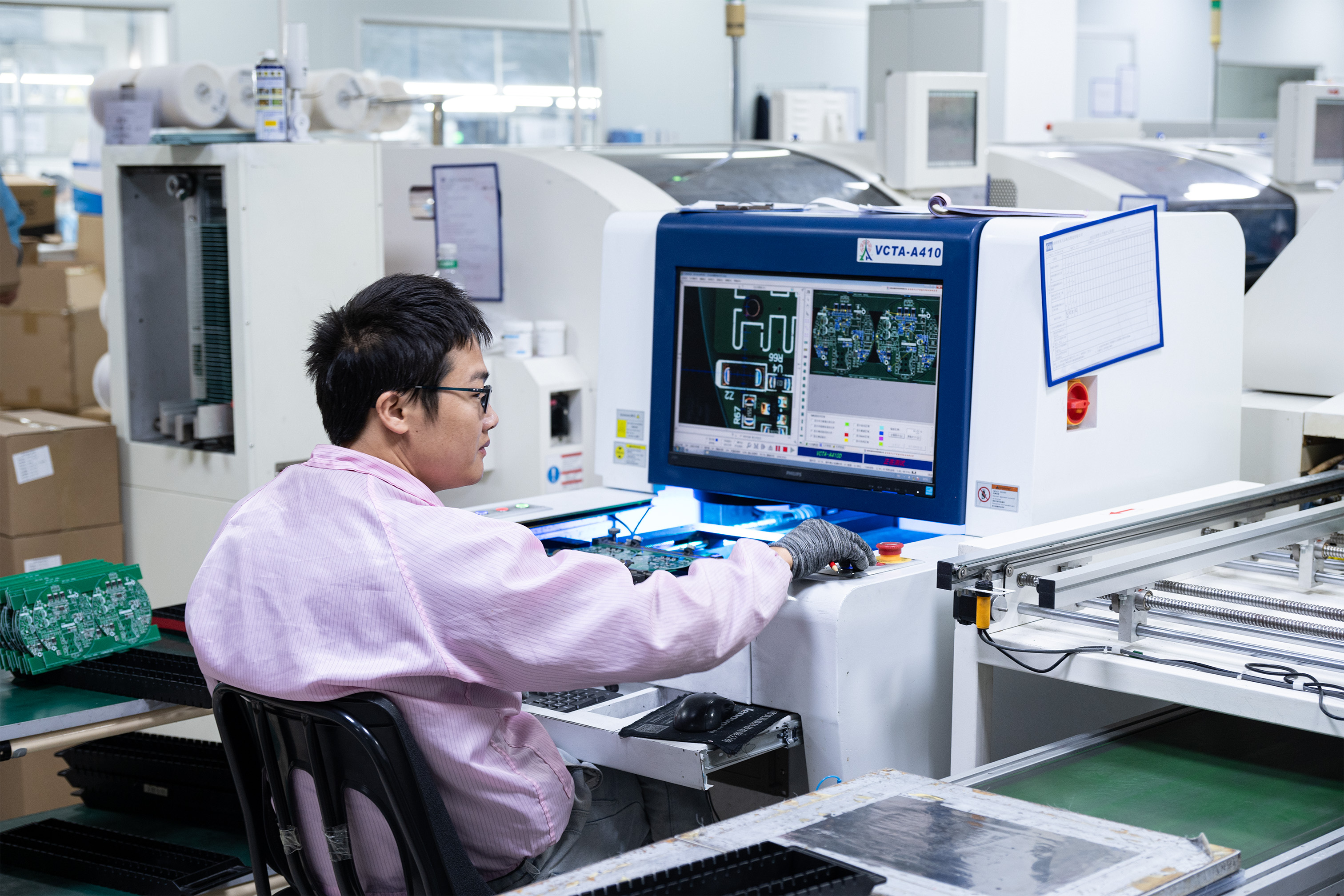
GMIC develops customizable voice-capture hardware for AI scribe and clinical documentation companies that need more control over audio capture, connectivity, and software integration than smartphones or laptops can provide.
Audio & DSP Firmware SDK/API Integration Prototype → Production OEM/ODM US + Shenzhen
When Does Dedicated AI Scribe Hardware Make Sense?
Smartphones and laptops are the right answer for an MVP, for validating the software, for a small pilot, and for early testing with a handful of clinicians. They are available, familiar, connected, and they let a team change the product in an afternoon. Many AI scribe companies should stay on them longer than they expect to.
The hardest part of ambient scribing is not the model — it is capturing a clean doctor-patient conversation in a busy room. Dedicated hardware becomes relevant when that capture problem, rather than the documentation problem, is what limits the product.
- Microphone positioning has to be consistent across encounters
- Capture has to be hands-free
- Recording cannot depend on connectivity
- Device behavior has to be predictable, with dedicated controls
- Devices need identity and fleet management
- The hardware carries your brand
- Firmware behavior needs to be yours to define
- SDK/API integration needs predictable device behavior
Not every AI scribe requires dedicated hardware. If none of the conditions above is currently limiting the product, staying on phones is the cheaper and faster decision, and it is the one GMIC will recommend.
Smartphone vs Dedicated Hardware
Six rows that usually decide it. Each is a trade rather than a verdict.
| Criteria | Smartphone | Dedicated hardware |
|---|---|---|
| Prototype speed | Strong advantage | Requires evaluation first |
| Microphone consistency | Varies by model and case | Controlled across the fleet |
| Hands-free workflow | Requires screen interaction | One button, or always on |
| Offline recording | App-dependent | Built in, with retry logic |
| Custom firmware | Limited by the OS | Direct control |
| Fleet deployment | Mixed models and OS versions | Standardized hardware |
Scroll the table horizontally to compare →
The full version of this comparison, including deployment models and cost structure, is in medical dictation device vs smartphone.
Hardware Form Factors
Depending on the workflow, AI scribe companies may evaluate different form factors. Comfortable, discreet, clinician-friendly devices designed around the documentation workflow.
Wearable clinical mic
Suited to mobile clinicians. Keeps the microphone at a consistent distance from the wearer and leaves both hands free. Capturing the second speaker at range is a separate design question.
Clip-on badge recorder
Suited to shift-based staff. Worn all day with onboard storage, so capture survives a dead zone. Multi-speaker capture is harder than for a room device.
One-tap voice recorder
Suited to deliberate, session-based capture. A dedicated physical control removes the phone from the workflow. It does require the clinician to remember the tap.
Desk or ambient mic
Suited to telehealth and stationary encounters. Sits between the speakers for balanced multi-speaker capture, at the cost of portability.
Audio Capture Design
Hardware design begins with the target acoustic environment rather than with a component list. Who speaks, how far they are from the device, where the device sits, how many speakers are in the room, what else is making noise, how reflective the surfaces are, and whether the clinician moves during the encounter — those answers set the element count, the topology, the placement, and often the form factor itself.
The reasoning behind those trade-offs is set out in choosing a microphone for an AI scribe.

Audio and DSP
The processing chain typically includes some combination of noise reduction, beamforming, automatic gain control, voice activity detection, acoustic echo cancellation, and voice enhancement. Not every project needs every function — beamforming is only meaningful with an array, and echo cancellation only matters when the device plays audio back.
Audio processing can condition the signal for downstream speech recognition, but final performance depends on the complete system: capture, processing, the ASR model, the vocabulary, the speakers, and the room. The tuning work is audio and DSP tuning.
Recording Architecture
Chosen from the network the devices will actually live on, not from a preference.
| Architecture | Best for | Benefits | Trade-offs |
|---|---|---|---|
| Local recording | Offline environments | Capture continuity | Delayed results |
| Batch upload | Intermittent network | Simple sync | Not real-time |
| Real-time streaming | Stable Wi-Fi | Immediate transcription | Network dependency |
| Offline-first with sync | Hospital rounds | Continuity plus eventual speed | Storage sizing and retry logic |
| Hybrid | Variable networks | Flexible | More firmware logic to specify |
Scroll the table horizontally to compare →
Firmware
For a software company adding hardware, firmware is the layer with the least existing code to reuse — and the one that decides whether the device fits the clinical workflow or fights it.
- Recording start and stop behavior
- Button and LED semantics
- Local storage and upload logic
- Wi-Fi and BLE behavior
- Battery and power states
- OTA update paths
- Device authentication and identity
- Error handling and recovery
Depending on the hardware platform and project requirements, these behaviors are configured rather than rebuilt from scratch. Scope is covered under firmware integration.
Software Integration
Two layers with a clean boundary between them. Everything downstream of the upload stays yours.
-
Doctor / patient
The encounter, in the room where it actually happens.
-
AI scribe hardware
Wearable, badge, recorder, or desk device carrying your brand.
-
Microphone + DSP
Element, placement, and a processing chain tuned for the room.
-
Firmware
Recording behavior, storage, authentication, and upload logic.
-
Recording or stream
Held locally for later upload, or streamed during the encounter.
- Transport
- Wi-Fi
- BLE
- USB
-
Your SDK / API
The endpoint the device authenticates to and uploads through.
-
Your cloud
Your infrastructure or a private server, under your controls.
-
Your speech-to-text
Whichever ASR your platform already runs.
-
Your AI scribe
Your models produce the clinical documentation.
-
EHR / workflow
Delivered into the record system by your platform.
The hardware capture layer and the AI intelligence layer are separate. The customer keeps their existing AI stack; the device is built to fit it, through AI SDK integration.
Built for Real Clinical Environments
Clinic room
Clear capture of the exam-room conversation for ambient documentation, with the device positioned for two speakers rather than one.
Hospital rounds
Wearable capture that moves with clinicians across wards, where coverage is inconsistent and offline recording matters more than immediacy.
Dental office
Hands-free notes while gloved and working chairside, over equipment noise, with the microphone close and fixed.
Veterinary exam
Procedure notes and owner conversations captured without typing, in rooms with animal and background noise.
Telehealth
Consistent audio for remote and hybrid consultations, where speaker playback makes echo cancellation part of the requirement.
Home care
Portable, offline-capable recording for visits without reliable network, with simple controls and a battery sized for the round.
Wider healthcare programs are covered under healthcare AI hardware, and the device landscape around this one in medical dictation devices.Book a call
Privacy and Security
Hardware alone does not make an AI scribe system HIPAA compliant
Compliance is a property of the whole system: how audio is stored on the device and for how long, how it is transmitted and to whom, who can access it, what happens after upload, how a lost device is handled, and what the parties have agreed in writing. A device can support that architecture; it cannot deliver it alone. The HIPAA Security Rule is the public reference for the safeguards involved.
On the device side, the questions worth settling early are what is stored locally, for how long, how the device authenticates to your endpoint, how data is protected in transit, and what happens to a recording after a successful upload. Those are firmware and architecture decisions, made per project.
Existing Platform vs Deeper ODM Development
Start from an existing platform
Samples exist, so the audio can be evaluated in your rooms without waiting for a development cycle. Firmware can be modified, branding changed, and software integrated while the product decision is still open — and a pilot can run on those units.
See the customizable hardware platforms.
Deeper ODM development
A new PCB, a custom microphone architecture, custom controls, firmware written from the ground up, and mechanical design for a form factor that has no equivalent on the shelf. The right path when the requirement genuinely exceeds what exists.
That work runs as AI hardware ODM/OEM.
What Can Be Customized
Depending on the selected platform and project requirements, the following areas are open.
Audio architecture
Microphone configuration and topology, placement on the form factor, the audio front end, and the DSP chain.
Firmware
Recording logic, buttons, LEDs, local storage, connectivity, OTA updates, and power behavior.
Hardware
PCB and electronics, connectivity, battery and power architecture, buttons, and indicators.
Software integration
SDK and API work against your cloud endpoint, a private server, or a companion app.
Branding
Device logo and marking, enclosure finish, packaging, and the documentation that ships with the unit.
Mechanical
Enclosure and form factor, wearable structure, and the clip, lanyard, or mount it is carried on.
Worn form factors draw on AI wearable hardware work, and the wider category on voice AI hardware.
Development Process
Fourteen stages from first conversation to deployed fleet. Duration depends on how much of the hardware changes and on the certification scope.
-
1
Use-case review
Workflow, users, and what the device has to hear.
-
2
Environment definition
Rooms, speakers, distances, noise, and mobility.
-
3
Platform evaluation
Existing platform or custom development.
-
4
Sample
Real units in your hands, not a demo.
-
5
Audio testing
Recordings run through your own pipeline.
-
6
Firmware integration
Recording, storage, and upload behavior.
-
7
SDK/API integration
Authentication and endpoints against your server.
-
8
Pilot
A limited fleet with real clinicians.
-
9
Validation
Findings folded back into the design.
-
10
EVT / DVT / PVT
Engineering builds against exit criteria.
-
11
Certification planning
Scope and lab coordination per market.
-
12
Production
Tooling, line setup, first mass-production run.
-
13
QC
Inspection, functional test, and burn-in.
-
14
Deployment
Provisioning, packaging, shipment to your sites.
Stages ten and eleven are described under EVT, DVT, and PVT validation and hardware certification support.Contact the team
Where the Hardware Is Built
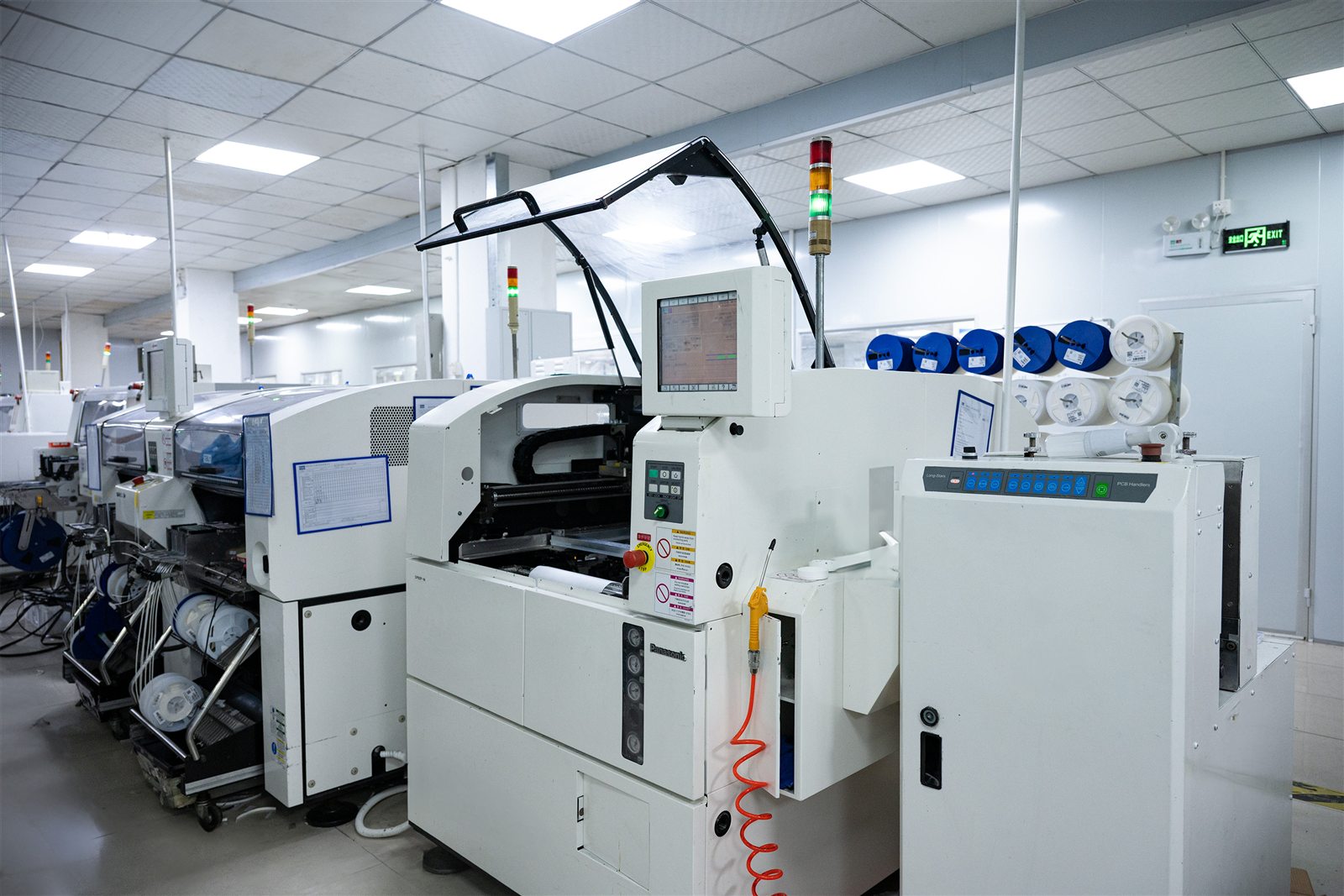
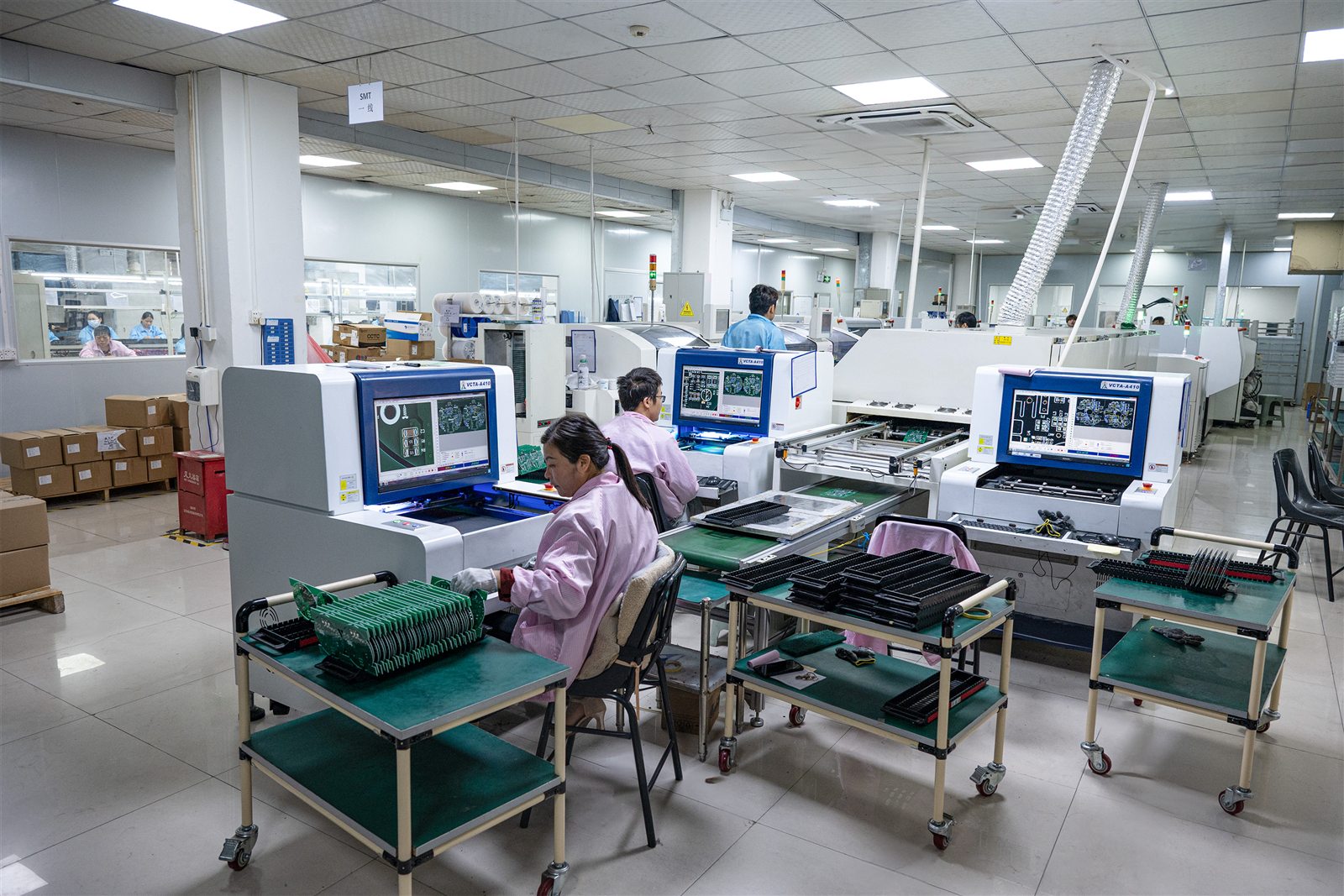
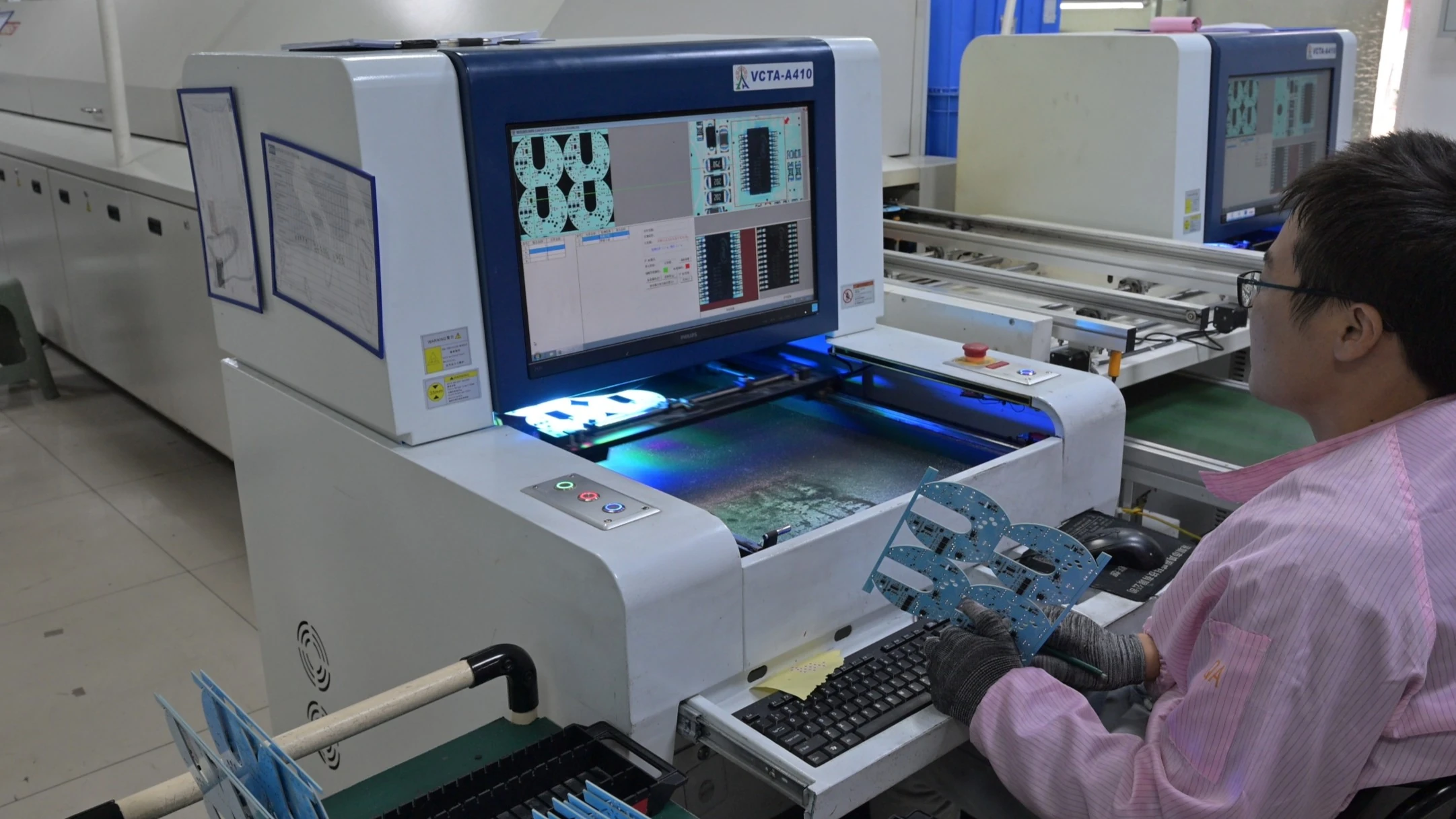
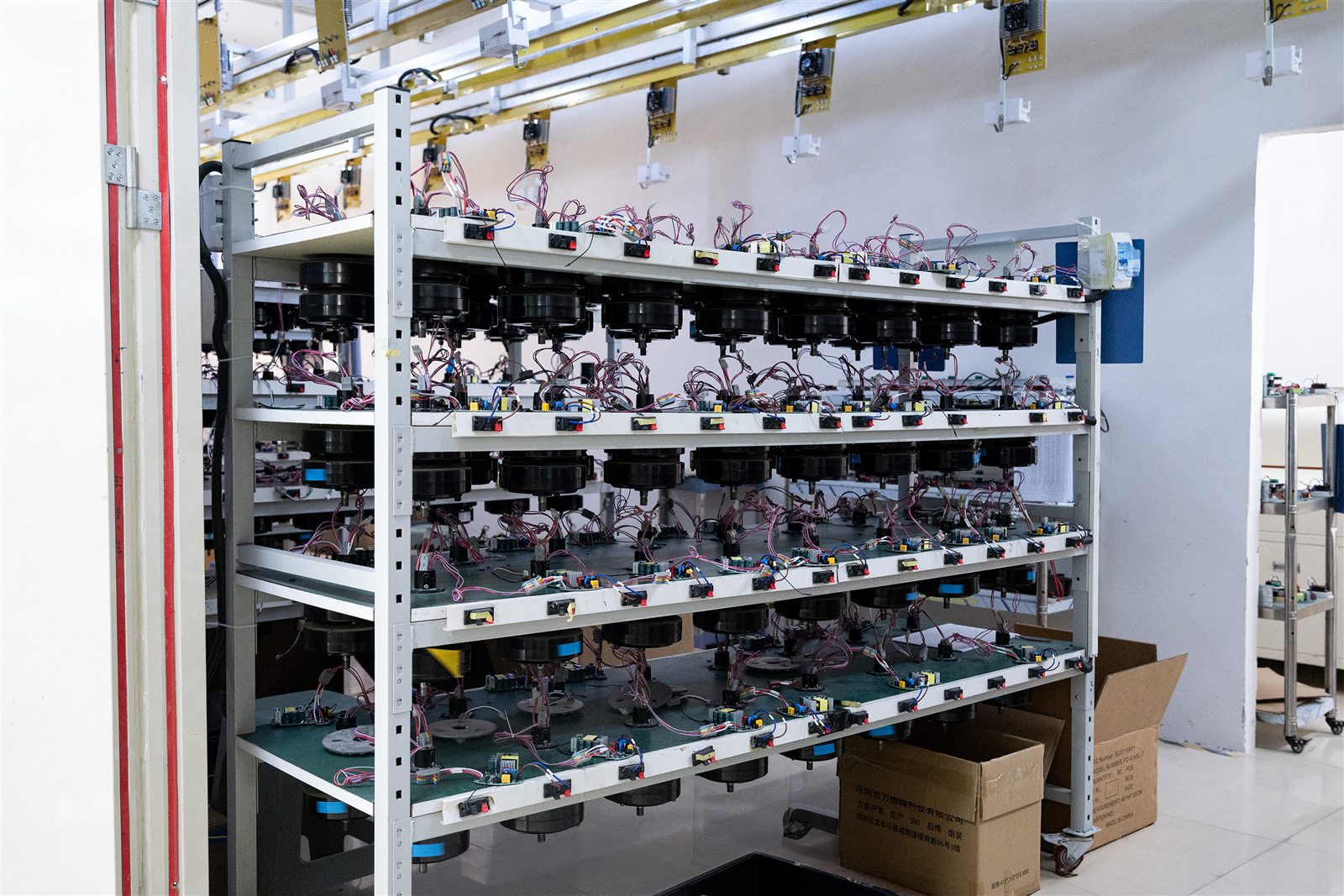
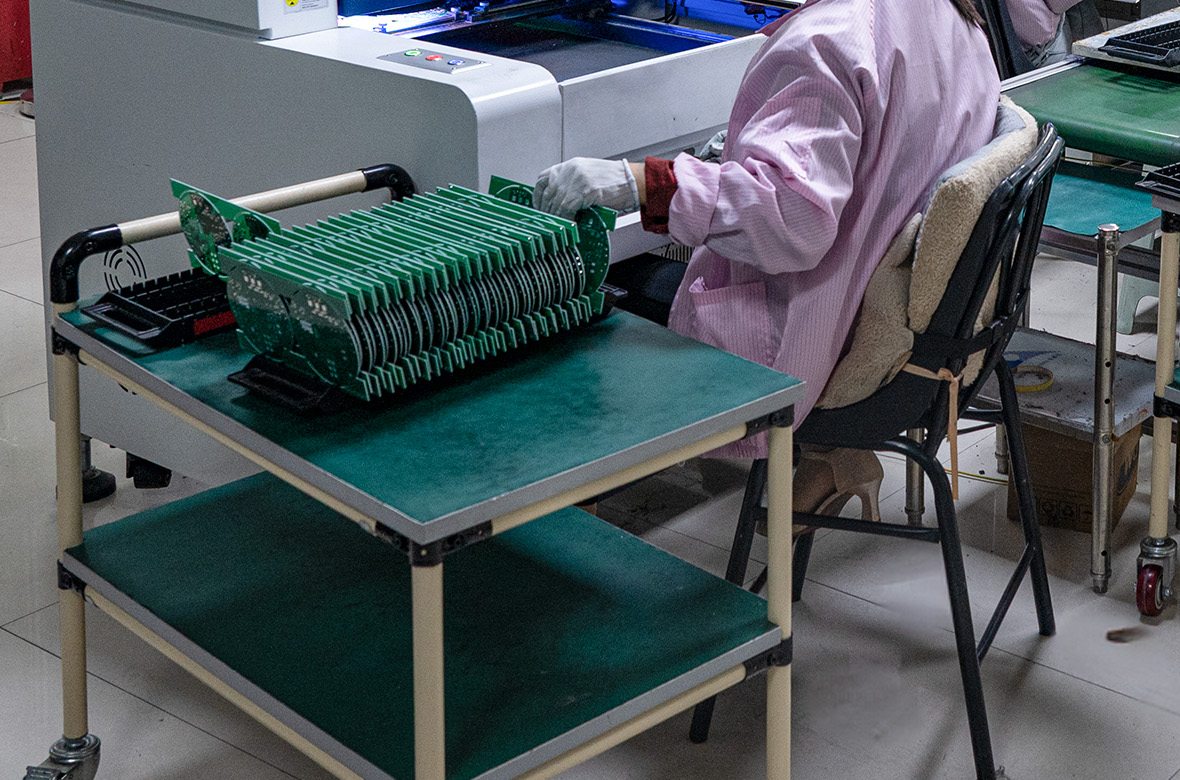
GMIC is the AI hardware division of Gainstrong, a contract manufacturer founded in 2009. Engineering and production are in Shenzhen; the commercial team is in Anaheim, California.

What to Prepare
Enough for a specific answer instead of a generic one. Gaps are fine — they are usually the first thing worth discussing.
- The AI scribe use case and target clinical environment
- Who speaks, how many, and the expected microphone position
- Wearable or stationary; streaming or recording
- Offline requirements and available connectivity
- Your existing app and cloud architecture
- SDK/API requirements and authentication model
- Target geography, pilot quantity, production volume
- Branding, battery expectations, and form factor
Related Guides
Medical Dictation Devices
The pillar guide to dictation hardware for AI scribe platforms.
Read the guideMicrophone for AI Scribe
Speaker distance, single versus array, DSP, and placement.
Read the guideMedical Transcription Equipment
The full equipment landscape, from recorders to room systems.
Compare equipmentDictation Device vs Smartphone
When a phone is enough, and when a device earns its cost.
See the comparisonAI Scribe Hardware OEM
White label, OEM, and ODM paths for building the device itself.
See the OEM pathsFrequently Asked Questions
Purpose-built voice-capture devices for AI scribe platforms — wearable microphones, badges, one-tap recorders — designed for consistent audio, hands-free operation, and firmware-level integration with the customer's software.
Not always. Smartphones work for MVPs and small pilots. Dedicated hardware becomes relevant when workflows need consistent microphone positioning, offline recording, custom firmware, fleet deployment, or branded devices.
Yes. Smartphones are reasonable for software validation and early pilots. Limitations emerge at deployment scale, or when firmware control and hardware standardization matter.
Yes, depending on the platform. Devices can record locally and upload when connectivity returns, with retry logic handled in firmware. The specific behavior is confirmed for the selected platform during technical review.
Yes, depending on platform and connectivity. Wi-Fi streaming enables live transcription, and the architecture should be validated during technical review.
Yes. The device captures and delivers audio via SDK/API to the customer's cloud, speech-to-text, and AI platform. The customer keeps their existing software stack.
Yes. GMIC hardware captures audio. The customer's software performs recognition, processing, and documentation. The hardware layer and the AI layer are separate.
Yes, depending on firmware configuration. Upload endpoints can be configured for a customer cloud or private infrastructure.
Yes. GMIC provides OEM and ODM services including branding, firmware, audio tuning, enclosure, and packaging customization.
No. Compliance depends on the complete system — hardware, firmware, transmission, cloud, software, authentication, policies, and applicable agreements.
Add a Dedicated Hardware Layer to Your AI Scribe Platform
If your AI scribe software is already working but you need more control over real-world voice capture, GMIC can evaluate your recording environment, hardware architecture, audio, firmware, connectivity, SDK/API, and production requirements.