AI Scribe Hardware OEM & ODM
You build the AI software. We build the physical hardware layer.

GMIC works with AI scribe and healthcare software companies that need dedicated voice-capture hardware, firmware customization, audio engineering, SDK/API integration, and production support — from prototype to mass production.
Hardware + PCB Firmware Audio & DSP SDK/API Prototype → Production OEM/ODM Manufacturing + QC
Turn Your AI Scribe Software Into a Physical Product
Most AI scribe platforms start on hardware that was already in the room — a phone in a coat pocket, a laptop on the desk. That is the right way to validate the product, and it stops being the right way once the software works and the constraint moves to how the audio arrives.
At that point the requests are consistent: a hands-free workflow, a microphone that sits in the same place on every encounter, recording that survives a dead zone, device identity, your brand on the hardware, firmware you control, and a fleet that behaves the same way everywhere.
This page is about how that hardware gets built. If you are still deciding whether you need dedicated AI scribe hardware at all, settle that first — the broader category of medical dictation devices covers the landscape it sits in.
Choose the Right Development Path
Three routes, distinguished by how much of the hardware changes. Most programs are best served by the lightest path that meets the requirement.
| Dimension | White label | OEM / platform customization | Full ODM development |
|---|---|---|---|
| Best for | Fastest path to market | An existing platform that needs deeper changes | A fully custom product |
| Hardware changes | Minimal — branding only | Moderate — microphone, buttons, LEDs, enclosure | Full — new PCB, custom architecture |
| Firmware changes | Cloud endpoint and basic configuration | Recording logic, connectivity, OTA | Ground-up firmware |
| Time to pilot | Fastest | Moderate | Longest |
| Engineering depth | Light | Medium | Deep |
| Typical next step | Evaluate an existing platform | Technical review | Requirements workshop |
Scroll the table horizontally to compare →
White label
An existing GMIC platform, branded as yours and pointed at your cloud endpoint. The hardware is already validated, so the work is configuration and packaging rather than development — usually the fastest route to a pilot.
Evaluate existing hardwareOEM / platform customization
Start from a proven platform and change what the workflow requires — microphone placement, button and LED behavior, connectivity, enclosure, recording logic. The base electronics stay, which keeps validation scope contained.
Discuss customizationFull ODM development
A new product: custom PCB, microphone architecture, mechanical design, and firmware written for your workflow. The right path when the form factor or the audio requirement has no equivalent on the shelf.
Start a requirements reviewCustomization Capabilities
Depending on the selected platform and project requirements, the following areas are open for customization.
Microphone & audio
Element selection and topology, placement on the form factor, the analog and digital front end, and a DSP chain tuned as one system.
Firmware
Recording logic, button and LED behavior, local storage, upload and retry, BLE and Wi-Fi behavior, OTA updates, power states, and device authentication.
Hardware
PCB and electronics design, connectivity, onboard storage, battery and power architecture, buttons, and status indicators.
Software integration
SDK and API work against your cloud, speech-to-text backend, AI platform, private server, or companion app — whichever the deployment already uses.
Branding
Device logo and marking, enclosure finish, packaging, and the documentation that ships with the unit.
Mechanical
Enclosure and form factor, wearable structure, and the mounting, clip, or lanyard the device is actually carried on.
Design Hardware Around the Real Recording Environment
Audio hardware cannot be specified from a software document alone. Before an architecture can be chosen, the engineering team needs to know who is speaking, how far they are from the device, what the room is made of, what else is making noise, and whether the clinician is moving.
Those five answers decide the element count, the placement, the DSP chain, and often the form factor itself — and a device that measures well on a bench can behave very differently on a moving clinician. The trade-offs are covered in the guide to choosing a microphone for an AI scribe; the tuning work itself is audio and DSP tuning.

Firmware That Fits Your AI Scribe Workflow
Firmware is where a hardware program either matches the clinical workflow or fights it — and it is the layer with the least existing code to reuse.
- Press-to-record or continuous capture
- Local storage on the device
- Wi-Fi upload to your endpoint
- BLE pairing through a companion app
- Retry logic and offline workflow
- OTA update paths
- Battery and power management
- Device authentication and identity
Depending on the selected platform and project requirements, these behaviors are configured rather than rebuilt. Scope is covered under firmware integration.
Connect Hardware to Your AI Stack
The device is one layer of a system you already own. Everything downstream of the upload stays yours.
-
Doctor / patient
The encounter, in the room where it actually happens.
-
GMIC hardware
Wearable, badge, desktop, or tabletop device carrying your brand.
-
Audio + DSP
Front end and processing chain tuned for the target environment.
-
Firmware
Recording behavior, storage, authentication, and upload logic.
-
Recording or stream
Written locally for later upload, or streamed live.
- Transport
- Wi-Fi
- BLE
- USB
-
Your SDK / API
The endpoint the device authenticates to and uploads through.
-
Your cloud
Your infrastructure or private server, under your controls.
-
Your speech-to-text
Whichever ASR your platform already runs.
-
Your AI scribe
Your models, your prompts, your clinical output format.
-
Your clinical workflow
Delivered into the record system by your platform.
You do not need to replace your existing AI stack. The goal is to integrate the device into the architecture you already run, which is what AI SDK integration covers.
Offline Recording, Upload, or Real-Time Streaming
Four workable architectures. The right one follows from the network the devices will actually live on.
Local recording + batch upload
Audio is written to the device and uploaded when the clinician returns to coverage. Recording never depends on the network being there during the encounter.
Real-time streaming
Audio moves to your cloud during the encounter, so transcription can begin immediately. Requires stable coverage everywhere the device is used.
Offline-first + delayed sync
The device assumes no network, stores everything, and syncs opportunistically. Storage sizing and retry behavior become firmware requirements.
Hybrid
Stream when coverage allows, fall back to local recording when it does not — the most flexible option, and the most firmware logic to specify.
Existing Platform vs Custom
Start with an existing platform
Samples exist, so the audio can be tested in your rooms rather than after a development cycle. A pilot can run on branded units while the product decision is still open, and the findings carry forward if you later move to a custom build.
See the existing AI voice hardware platforms.
Build a custom platform
Worth it when the requirement genuinely exceeds what is on the shelf — an unusual form factor, a microphone geometry no existing device has, a battery target no existing enclosure can hold, or an integration that has to be in the firmware from the start.
That path runs as AI hardware ODM/OEM.
Wearable AI Scribe Hardware
Wearables fit the cases where the clinician's hands are occupied and the location changes constantly — rounds, home visits, outpatient clinics. Worn on the body, the microphone keeps roughly the same distance from the wearer's mouth on every encounter, which matters more for transcription consistency than raw specification.
The constraints are worth naming early: battery life against a full shift, comfort over hours, microphone position relative to clothing, distance to the second speaker, and contact noise from fabric against the enclosure. Design considerations across form factors are covered under AI wearable devices.
Privacy & Security
Hardware alone does not make an AI scribe system HIPAA compliant
Compliance is a property of the whole system — how audio is stored, transmitted, accessed, retained, and disclosed, and the agreements between the parties handling it. A device can support that architecture; it cannot deliver it on its own.
- Where audio is stored on the device, and for how long
- How the device authenticates to your endpoint
- How data is protected in transit
- What happens to recordings after a successful upload
- How a lost or decommissioned device is handled
- Which party is responsible for each step
These are decisions for your security and legal teams, taken against your own deployment. The HIPAA Security Rule is the public reference for the safeguards involved. It is cited here to support the principle, not as a claim that any device is compliant.
Certification Planning
What a device needs depends on its architecture, its wireless technology, the markets it ships to, and its intended use.
For a connected recording device, the scope typically includes some combination of FCC, CE, RoHS, UKCA, TELEC, and ISED, driven mainly by the radio and the destination market. Planning it early matters, because certification scope influences hardware decisions that are expensive to revisit later.
Intended use is a separate question, and one for your regulatory counsel rather than your hardware partner — whether a product is regulated as a medical device depends on what it claims to do. The FDA guidance on medical device determination is the US starting point. GMIC does not provide FDA clearance or approval.
Test planning, documentation, and lab coordination run under hardware certification support.
Development Process
Eleven stages from first conversation to deployed fleet. Duration depends on the path chosen and the certification scope.
-
1
Requirements
Workflow, environment, speakers, connectivity, volume.
-
2
Platform selection
White label, OEM, or full ODM — decided against the requirement.
-
3
Sample evaluation
Real units tested in your rooms, not in a demo.
-
4
Audio evaluation
Recordings run through your own transcription pipeline.
-
5
Firmware & API
Upload, authentication, and endpoints tested against your server.
-
6
Pilot
A limited fleet with real clinicians and real encounters.
-
7
Engineering validation
EVT, DVT, and PVT builds against defined exit criteria.
-
8
Certification
Test planning and lab coordination for the target markets.
-
9
Production
Tooling, line setup, and first mass-production run.
-
10
QC
Inspection, functional test, and burn-in on every batch.
-
11
Deployment
Provisioning, packaging, and shipment to your sites.
Stages seven through nine are described in detail under EVT, DVT, and PVT validation and the wider AI hardware development process.Book a call
Manufacturing & QC
GMIC is the AI hardware division of Gainstrong, a contract manufacturer founded in 2009. Engineering and production are in Shenzhen; the commercial team is in Anaheim, California.
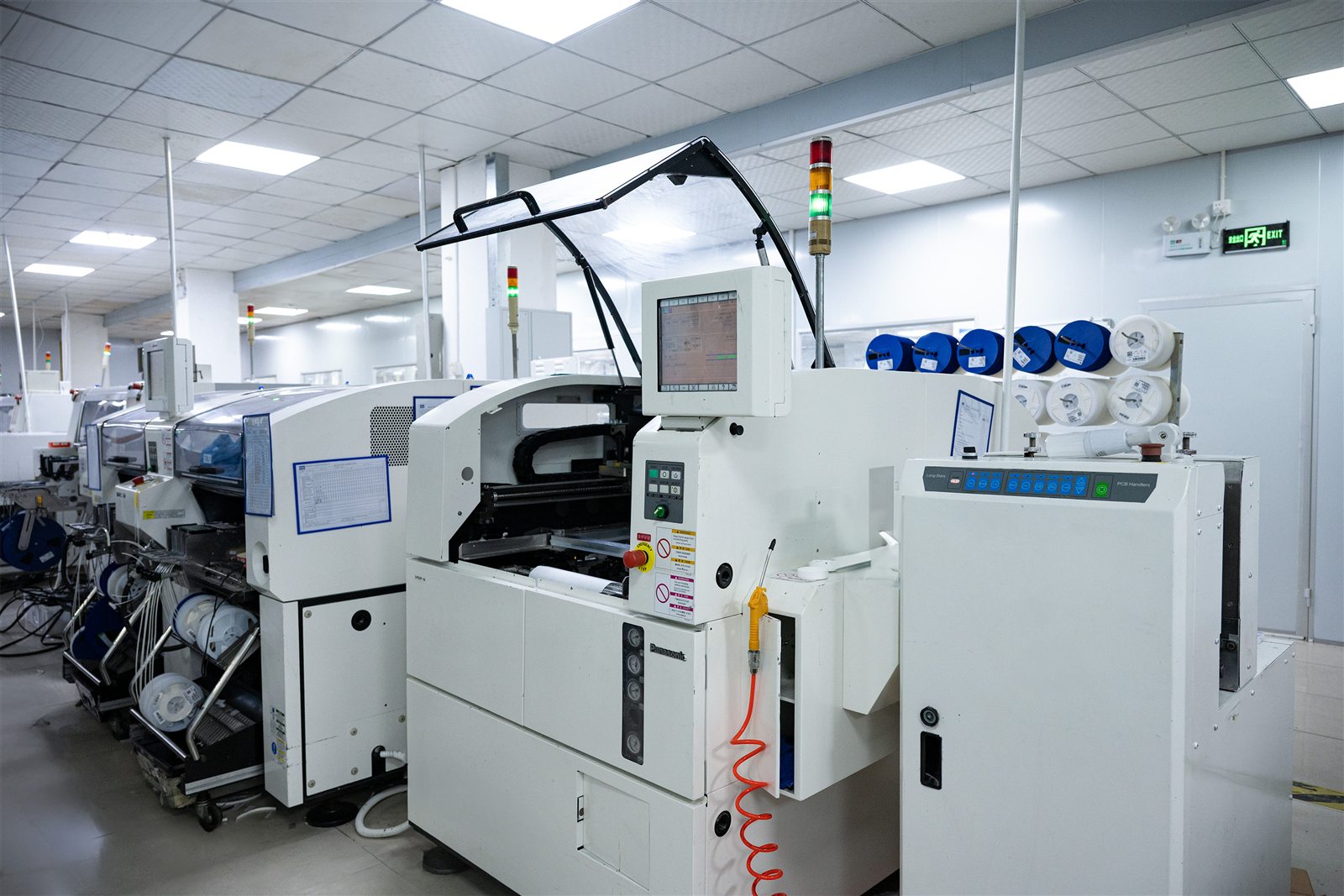
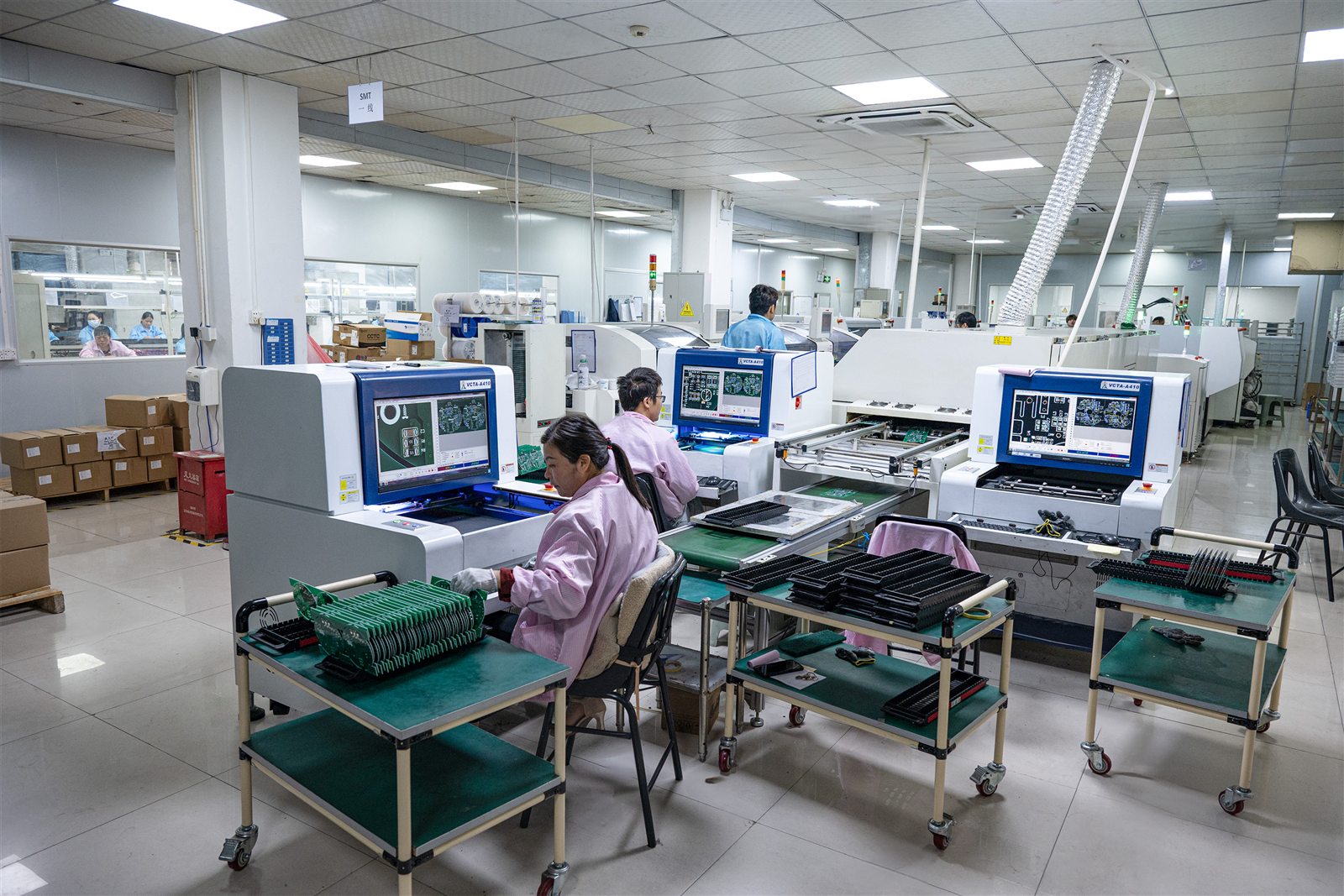
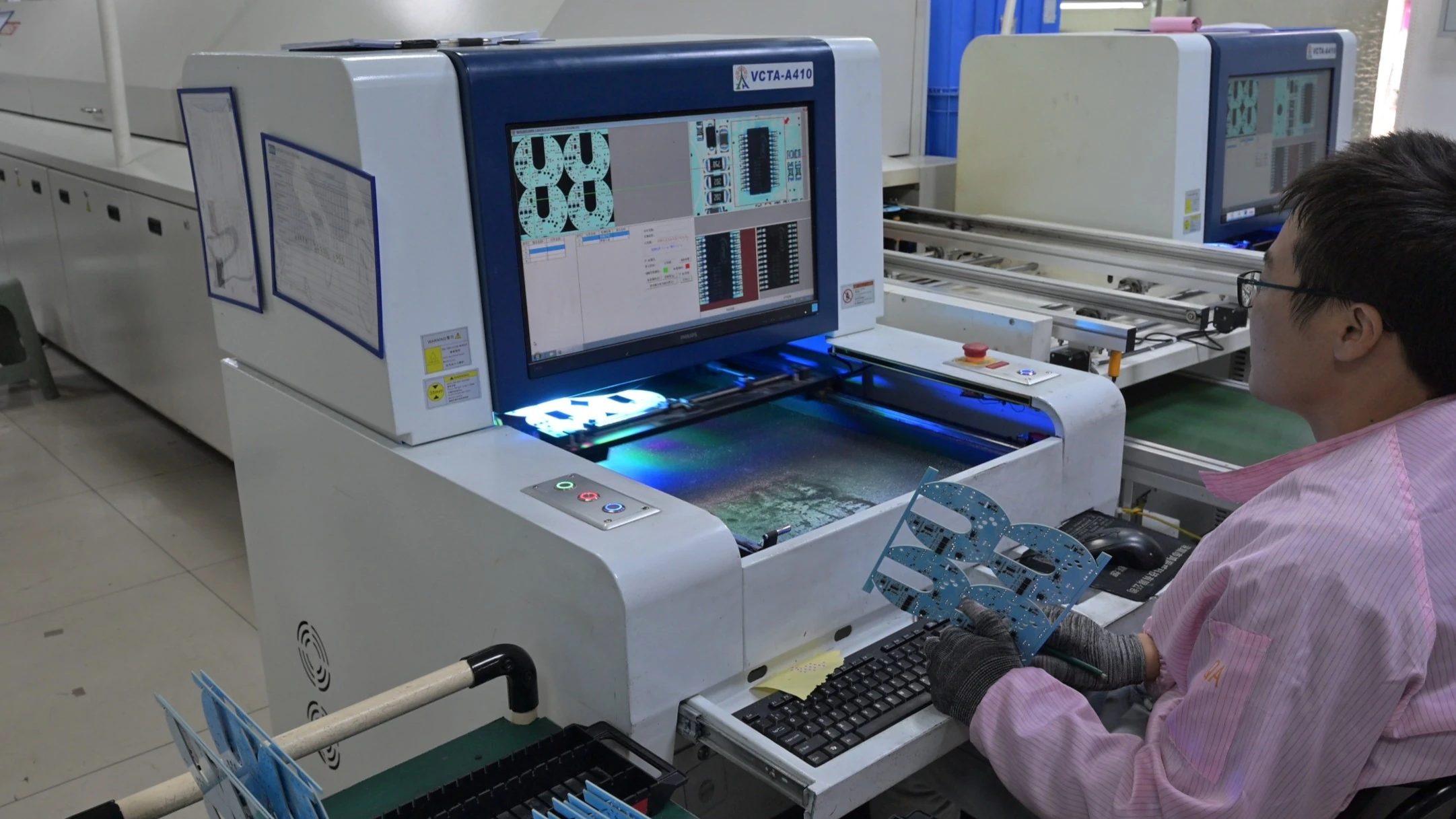
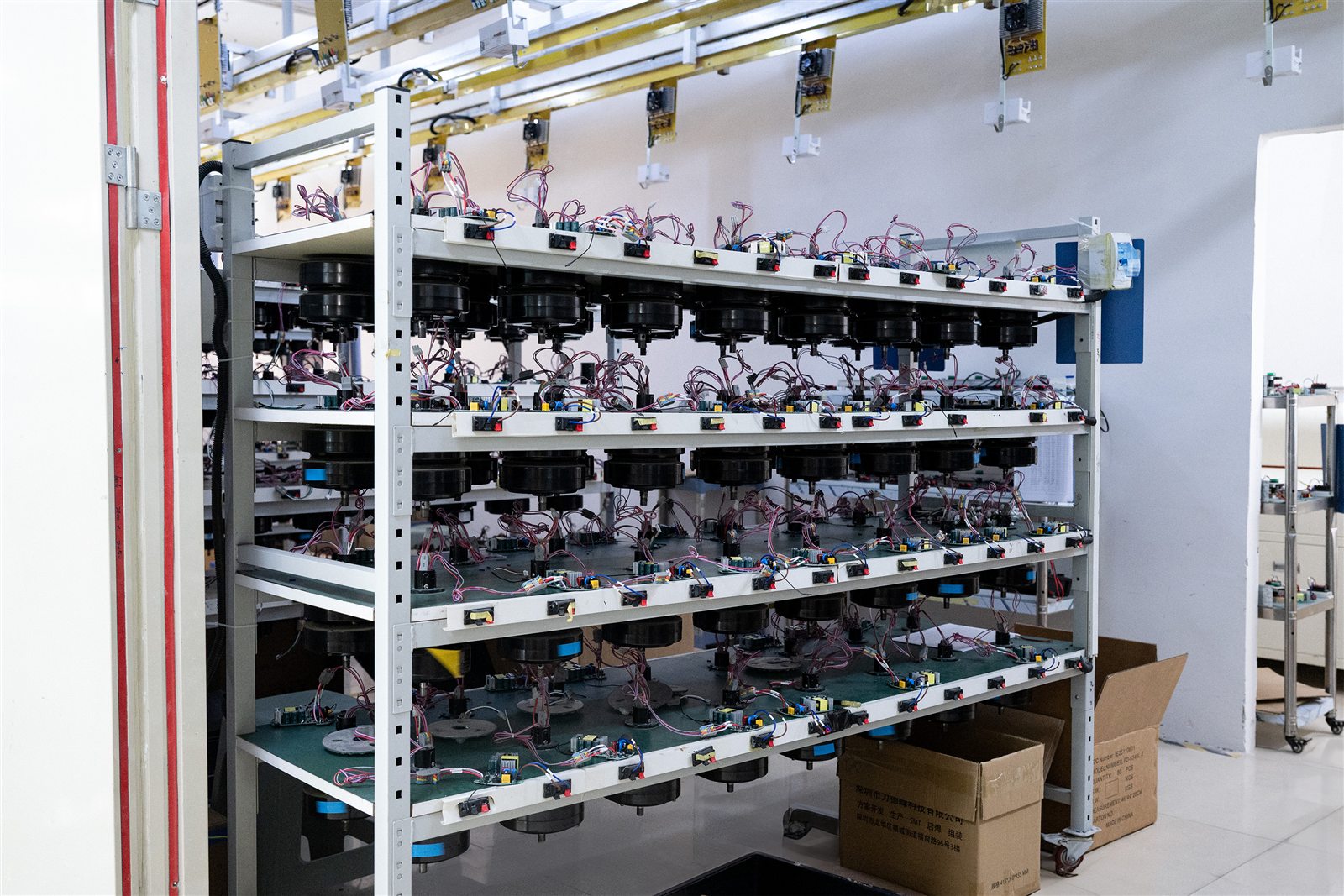

Supplier detail, capacity, and quality systems are covered under AI hardware ODM/OEM manufacturing.
What to Send Us
Enough to give you a real answer instead of a generic one. Partial information is fine.
- Your current AI scribe product and software architecture
- Target recording workflow and who uses the device
- Recording environment and number of speakers
- Microphone position and desired form factor
- Wearable or stationary
- Local recording, streaming, or both
- Connectivity and SDK/API requirements
- Cloud architecture and security requirements
- Target geography and certifications needed
- Pilot quantity and expected production volume
- Branding requirements and desired timing
Is GMIC the Right Partner?
Worth checking before either side spends time on a call.
Good fit
- You already have AI scribe or transcription software
- You need a dedicated hardware layer under it
- You need firmware or device integration work
- You are evaluating a pilot or a product rollout
- You need OEM, ODM, or white-label manufacturing
Less likely fit
- You want a single recorder for personal use
- You are looking for transcription software rather than hardware
- You need a consumer microphone available at retail
- You do not need hardware development or manufacturing
Frequently Asked Questions
A manufacturer that builds voice-capture hardware for AI scribe software companies — under the customer's brand, and integrated with the customer's platform.
Yes. GMIC provides OEM and ODM services to build dedicated hardware that connects to your existing AI stack through SDK/API integration. Your speech-to-text, models, and clinical output stay where they are.
Yes. Existing GMIC platforms can be branded with a custom logo, packaging, and documentation, with firmware configured for your cloud endpoint.
OEM typically involves customizing an existing hardware platform. ODM involves deeper custom development — a new PCB, a custom microphone architecture, ground-up firmware. GMIC supports both paths.
Yes, depending on the platform and project scope. Firmware can be configured to upload audio or session data to your cloud endpoint through your SDK or API.
Yes. GMIC hardware captures and delivers audio. Your software performs speech recognition, AI processing, and clinical documentation.
Yes. Recording logic, connectivity, upload behavior, buttons, LEDs, OTA updates, power management, and device authentication can be configured based on project requirements.
MOQ depends on the level of customization, the hardware architecture, tooling, and expected volume. GMIC reviews the project before providing a specific estimate.
Timeline depends on customization depth — white label is fastest, full ODM is longest. GMIC provides a project-specific timeline after a requirements review.
Yes. GMIC supports the full path from sample evaluation through pilot, engineering validation (EVT/DVT/PVT), certification planning, and mass production.
Related Resources
Dedicated AI Scribe Hardware
When purpose-built capture hardware becomes worth the investment for a scribe platform.
Medical Dictation Devices
The pillar guide to dictation hardware for AI scribe platforms — device categories and integration architecture.
Read the guideMicrophone for AI Scribe
How to choose the microphone architecture — speaker distance, single versus array, DSP, and placement.
Read the guideAI Hardware ODM/OEM
GMIC's wider ODM and OEM manufacturing service across voice and edge AI hardware programs.
Explore ODM/OEMBuild the Hardware Layer for Your AI Scribe
Already have an AI scribe, medical transcription, or clinical documentation platform? Send GMIC your workflow, software architecture, hardware requirements, and expected deployment volume. We can evaluate whether an existing hardware platform, OEM customization, or deeper ODM development is the right starting point.