
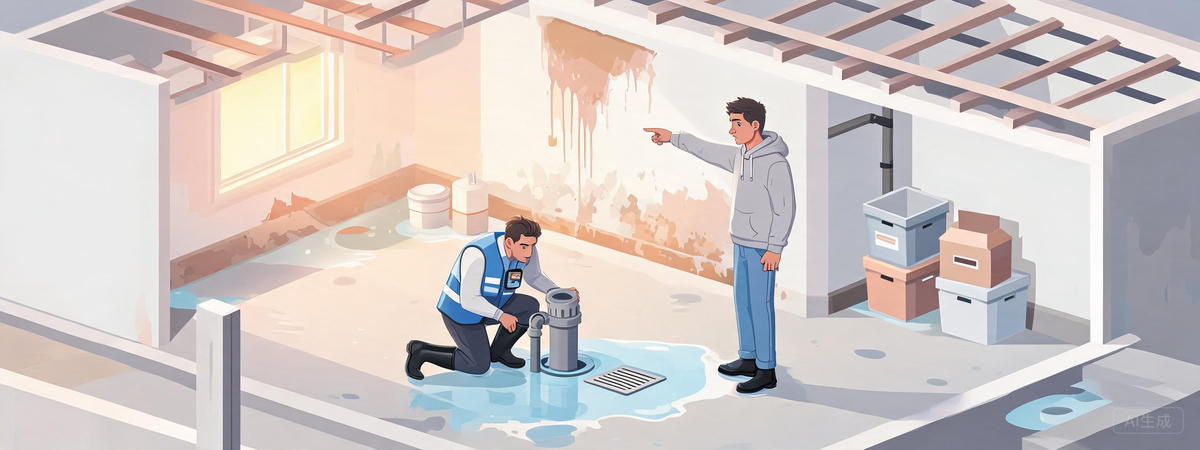
It is 6:12 a.m. after a night of rain, and a homeowner is standing in ankle-deep basement water trying to explain the smell, the breaker panel, the boxes floating against the wall, and the sound the sump pump made before it quit.
Your dispatcher is still opening yesterday’s notes. Your field crew is loading dehumidifiers. Across town, another restoration company has an AI receptionist responding in two seconds, asking the right questions, collecting photos, confirming the address, and telling the customer what happens next.
The race is no longer polite
The Yahoo Finance headline about AutomateNexus Voice launching an AI-powered virtual receptionist is not just another vendor announcement. It is a signal that small businesses are being pulled into a new operating tempo.
For years, local service businesses competed on trust, skill, price, and proximity. Those still matter. But in the first minute, the customer does not know your craftsmanship yet.
“In urgent service work, the first business to create calm often becomes the business that gets the job.”
Look at restoration, garage doors, HVAC, plumbing, towing, pest control. The customer is not leisurely shopping. They are standing next to a broken thing and trying to hand the problem to someone competent.
The old workflow assumes the office will catch up when the current job slows down. The new workflow assumes your competitor is already in the conversation.
- The customer describes the problem once: the breaker tripped, the ceiling stain grew overnight, the furnace clicked three times and stopped.
- The fastest company structures that information: location, urgency, equipment, photos, access, expectations.
- The slower company starts cold: asking the same questions later, after the customer already feels handled somewhere else.
This is not a reception problem. It is a memory problem under time pressure.
The first-responder advantage is real
Harvard Business Review studied 2,241 U.S. companies and found that companies responding within an hour were nearly seven times as likely to qualify a lead as companies responding an hour later, and more than 60 times as likely as companies waiting 24 hours or longer.
A well-known Lead Response Management study by Dr. James Oldroyd found the odds of qualifying a web inquiry were 21 times higher when contact happened within five minutes compared with 30 minutes. The exact channel changes. The human behavior does not.
Speed feels unfair because it is unfair. The first competent response shapes the customer’s definition of competence.
But here is where many owners get the wrong lesson from the AI receptionist trend. They think the game is simply answering faster. It is not.
Pick the last urgent customer call. How long until your team had the full context they needed to act on it?
Not just the name and number. The customer’s words, the symptoms, the urgency, the access notes, the promise made, and what your tech should know before stepping out of the truck.
AI response speed changes the math
Two hours used to be normal. Finish the job, wipe your hands, check the messages, call people back, reconstruct the story, create the work order, hope the details survived.
Now two hours is an eternity. An AI receptionist can respond immediately, ask consistent intake questions, and hand the customer a clear next step while your crew is still at the supply house.
- Before AI: speed depended on who was free, who remembered the script, and who could type fast enough.
- With basic AI: the first response happens instantly, but the business can still end up with thin notes.
- With Enterprise Memory: the conversation becomes usable company knowledge from the first second.
That last point is the difference between an AI tool and infrastructure.
“Knowledge has a half-life, and that half-life is shortest when your hands are dirty.”
Telalive was built for that gap. Every customer call becomes searchable customer memory and structured work-order detail, so the next person does not start with a blank screen and a vague line that says water issue or unit not working.
The value is what they said in their words, searchable next visit. The smell near the furnace. The gate code that only works if you press pound twice. The customer’s warning that the dog bolts when the side door opens.
The second race happens after the first response
Most AI receptionist conversations stop at scheduling. That is useful. It is also the shallow end of the pool.
The deeper race is whether your company carries context from the first conversation into the field, from the field back to the office, and from today into the next visit.
- The return customer: your tech can almost remember them, but not the detail that made last time complicated.
- The repeated diagnosis: you paid for it once in the field, then paid for it again because the work order was vague.
- The shift handoff: everyone was busy, nobody was careless, and still the context died.
This is why voice capture cannot stop at the front desk. MIC05 and MIC06 capture in-bay, in-store, and field conversations while the work is happening, not later when the tech is standing at a keyboard trying to compress a real diagnosis into three generic words.
There are 11 minutes that evaporate between the wrench and the keyboard. In those 11 minutes, the technician remembers the sound, the smell, the customer’s exact phrasing, the pattern the 30-year veteran recognized immediately. Then the next job interrupts.
The front desk is becoming a memory layer
AutomateNexus Voice and the wave of AI reception products show where the market is moving. Small businesses are realizing that instant response is no longer a luxury reserved for national chains.
But the winner will not be the company with the flashiest bot voice. The winner will be the company whose conversations become action faster: cleaner dispatch, sharper work orders, better handoffs, fewer blank stares when the same customer calls again.
Every business runs on conversations. The call from the homeowner. The quick exchange at the counter. The diagnosis between the wrench and the work order. The senior tech saying, I have heard that sound before.
But when hands need to type, the thought has already collapsed. It becomes checked unit, customer says leak, follow up Monday.
That is not how real work happens. Real work happens in motion, under pressure, with noise in the background and a customer looking at you for certainty.
The first minute is now the front desk. The next advantage is making sure that first minute, and every minute after it, becomes company memory before it disappears.
“I’m Trigg — CEO at GMIC AI. We build AI solutions that actually ship, from phone agents to custom hardware.”
What Can GMIC AI Do for You?
From AI phone agents to custom hardware — we’ve got you covered.