

So I was on the phone with an auto shop owner in Mesa last Thursday, and he said something I can’t get out of my head: “I don’t need another gadget that records everything. I need something that helps me remember the right thing without creating a future headache.”
And… yeah. That’s the whole market in one sentence. The next three years in AI recording devices won’t be won by whoever makes the tiniest wearable or the loudest demo video. It’ll be won by whoever can prove the boundaries. Consent. Minimal capture. Deletion. Audit trail. Not as legal decoration—more like the load-bearing beams of the house. That’s how voice AI customer data becomes usable instead of risky.
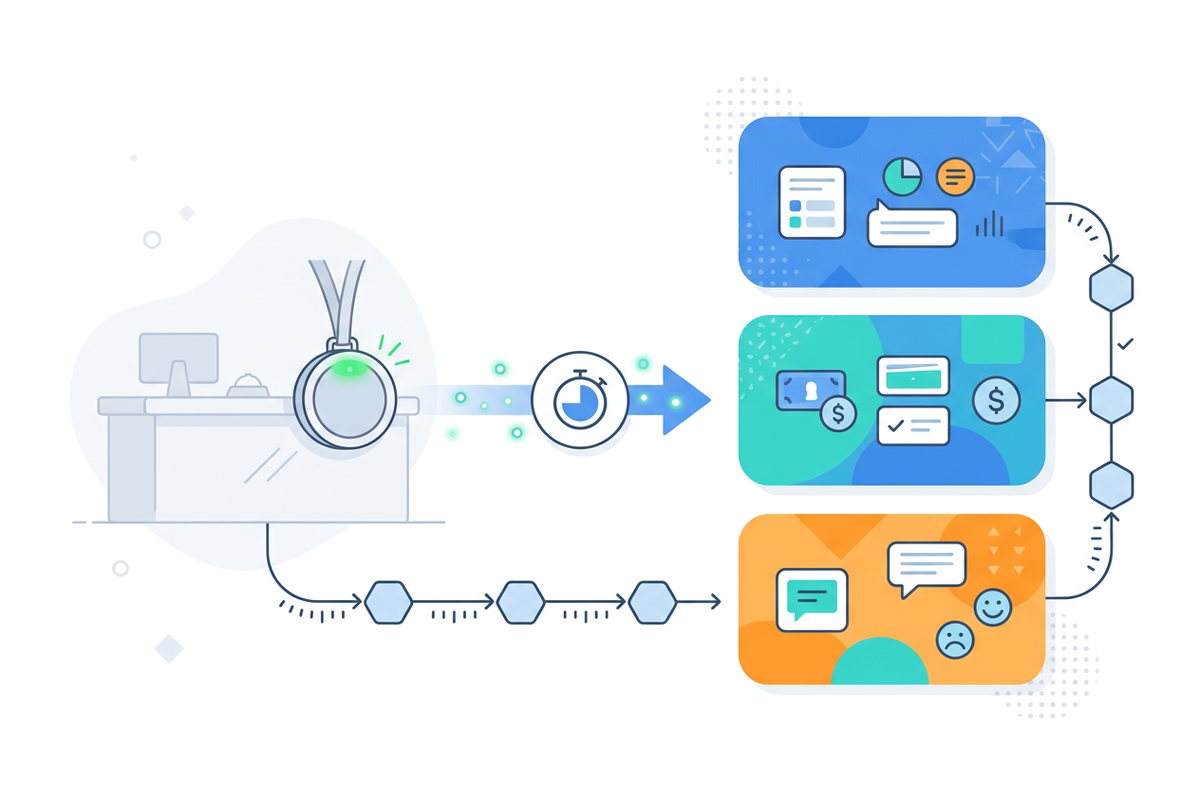
We learned this the hard way building around MIC05 and Telalive. Early on, we had a cringe-worthy internal prototype where every in-store conversation got pushed into one long running summary thread. In theory, that sounded useful. In practice, a clinic manager in Irvine looked at the feed and said, “I can’t tell what’s operational, what’s sensitive, and what should never have been retained this long.” She was right. The failure wasn’t the speech model. The failure was that we treated memory like a junk drawer.
So we changed it. MIC05 voice capture stopped behaving like “save first, sort later.” We switched to mode-based capture, visible prompts, short-lived raw audio in higher-risk scenarios, and event summaries by default. Three buckets. Follow-up needed. Customer preference. Needs human review. That’s it. Ugly? Maybe. Much better.
6
questions that decide whether memory is useful or dangerous
Six questions that protect voice AI customer data
If I were writing the constitution for a real-world voice memory system, I’d start with six questions: what gets captured, what never should, when people are notified, where data sits, how long it stays, and who can erase or inspect the trail later. That’s not abstract. GDPR’s privacy-by-design and storage-limitation logic points in that direction, and the FTC has already sent a very clear market signal that voice retention promises matter a lot when companies break them.
- Record what: the task-relevant slice, not the whole day.
- Notify when: at capture time, not buried in a settings page.
- Store where: as little raw audio as the use case allows.
- Keep how long: with an expiration date, not digital forever.
- Show to whom: inherited from existing team permissions.
- Delete how: by conversation, by person, with proof.
Pull up your current workflow right now.
Can you answer these four things in under two minutes: where consent is shown, how long audio stays, who can see summaries, and how one conversation gets deleted? If not, you don’t have a memory system yet—you have a liability pile. If you want a reference point, start here: see how we map bounded memory into Telalive workflows.
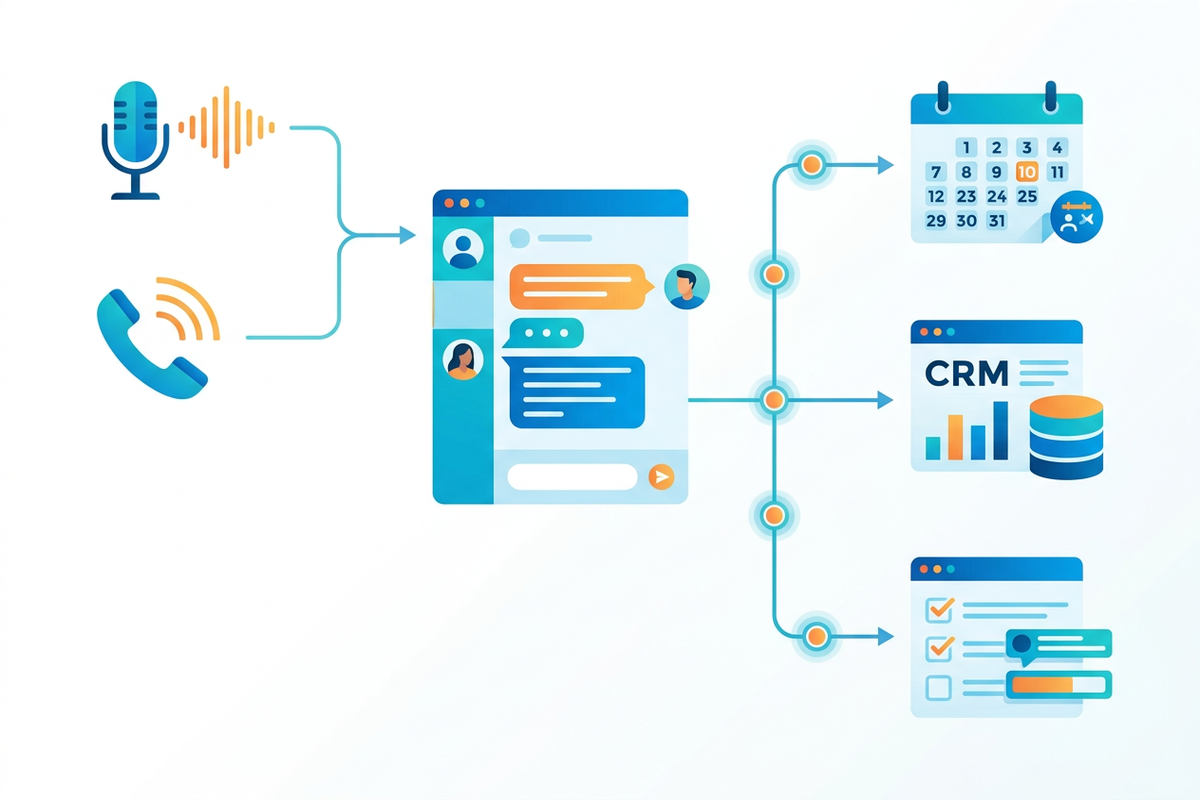
MIC05 voice capture and the four-layer stack
A better way to think about the stack is four layers. Device. Memory. IM. Execution. The device layer—MIC05 in our case—handles mode switching and promptable consent. The memory layer keeps summaries and retention rules. The IM layer is where people actually live now, usually WhatsApp or Telegram, not some shiny new app nobody opens after week two. And the execution layer is where Telalive AI phone agent or an automation tool turns a summary into a callback, appointment, quote, or task—with a record of who triggered what.
Why voice AI for SMB needs bounded memory
Maria runs a six-bay repair shop in Phoenix. A customer argues that nobody told him the brake job excluded rotor replacement. With the sloppy version of this market, you’re stuck in a feelings contest. With bounded memory, MIC05 captured the service-desk conversation in the shop’s “estimate review” mode, the system kept the original audio with timestamps for a short review window, and Telalive pushed an event summary into the manager’s Telegram thread: estimate explained, exclusion mentioned, customer asked for cheapest safe option. Human review happened before anything was written into the formal record. That’s the part people miss—transcripts are a sketch, not the courtroom photograph. OpenAI has said as much in its own realtime guidance: transcription can be a rough guide, not final truth.
AI customer service for small business works where people already are
And I didn’t plan to write about this, but the IM piece matters more than most hardware founders want to admit. OpenClaw, Claude inside chat tools, MCP—all of that points the same direction. AI doesn’t win by dragging humans into a new room. It wins by showing up where the conversation already is. A recording device without an IM handoff is like a security camera that stores footage in a locked basement. Useful, technically. Dead, operationally.
“Privacy isn’t the tax you pay for AI memory. It’s the constitution that decides whether memory can live among humans at all.”
What I keep coming back to is this: cheap hardware gets copied. Trust doesn’t. The moat isn’t “we record more.” It’s “we can show, conversation by conversation, what was captured, what was reduced to summary, who saw it, what action fired, and how it can be revoked.” That’s why Telalive plus MIC05 is interesting to me—not because it’s magic, but because online calls and offline conversations can flow into the same bounded system: hear it, reduce it, deliver it in IM, act on it, leave receipts. That’s the difference between raw storage and voice AI customer data with boundaries.
I’m Trigg — I help SMB teams set up voice systems that keep the useful context and cut the dangerous clutter. I’ll show you how MIC05 and Telalive can handle consent prompts, minimal summaries, IM delivery, and an audit trail without turning your staff into compliance clerks.
See a bounded memory workflow on your own use case
Bring one front-desk scenario or field-service call flow. We’ll map what gets captured, what expires, what reaches WhatsApp or Telegram, and what stays review-only.
Book the 15-minute walkthrough →
Starting at $29.9/month. No contracts.