
The debate around live AI video generation is useful for one reason: it exposes how much of the AI market is still driven by demos, not business physics.
Researchers are asking the right question. Is this a real technical category, or just a marketing wrapper for “fast enough” generation? That distinction matters. Real-time systems are different. They have hard latency constraints, continuous inputs, failure modes that compound by the second, and almost no room for cleanup after the fact.
But here’s the bigger point: most businesses do not wake up needing live-generated video. They wake up needing to remember what just happened.
A customer called with a pricing objection. A walk-in asked about a product variant that is always out of stock. A supplier hinted that next month’s shipment will slip. A technician promised a return visit on Thursday. A manager heard a complaint in the hallway that never made it into any system. That is the operating reality of business. And almost none of it gets captured.
So while the market argues about whether video is truly live, the more important question is simpler: what percentage of real business interactions become usable company memory?
For most companies, the answer is embarrassingly low.
Fast output is not the same as durable intelligence
This is where the industry keeps confusing performance with value.
A model that can render frames in milliseconds is impressive. But if the business still loses the substance of customer conversations, employee observations, field updates, and verbal commitments, then nothing structural has changed. You have faster output sitting on top of missing input.
Look, AI has been packaged for enterprises mostly as an interface layer: chatbot, copilot, assistant, agent. Useful in some cases. But these products often assume the important data already exists in clean systems. It usually doesn’t. The CRM is partial. The ticketing system is delayed. Notes are inconsistent. And the highest-value information never gets typed in at all.
McKinsey has estimated that employees spend nearly 20% of the workweek searching for internal information or tracking down colleagues who may know it. That is not just a workflow problem. It is a memory failure. And in customer-facing businesses, the gap is worse because the missing information often lives in speech, not documents.
If it was said but never captured, the company cannot learn from it, automate from it, or monetize it.
The next AI category is not another copilot
Here is the contrarian take: the next important AI category is not a better assistant. It is memory infrastructure.
Not software that waits for a user to ask a question. Infrastructure that records the business as it actually operates. Calls. Counter conversations. Team huddles. Service visits. Vendor negotiations. Meeting rooms. The spoken layer of the company.
That is where most operational truth lives.
And yes, this is harder than shipping another chat interface. Speech is messy. Real environments are noisy. People interrupt each other. Context spans days or months. But that is exactly why this layer matters. The hard part is where the moat is.
OpenAI reportedly crossed $2 billion in annualized revenue in 2024. Nvidia built one of the most valuable businesses in history by powering model training and inference. Those are massive shifts. But neither fact changes the first-principles reality for operators: a model is only as useful as the business memory it can access.
And the company that captures the memory owns the compounding advantage.
Who captures the data will decide who wins
The AI industry talks constantly about model quality. I think the more important battle is who captures the raw, high-frequency, real-world data.
Not synthetic benchmarks. Not polished knowledge bases. The actual stream of business interactions.
Why? Because once you capture conversations reliably, you can structure them into assets: customer profiles, follow-ups, objections, demand signals, training material, compliance records, sales content, and operational alerts. One conversation becomes ten downstream actions. Now AI is not a toy. It is execution infrastructure.
This is why I’m skeptical when people frame the market as model wars or app wars. The deeper war is memory capture. The company with complete recall has a permanent advantage over the company with fragmented recall, even if both use similar models.
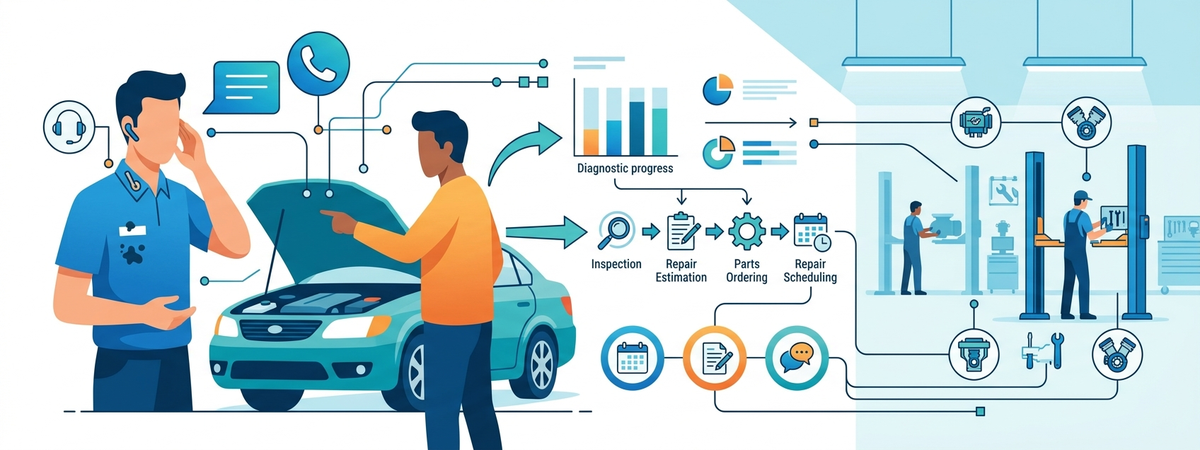
Think about a dental group, an auto repair chain, or a senior care operator. Their edge is not generated video. Their edge is knowing every patient concern, every deferred service, every family question, every recurring complaint, every promise made by staff, every signal that predicts churn or upsell. Most of that is spoken. Most of it disappears.
That is a trillion-dollar blind spot hiding in plain sight.
Enterprise Memory turns speech into execution
This is the thesis behind what we build at GMIC AI.
We are not trying to add one more AI tool to a crowded stack. We are building the Enterprise Memory System: the layer that captures business conversations across channels and turns them into structured, executable assets.
Telalive handles the phone layer. Every inbound call becomes more than a momentary interaction. It becomes memory: who called, what they asked, what they cared about, what follow-up should happen next, what content can be generated from the demand patterns inside those calls.
Then there is the offline world, where most software still goes blind. In-store conversations. Field visits. On-site discussions. Team coordination. That is why we built MIC05 for wearable voice capture and MIC06 for meetings and conference environments. Different surfaces, same principle: if the business said it, the business should be able to remember it.
But memory alone is not enough. Memory has to become action. Follow-up messages. CRM updates. Customer segmentation. Training insight. Marketing content. Management visibility. Revenue recovery. Otherwise it is just storage with better branding.
The point is not to transcribe the world. The point is to make spoken business intelligence executable.
Perfect recall will become a basic expectation
I think we are heading toward a simple future: every serious business will expect perfect recall.
Not because it sounds futuristic. Because operating without it will feel primitive.
Imagine asking: What objections did customers mention most this week? Which supplier conversations signaled risk before delays hit? Which locations are hearing the same complaint in person and by phone? Which verbal promises were made but never completed? Which frontline phrases convert best in real interactions, not scripted campaigns?
Today, most companies answer those questions with anecdotes. Tomorrow, they will answer with memory.
And once that happens, the center of gravity in enterprise AI shifts. Away from clever interfaces. Toward the systems that capture reality at the source.
So yes, keep debating whether live AI video generation is a meaningful technical category. It is a fair question. But for businesses trying to grow, the more urgent category is the one that captures what their people and customers are already saying every day.
Businesses do not lack AI. They lack memory.
If you want to see what Enterprise Memory looks like in practice, visit telalive.us or hearit.ai.