

Most companies don’t have an enterprise AI solutions problem first. They have a visibility problem.
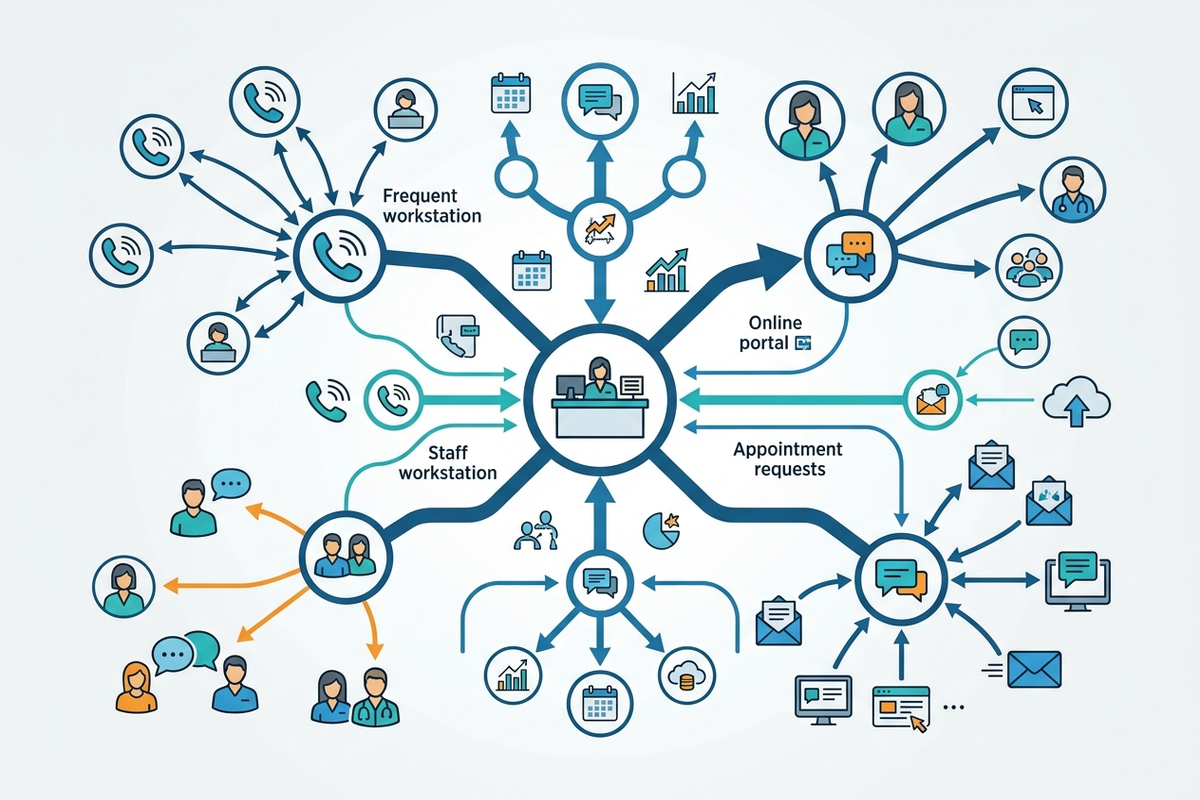
Picture a busy clinic front desk on a Monday morning. Phones are ringing, a patient asks about rescheduling in person, someone sends a WhatsApp message about insurance, and a follow-up request lands in email. By noon, half the work happened in conversation, not in software. The charting system only sees the part someone had time to type.
I’ve seen the same thing in restaurants, auto shops, and field service teams. And I’ll be honest: we got this wrong early on. We assumed if we captured calls and pushed neat summaries into a dashboard, owners would finally have clarity. They didn’t.
What failed? The summaries were too polished and too detached from the mess of real work. In one early setup, we grouped conversations into a long list of tags because, on paper, that looked smart. Staff ignored half of them. During a rush, nobody is tapping through a taxonomy. We found out the hard way when follow-up notes stopped matching what customers actually asked for, and the owner basically said, “This looks nice, but it doesn’t help me call people back.” Fair. We cut it down to a few required labels and one catch-all that flagged a human review. Ugly fix. Better result.
The Business Already Has a Memory Problem
That’s the real issue here. Most organizations run on fragmented signals: phone calls, hallway conversations, texts, voice notes, emails, comments, handoffs. Those fragments are the business. But they’re scattered like receipts in a glove box.
Your CRM shows what got entered. Your ERP shows what got processed. Neither one shows the hesitation in a customer’s voice before they cancel, or the repeated question your staff keeps answering ten times a day, or the quote request that died because nobody wrote down the callback number.
- Recorded operations: what made it into a system.
- Actual operations: what people said, asked, promised, forgot, and fixed on the fly.
AI can’t act on what it can’t see. That’s not a model limitation. That’s an input limitation.
Here’s what I’d tell you if we were having coffee
Pull up your phone logs right now. Then look at your notes, CRM, or ticketing system. How many calls from the last week don’t have a clear follow-up trail? Try tracking your missed calls for one week — the number might surprise you.
What an Enterprise Memory Layer Means for Enterprise AI Solutions
I don’t mean “memory” as a fancy archive. I mean a living record of how work really moves.
Imagine a small auto shop. A customer calls about brake noise. Later, they stop by. A technician speaks with them in the lot. Then the estimate gets texted. Then the customer asks one more question by phone before approving the job. If those moments stay disconnected, the business keeps starting from zero. If they’re tied together, the shop has continuity. That’s memory.

- It starts with real touchpoints: calls, in-person talk, messages, email, web inquiries.
- It keeps updating: not a snapshot, but an ongoing record.
- It keeps context intact: not just raw transcripts, but who asked what, what happened next, and where a human still needs to step in.
This is why the combination of online voice capture and offline voice capture matters so much. A phone agent like Telalive can catch the inbound call, summarize it, and turn it into tasks. A wearable device like MIC05 can capture what happens at the counter or in the field, where a surprising amount of real decision-making still lives. Put those together and you stop treating the business like a set of disconnected apps.
“The ancient problem of management was always the same: how do you know what is happening when you are not there? AI doesn’t erase that problem. It just makes the blind spots more expensive.”
An AI Implementation Guide: Don’t Rebuild the Company From Scratch
This is where I have an opinion some people won’t like: most “AI-first redesign” talk is nonsense for operating businesses. Not because ambition is bad. Because reality is sticky.
People don’t suddenly change how they answer customers because a consultant drew a cleaner diagram. They change when the new system catches missed work, reduces repeat questions, and doesn’t make the lunch rush worse.
So the order matters. First, capture what already happens. Then spot repeated delays, dropped handoffs, and weird exceptions. Then fix one narrow area. Then let AI handle the parts with clear boundaries.
I didn’t plan to write about this, but ownership matters more than most teams admit. Once your conversations become structured memory, you’ve built something valuable and portable. If that memory sits entirely inside someone else’s black box, you’re renting your own operational brain.

Why Enterprise AI Solutions Matter Even More for SMBs
Small businesses actually have an advantage here. They don’t have perfect process maps. Good. Neither does real life.
A restaurant owner can hear in two days whether callers keep asking about catering. A clinic can notice by Friday that reschedule requests spike after a certain reminder goes out. A field team can compare what customers say on the phone with what they say on site. Fast feedback beats giant software projects.
The future won’t belong to the company with the flashiest model. It’ll belong to the company that bothered to capture its own reality clearly enough for AI automation for business to work with it.
“I’m Trigg — CEO at GMIC AI. I spend my time helping teams connect messy real-world conversations to systems that can actually do something useful with them.”
If you’re working on this problem, here are the three angles we know well
If you want to see how this works in practice, book a 15-minute demo, or download the enterprise memory template at gmic.ai/framework.