
Estimated reading time: 8–10 minutes
Key takeaways
- New and eligible returning subscribers can get the Disney+ and Hulu bundle for $9.99 for one month, which is $3 off the regular $12.99 price—and it’s not as low as last year’s $5/month for a year Black Friday deal.
- In wearables, value isn’t a headline price; it’s daily reliability: if audio capture fails, everything downstream fails (transcription, summaries, tasks, records).
- Wearable AI microphones reduce typing and friction by enabling hands-free, natural dictation via BLE (Bluetooth Low Energy).
- GMIC, a U.S.-based specialist in BLE microphones, helps teams build wearable AI hardware that works in real environments (noise, movement, masks, long shifts).
Table of contents
- Please use the following news: New and eligible returning subscribers can access the Disney+ and Hulu bundle for $10 a month, $3 off the regular price—value isn’t just price, it’s everyday use
- Wearable AI microphones, explained in plain language (no buzzwords)
- How it works (simple, practical steps)
- Why microphone quality matters more than most teams expect
- GMIC’s role: BLE microphones that enable real wearable AI hardware
- Practical benefits people actually feel (day one)
- Healthcare spotlight: where wearable AI dictation is changing the day
- Real-world examples (simple, believable stories)
- Why the Disney+/Hulu deal is a useful metaphor for wearable AI purchasing
- Future possibilities (near-term, realistic)
- Actionable takeaways (for buyers, builders, and leaders)
- Where GMIC fits: dependable BLE microphones for wearable AI that people keep using
- A hopeful close (and next step)
- FAQ: AI Hardware & GMIC AI INC
It’s a weeknight, and you’re trying to “save a little” without giving up what you enjoy. You see a headline and think, Finally—something cheaper. Please use the following news: New and eligible returning subscribers can access the Disney+ and Hulu bundle for $10 a month, $3 off the regular price. This offer is notable but not as low as last year’s Black Friday deal of $5 per month for a year.
You do the math. You compare it to last year. You wonder if it’s worth switching, signing up again, or waiting.
That same “value check” is happening right now in healthcare, field service, and enterprise work—just with a much bigger cost than streaming. People are looking at the tools they use every day and asking: Is this saving me time? Is it cutting stress? Is it worth it?
In this post, we’ll use that Disney+/Hulu bundle news as a simple way to think about value, consistency, and real savings—then bring it back to what matters most for busy teams: wearable AI microphones and how GMIC, a U.S.-based specialist in BLE microphones, helps companies build reliable, real-world wearable AI hardware.
Please use the following news: New and eligible returning subscribers can access the Disney+ and Hulu bundle for $10 a month, $3 off the regular price—value isn’t just price, it’s everyday use
The latest deal is clear: new and eligible returning subscribers can get one month of the Disney+ and Hulu bundle (with ads) for $9.99, which is $3 off the usual $12.99 price. Multiple outlets are reporting the same offer and details:
- IGN: “Get 1 Month of Hulu and Disney+ for $9.99”
- AppleInsider coverage of the $9.99 promo terms for new/returning users
- Engadget deal write-up
- Yahoo/Tech’s January deal round-up
- A discussion thread echoing the same numbers
And there’s an important note in the news: it’s a good discount, but it’s not as low as last year’s Black Friday deal (reported as $5 per month for a year). That one felt “too good to ignore.”
Here’s the lesson that carries over to wearable AI hardware:
- A small discount can be nice.
- But the real decision is whether the tool becomes part of your daily routine.
- If it works every day, it saves you time every day.
- If it’s annoying, flaky, or hard to use, people stop using it—no matter how “good the deal” looked.
In wearable AI, the microphone is not a small detail. It’s the front door. If audio capture fails, everything downstream fails—transcription, summaries, reminders, tasks, and records.
Wearable AI microphones, explained in plain language (no buzzwords)
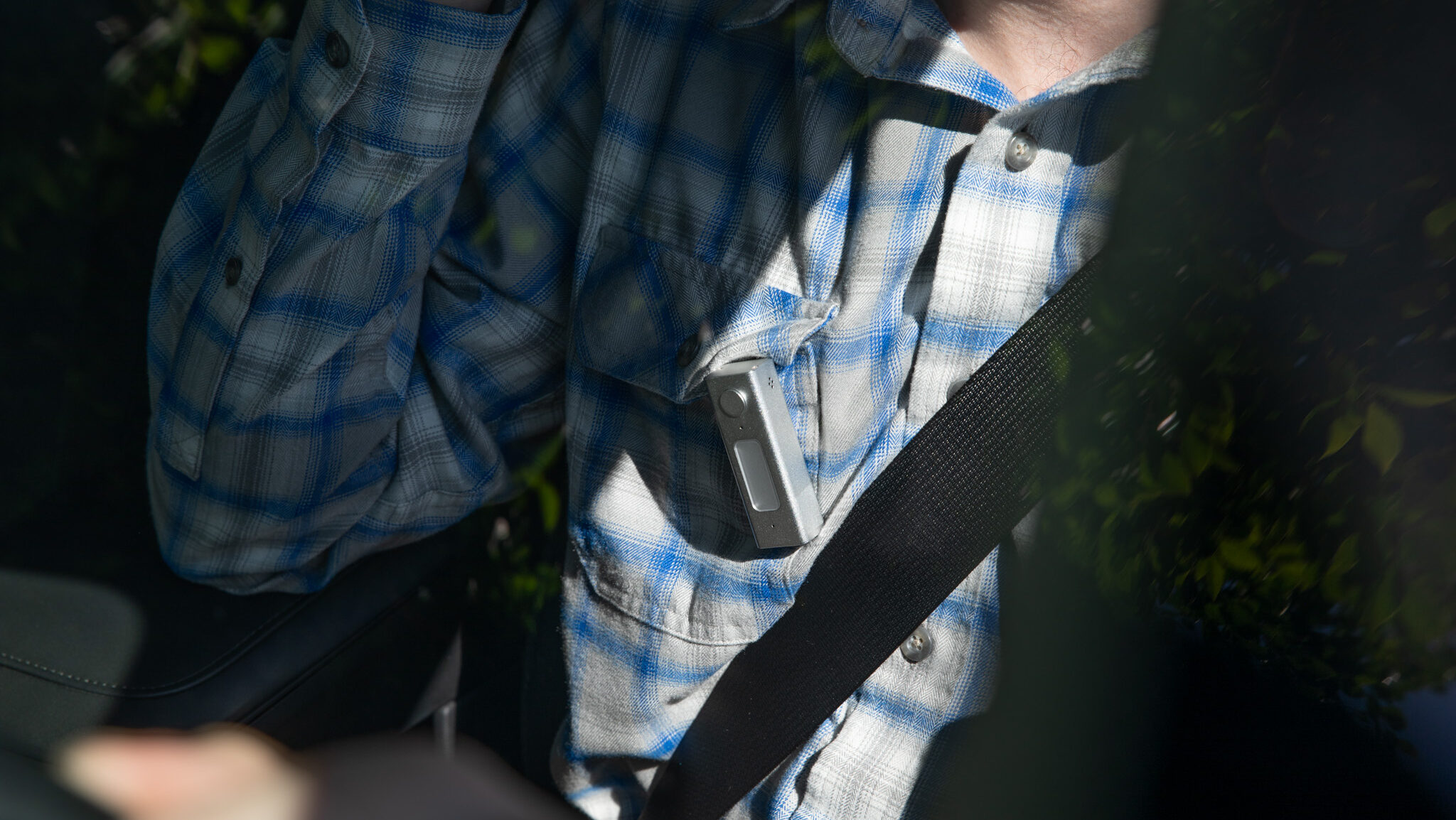
A wearable AI microphone is a small mic you can wear—on a badge, lanyard, shirt clip, headset, or other form—so you can talk naturally and let your device handle the writing.
Think of it like this:
- You speak.
- The wearable mic hears you clearly.
- Your phone/tablet/computer receives the audio (often through BLE, which stands for Bluetooth Low Energy).
- An app turns your speech into text (voice-to-text).
- The text can become a note, a form entry, a checklist item, or a task.
This is especially helpful in places where hands are busy and time is tight—like hospitals, clinics, home health visits, labs, warehouses, and field work.
And because so many teams already rely on smartphones and tablets, BLE wearables can fit into current workflows without forcing a full rebuild.
How it works (simple, practical steps)
Here’s the basic flow for a BLE microphone wearable—like the types GMIC supports:
- Clip on the mic (badge, collar, or wearable mount).
- Connect over BLE to a phone or workstation.
- Start dictating in normal speech.
- Real-time voice to text appears in the app (or near-real time, depending on settings).
- Save or send the note to the right place—EHR fields, case notes, service tickets, CRM logs, or internal docs.
BLE is designed to use less power than classic Bluetooth. For wearable devices, that matters. People don’t want another thing that dies mid-shift.
Just like streaming bundles need a smooth “play” button experience, wearable AI needs a smooth “talk and it works” experience.
Why microphone quality matters more than most teams expect
If you’ve ever tried voice-to-text in a noisy place, you already know the problem:
- The app isn’t always wrong.
- Often, the audio coming in is messy—background chatter, AC hum, hallway noise, masks, distance from the mic, or a bad mic position.
A reliable wearable mic helps by capturing speech closer to the mouth and keeping the signal steady.
In real work settings, people don’t have time to re-dictate. If they have to repeat themselves, they’ll go back to typing—or worse, they’ll delay documentation until late at night.
That’s where GMIC’s focus comes in.
GMIC’s role: BLE microphones that enable real wearable AI hardware
GMIC is a U.S.-based company specializing in BLE microphones. In wearable AI, that specialization is a big deal because many “voice AI” projects succeed or fail based on the audio front end.
GMIC helps teams building wearable AI microphone hardware by supporting the building blocks that matter:
- Consistent BLE connectivity for wearable workflows
- Clean voice pickup for real environments (not just quiet rooms)
- Wearable-friendly form factors and integration thinking
- Practical, product-ready experience (what works in the field)
If your product promise is “talk less, document more,” your mic has to perform when the user is moving, turning their head, walking between rooms, or working in loud spaces.
Practical benefits people actually feel (day one)
Wearable AI microphones aren’t about “cool tech.” They’re about small daily wins that add up.
1) Less typing, fewer clicks
Typing is slow, tiring, and easy to postpone. Dictation is natural.
2) Hands-free operation
This is huge when hands are busy—gloves, tools, carts, medical devices, or sterile tasks.
3) Faster notes and better recall
Many professionals can speak 2–3x faster than they can type. That speed reduces end-of-day documentation.
4) More consistent workflows
When dictation is easy, notes get completed closer to the moment of care or service.
5) Workflow automation (simple version)
Once words become text, software can do things like:
- Fill templates
- Create follow-up tasks
- Trigger reminders
- Sort notes by patient/job/project
Healthcare spotlight: where wearable AI dictation is changing the day
Healthcare is one of the clearest fits because documentation is constant and high stakes.
These exact SEO use cases are becoming common:
- AI dictation wearable for doctors who move room to room and need fast notes
- hands-free medical notes during rounds, consults, or bedside updates
- real-time voice to text for clinicians who want documentation while care is happening
- wearable transcription device in healthcare for nurses, home health staff, and specialists
A relatable scenario: the 6:30 PM “second shift” problem
A clinician finishes patient care… but not the charting. So the day continues at a computer.
Now picture a different flow:
- A doctor speaks a short assessment right after the visit.
- The wearable mic captures it clearly while walking to the next room.
- The note becomes text immediately, ready for review and sign-off.
Even if the clinician still edits later, the hardest part—starting from scratch—is gone.
That is the difference between “a neat demo” and “a tool people keep using.”
Real-world examples (simple, believable stories)
Example 1: Hospital rounding with less stopping
A resident wears a clip-on mic. Between rooms, they dictate:
- “Room 12: pain improved, continue meds, follow labs.”
- “Room 14: discharge planning, follow up in two weeks.”
Because it’s real-time voice to text for clinicians, the note isn’t trapped in memory. It’s captured when it’s fresh.
Example 2: Home health nurse on the move
In home health, there’s no perfect workstation. A nurse needs hands-free medical notes while managing supplies, safety, and patient comfort.
A wearable transcription device in healthcare helps them record wound observations, vitals, and instructions without juggling a keyboard.
Example 3: Clinic intake and handoff
In busy clinics, handoffs can be rushed. A wearable mic supports fast, consistent summaries so the next person gets a clear picture.
Even short dictated handoffs can reduce missed details.
Why the Disney+/Hulu deal is a useful metaphor for wearable AI purchasing
That streaming discount is good, but it’s also temporary (one month) and not as low as the biggest deal last year. So people evaluate:
- Will I actually use this next month?
- Is the experience smooth enough that I’ll keep it?
- Should I wait for a better offer?
With wearable AI, business leaders ask similar questions:
- Will staff use it after week one?
- Is setup simple?
- Does it work in real environments (noise, movement, masks)?
- Will it save time every day—not just in a pilot?
The “real discount” in healthcare isn’t $3 off. It’s hours back per week, fewer late nights, and reduced burnout.
Future possibilities (near-term, realistic)
Wearable AI microphones are already strong for dictation. Next steps are exciting and practical:
- Live translation for multilingual care teams and patients
- More structured notes created from natural speech (still editable by humans)
- Industry-specific voice workflows (ED, surgery follow-ups, home health, PT)
- Better on-device privacy options as hardware improves
- Broader use beyond healthcare: insurance claims, field inspections, logistics, elder care, and public safety
The common thread: the microphone remains the start of the chain. Better audio creates better results.
Actionable takeaways (for buyers, builders, and leaders)
If you’re a healthcare leader considering wearables
- Start with one workflow: rounds notes, discharge summaries, or home health visit notes.
- Measure time saved per shift and note completion time.
- Ask staff one simple question: “Would you miss it if we took it away?”
If you’re a product team building wearable AI
- Test in real noise: hallways, carts, stations, and busy rooms.
- Design for quick pairing and reconnection—people won’t troubleshoot.
- Treat the mic as a core feature, not an accessory.
If you’re a procurement or operations leader
- Watch for “pilot drop-off.” If use declines after novelty fades, something is wrong (comfort, audio, reliability, workflow fit).
- Choose hardware partners with BLE microphone experience—small issues become big support costs at scale.
Where GMIC fits: dependable BLE microphones for wearable AI that people keep using
Wearable AI is moving from “interesting” to “expected,” especially anywhere documentation is heavy and time is limited. But adoption depends on the basics working every day.
GMIC focuses on those basics: BLE microphones built for wearable AI hardware realities—mobility, battery needs, stable connections, and clear voice capture.
If your goal is to support AI dictation wearable for doctors, enable hands-free medical notes, and deliver real-time voice to text for clinicians through a wearable transcription device in healthcare, you need the audio layer to be dependable. GMIC’s expertise helps teams bring that dependability into real products.
A hopeful close (and next step)
The Disney+/Hulu bundle deal is a reminder: people don’t just buy “a price.” They buy what they’ll actually use—and what feels smooth in daily life. In healthcare and other demanding industries, wearable AI isn’t about entertainment. It’s about time, focus, and reducing the weight of documentation.
If you’re building or deploying wearable AI voice solutions and want a hardware partner with deep experience in BLE microphones, GMIC is ready to help.
Explore GMIC’s wearable AI microphone capabilities and services, or contact our team to discuss your product goals—so your users can speak naturally, document faster, and end the day with more energy left.
FAQ: AI Hardware & GMIC AI INC
What kind of AI hardware does GMIC specialize in?
GMIC focuses on voice-first, AI-native hardware, including wearables, desk devices, and embedded endpoints designed to integrate directly with AI software platforms.
Can GMIC help AI companies validate hardware before mass production?
Yes. GMIC supports fast MVP validation using existing platforms, light customization, and small pilot runs to reduce risk before full development.
Does GMIC work with startups or only large companies?
GMIC works with AI startups as well as established teams, especially those looking to turn software into a differentiated hardware experience.
How is GMIC different from off-the-shelf hardware suppliers?
Unlike generic devices, GMIC designs hardware around your AI workflow, including firmware, audio pipelines, and connectivity.
How long does it take to build an AI hardware prototype?
Depending on complexity, functional prototypes or pilots can often be delivered within a few weeks.
Which industries are adopting AI hardware the fastest?
Healthcare, sales, customer support, and field operations are among the fastest adopters of voice-based and edge AI hardware.
Is AI hardware risky for AI software companies?
It can be if overbuilt early. GMIC minimizes risk through MVP-first development and clear validation milestones.
How do companies typically start working with GMIC?
Most projects begin with a feasibility and scope discussion to determine whether custom hardware truly adds value to the AI product.