
AI Phone Answering: Telecom’s Next SMB Edge
I keep hearing the same sentence from telecom teams: voice is mature, messaging moved elsewhere, and bandwidth gets cheaper every quarter. Fair enough. But that framing misses something sitting in plain sight. AI phone answering is starting to change what businesses can actually do with the calls they already receive.
The phone call itself still matters. Not the minutes. The content.
Voice AI for SMB starts with repeated customer questions
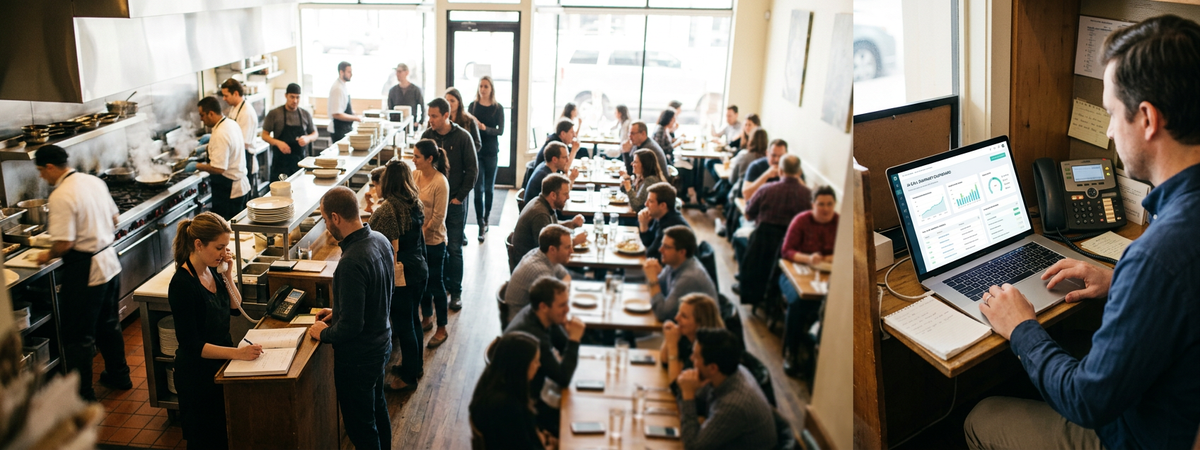
Last month I was looking at a local restaurant group in Houston with three locations. Nothing fancy. One noodle shop downtown, one in Sugar Land, one next to a hospital where the lunch rush hits like a hammer between 11:20 and 1:10.
They weren’t asking for “business intelligence.” They were asking why the phone kept ringing, why staff forgot callbacks, and why one dish kept selling out before dinner even though the owner thought the real favorite was something else.
So they tested Telalive on inbound calls and used MIC05 at the front counter for short in-store voice capture. Not to spy on anyone. Just to catch the repeated questions that disappear when a shift gets busy: “Do you still have the spicy beef special?” “Is the lunch combo available after 2?” “Can I order the family pack for pickup?”
Inside ten days, a pattern showed up. Customers mentioned the spicy beef special 63 times across calls and counter conversations. The owner had been pushing a different dish on Instagram because he liked the photos better. Real demand was somewhere else.
63
mentions of one dish in 10 days across calls and in-store voice notes
That matters because telecom operators already sit near the flow of these conversations. If they only sell dial tone, they get paid once. If they help a business spot demand, answer every call, and turn repeated customer questions into usable follow-up, they become part of the business itself. Different category entirely. That’s where AI phone answering becomes useful, not as a demo, but as a working tool.
☕ Here’s what I’d tell you if we were having coffee
Pick one vertical. Restaurants. Clinics. Auto shops. Then pull 200 calls and ask a blunt question: what gets asked over and over, and can that repeat pattern turn into a booking, a sale, or a post the owner would actually approve? Don’t start bigger than that.
Missed call solution lessons from what we got wrong
Now the part most articles skip. We got this wrong the first time.
Early on, we assumed business owners would love automatic social posts generated from call transcripts. They didn’t. One shop owner in Phoenix looked at the draft video caption and said, “This sounds like a robot who ate Yelp.” He was right. The wording was too polished, too generic, and one transcript mixed up “brake pads” with “backpack.” Brutal.
What failed wasn’t the transcription alone. It was the jump from raw conversation to public-facing content without a human filter. Staff also ignored a tagging screen we built because, during a rush, nobody wants to tap 14 categories after every call. They want the phone to stop ringing for ten seconds.
- What changed: we cut the tags down to three useful buckets for that pilot: order, hours, and needs human.
- What changed next: Telalive AI phone agent sent a short WhatsApp summary instead of a fully written campaign.
- What happened after that: owners actually responded, because approving one sentence is easier than fixing a fake-sounding paragraph.
That little embarrassment taught me something bigger. Technology only helps when it respects the shape of a person’s day. In embodied cognition research, tools work best when they fit the body and the task so well they almost disappear. A hammer is useful because your hand understands it. Bad AI fails for the opposite reason. It asks the tired restaurant manager to become a data analyst at 12:40 p.m.
“The real product isn’t the transcript. It’s the next clear action a busy human can take before the next interruption arrives.”
AI lead capture works when follow-up is simple
So yes, I think telecom has another shot here. But I don’t think the winner will be the operator with the prettiest slide about AI. I think it’ll be the one that can walk into a clinic, restaurant, or repair shop and say: we’ll answer the calls, summarize what matters, flag what needs follow-up, and show you what customers keep asking for.
That’s more grounded than selling “conversation intelligence” as an abstract idea. It’s closer to selling fewer missed orders, fewer forgotten callbacks, and better timing on what a business should talk about publicly. Messier. More useful. For operators, AI phone answering can become a real missed call solution and a practical form of AI lead capture.
Why telecom should care about AI phone answering
One opinion some people in telecom won’t like: the next margin pool probably won’t come from inventing a new pipe. It’ll come from helping SMBs make sense of the conversations already passing through the old one.
“I’m Trigg — I build AI phone systems for SMBs and help teams test whether call traffic can become a real service line, not just a demo.”
Show me one vertical, and I’ll map the call flow
If you’re evaluating how operators can package voice into a business service, I’ll show you a concrete pilot: which calls to capture, which three tags to keep, and where Telalive or MIC05 voice capture fit without dumping extra work on the merchant.
Starting at $29.9/month. No contracts.