

AI has big “kid who read half a philosophy book and now thinks he owns the dorm” energy. It can write code, sketch hardware, talk to suppliers, spit out ad copy, and probably tell you twelve ways to price a sandwich. But in AI phone answering and every other real-world workflow, the thing that decides adoption isn’t raw intelligence. It’s the interface.
So the scary question shows up fast: if AI can do all that, what exactly are humans supposed to do besides pay the invoice and squint at dashboards?
1 thing
still decides who wins: the place where humans actually meet the machine
OK, but seriously.
I’ve spent the last year building AI products for small businesses, and the pattern keeps smacking me in the face. The raw model matters. The cloud bill matters. The chips matter. But the thing that changes behavior? The interface. The handoff point. The moment a real person says, “Fine, I’ll use this.”
Why Voice AI for SMB Still Depends on the Interface
AI doesn’t own factories. It doesn’t own power plants. It doesn’t own customer relationships. It doesn’t own distribution. And no, a large language model is not filing a trademark application and opening a warehouse in Nevada.
People and organizations own those things. Which means the center of gravity in every tech era still comes down to control over the stack people depend on.
- Agriculture: land mattered.
- Industry: factories mattered.
- Internet: platforms mattered.
- AI: compute, models, and distribution matter.
That part is obvious. The less obvious part is where the money and loyalty pile up after the infrastructure gets boring. It usually happens at the layer people touch every day. In voice AI for SMB, that means the human-machine handoff matters more than the hype cycle.
“Technology gets adopted twice: first by engineers, then by normal humans. The second adoption is where empires get built.”
AI Receptionist for Small Business Starts at the Doorway
Take a restaurant in Houston I’ll call Rosa’s Grill. Lunch rush. Phone ringing like it’s trying to win a contest. Before they used Telalive, the staff answered some calls, missed a bunch, and scribbled callback notes on receipts like caffeinated archaeologists.
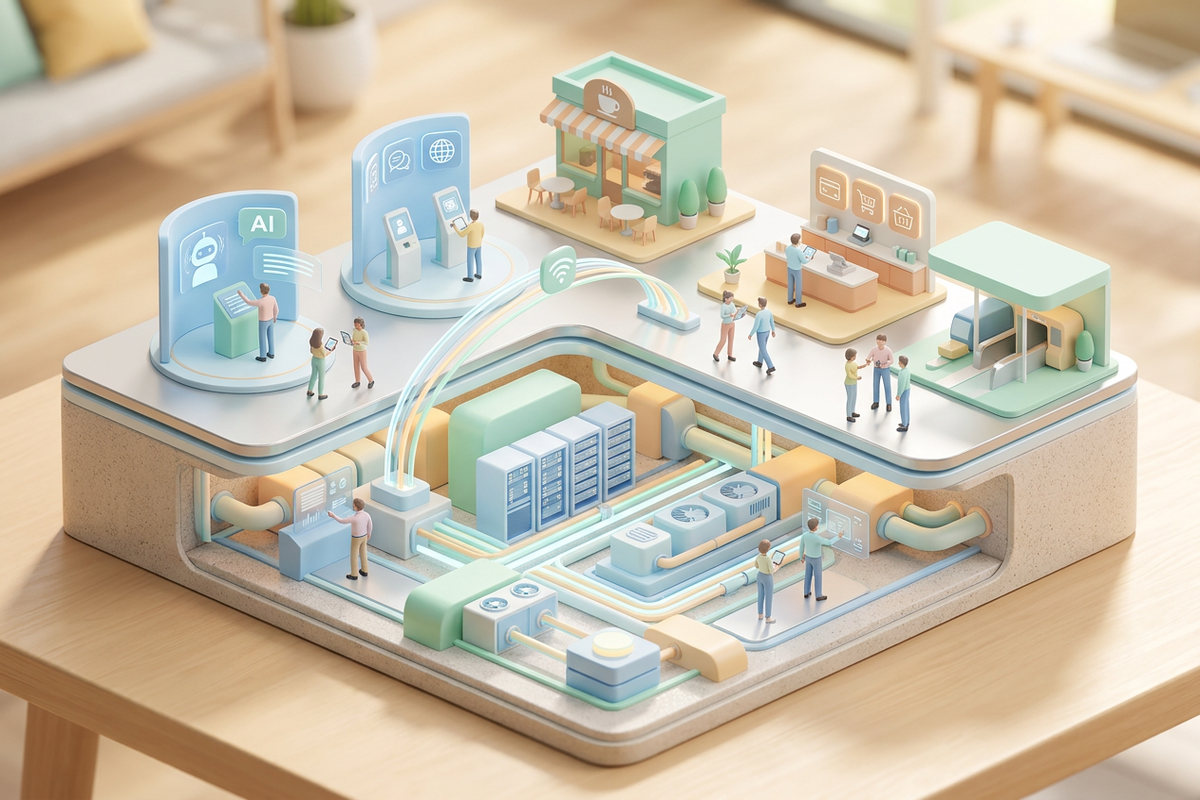
Telalive didn’t “replace the business.” It became the doorway. Every caller hit the same front desk voice, every order got summarized, and the owner got WhatsApp notes instead of mystery voicemails. That’s the point. The interface collected the behavior. The behavior created the data. The data made the system smarter next week than it was last Tuesday. That’s what makes AI phone answering and an AI receptionist for small business useful in practice.
💡 If we were having coffee, I’d ask you to do something mildly annoying right now:
Pull up your last 7 days of calls. Which ones turned into notes, bookings, or follow-up tasks—and which ones vanished into the void? That gap is your interface problem, not your “AI strategy” problem.

Wearable Voice Device Business Lessons from MIC05 Voice Capture
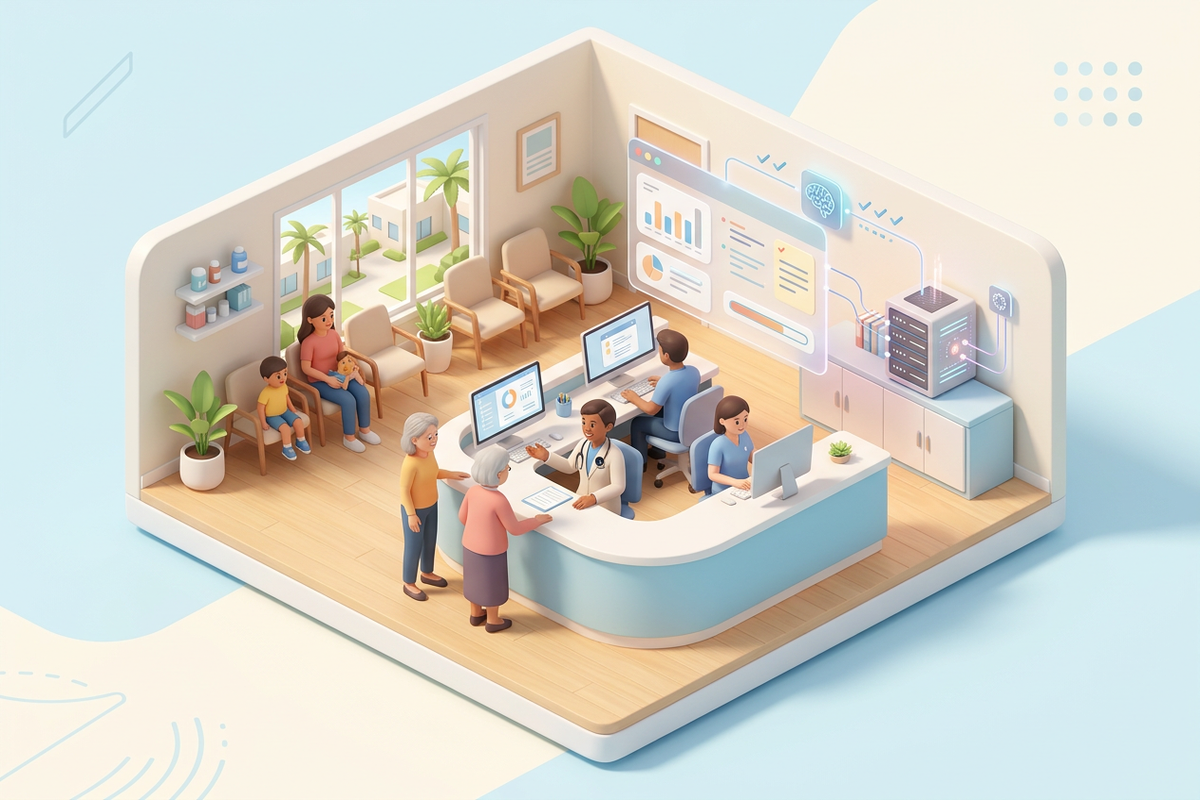
Same story offline. We’ve seen this with MIC05 in field and front-desk setups. A clinic manager in Orange County tested wearable voice device business workflows for in-person intake so staff wouldn’t retype every detail later. Smart idea. Our first version was a little too clever for its own good.
Cringe detail: we gave staff too many tagging options after each conversation. Not three. Not five. Twelve. During a busy morning. Nobody used half of them. One receptionist told us, very politely, that if we made her tap “insurance verification pending” one more time while a patient was standing there, she was going to throw the device in a ficus.
- What failed: too many post-call tags on the MIC05 voice capture workflow.
- How we found out: usage dropped after day four, and staff started leaving fields blank.
- What fixed it: we cut it down to 3 required tags plus one needs_human fallback.
Then adoption came back. Because the wearable wasn’t the hero. The human was. The device just had to stay out of the way long enough to become natural.
Small Business Phone Automation Works When It Disappears
There’s an old idea in human-computer interaction: tools work best when they fade into the background of action. A good hammer disappears into the carpenter’s hand. A good front desk system disappears into the rhythm of service. Same with AI.
That’s why I think the next winners won’t just be “the smartest models.” They’ll be the companies that build the most natural meeting point between human intention and machine capability—AI phones, microphones, wearables, glasses, ambient assistants, all of it. Not shiny toys. Entry points into behavior. The best small business phone automation feels invisible, and the best AI phone answering feels natural.
And yes, AI makes building easier. It also makes competition nastier. One founder with strong taste and a laptop can now ship what used to take a whole team. Which means you’re no longer competing with the shop across town. You’re competing with the sharpest operators anywhere with Wi-Fi and insomnia.
“I’m Trigg — I build AI interfaces for SMBs, and I’ll show you where your business is losing the handoff between customer intent and staff follow-up.”
Let me map your busiest customer touchpoint
We’ll look at your calls, front-desk flow, or in-store conversations and pick the simplest place to start—whether that’s Telalive on the phone side or MIC05 in-person.
Starting at $29.9/month. No contracts.
So no, AI probably doesn’t “own the world.” That headline is too dramatic, even for me. But the people who control the doorway between humans and AI? They’re going to have a very loud say in what happens next.