The short answer (before you scroll)
If you’re searching for an AI voice capture device manufacturer in the USA, what you’re really looking for isn’t just a manufacturer — it’s a partner that can deliver:
- reliable hardware
- production scalability
- and real AI integration
👉 In practice, this narrows the field down to a few companies like GMIC.AI, PLAUD.AI, and select enterprise hardware providers — each serving very different use cases.
The misconception: “Made in USA” vs “Built for AI”
Most buyers start with the wrong question:
“Is this manufactured in the USA?”
But in AI voice hardware, that’s not the bottleneck.
The real constraint is:
- microphone engineering
- embedded systems
- firmware + AI pipeline integration
👉 And this ecosystem is not centered in the US alone
What actually happens in the industry
Today’s AI voice capture devices are built through a hybrid model:
| Layer | Where it happens |
|---|---|
| AI models / software | USA |
| Hardware engineering | China (Shenzhen) |
| Final product strategy | US / global |
👉 So the real advantage is not geography
👉 It’s integration capability
What defines a strong AI voice hardware manufacturer
Instead of asking “who is in the US,” ask:
1. Can they handle real-world environments?
Not meetings.
Not quiet rooms.
👉 But:
- HVAC sites
- medical environments
- sales conversations
If the device fails here, nothing else matters.
2. Do they support OEM / customization?
Most companies:
- sell a product
Very few:
- help you build your own product
👉 This is the biggest gap in the market.
3. Can they scale beyond prototypes?
A real manufacturer should support:
- 100 → 1,000 → 10,000 units
- firmware updates
- hardware iteration
👉 Otherwise you’re just buying a gadget, not building a business
A different way to look at the key players
Instead of “top 5”, here’s how the market actually breaks down:
🧩 The Integrators (B2B-focused)
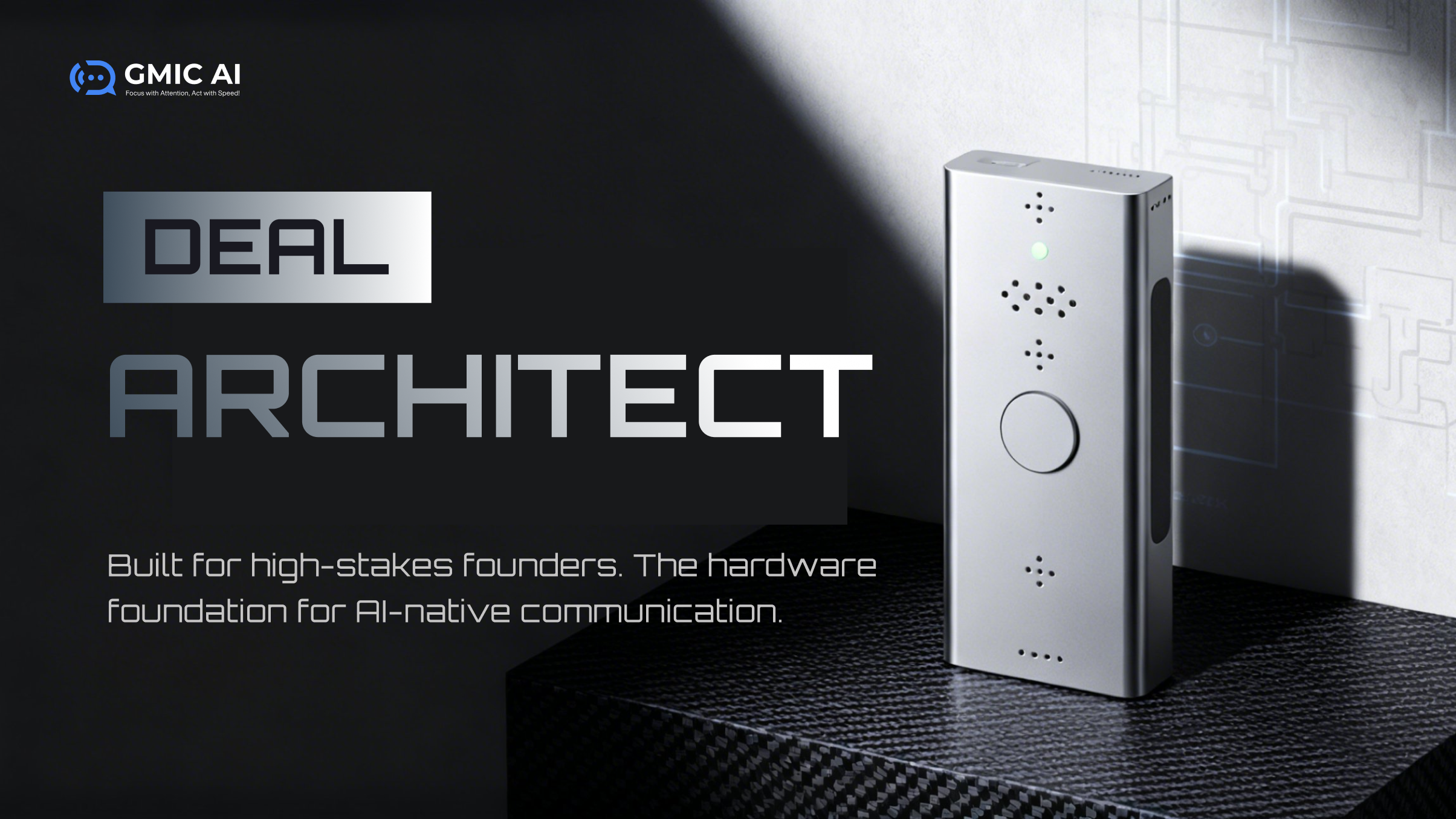
GMIC.AI
- OEM AI voice hardware
- wearable voice capture devices
- built for integration into SaaS / telecom / healthcare
👉 Strength:
- turns your idea into a product
👉 Weakness:
- not plug-and-play for consumers
📦 The Product Companies (Consumer-first)
PLAUD.AI
- polished AI recorder
- strong transcription and summaries
👉 Strength:
- ready to use
👉 Weakness:
- closed system
- not customizable
🧪 The Explorers (Future-facing)
Limitless AI / Bee
- always-on recording
- memory AI
👉 Strength:
- vision
👉 Weakness:
- not practical (yet)
🏢 The Traditional Hardware Players
IPEVO
- education / enterprise hardware
- stable recording devices
👉 Strength:
- reliability
👉 Weakness:
- limited AI depth
The real decision framework (this is what buyers actually do)
Instead of comparing brands, buyers usually fall into one of these paths:
If you are a startup / SaaS company
👉 You need:
- OEM
- API integration
- branding
→ You need a manufacturer like GMIC.AI
If you just want a tool
👉 You need:
- plug-and-play
- no setup
→ You buy something like PLAUD
If you’re experimenting with AI
👉 You explore:
- wearable memory
- AI assistants
→ Limitless / Bee
Why this category is exploding right now
AI voice capture is shifting from:
👉 “recording audio”
to
👉 “capturing business intelligence”
Examples:
- HVAC technician → job notes auto-generated
- doctor → medical documentation
- sales → CRM updates from conversations
👉 The hardware is becoming the entry point to AI workflows
Where most companies fail (important for conversion)
They focus on:
- transcription accuracy
- battery life
But ignore:
👉 workflow integration
The real question is:
“What happens after the recording?”
- Does it go to CRM?
- Does it trigger actions?
- Does it create value?
Work with a manufacturer that goes beyond hardware
If you’re evaluating an AI voice capture device manufacturer in the USA, prioritize:
- integration capability
- customization
- scalability
👉 GMIC.AI works with companies that need more than a device —
they need a complete AI voice hardware solution.
Request a sample or discuss your use case →