
Everyone talks about AI transforming businesses.
But there’s a question we kept asking ourselves:
What happens when AI meets the real world?
Not in a demo.
Not in a pitch deck.
Not in a conference.
But inside a small restaurant during lunch rush.
So we decided to find out.
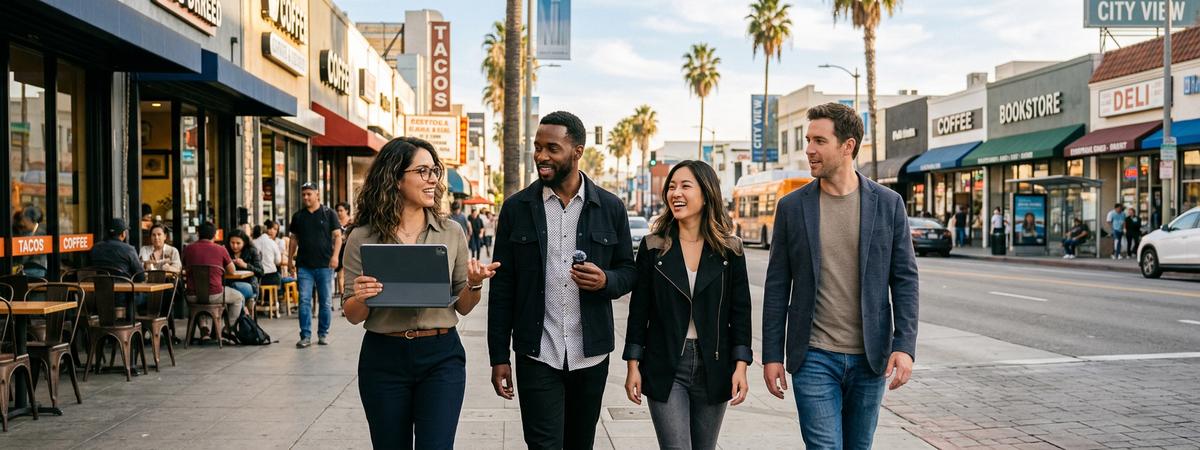
Last week, our team started a simple experiment in Los Angeles: walk into restaurants, introduce an AI system that answers phone calls, and see what happens.
No marketing campaign.
No cold email funnels.
Just doors, conversations, and reality.
After dozens of visits, we learned more in two days than months of product meetings.
Here’s what actually happened.
You Don’t Sell to the Owner. You Sell to the Door.
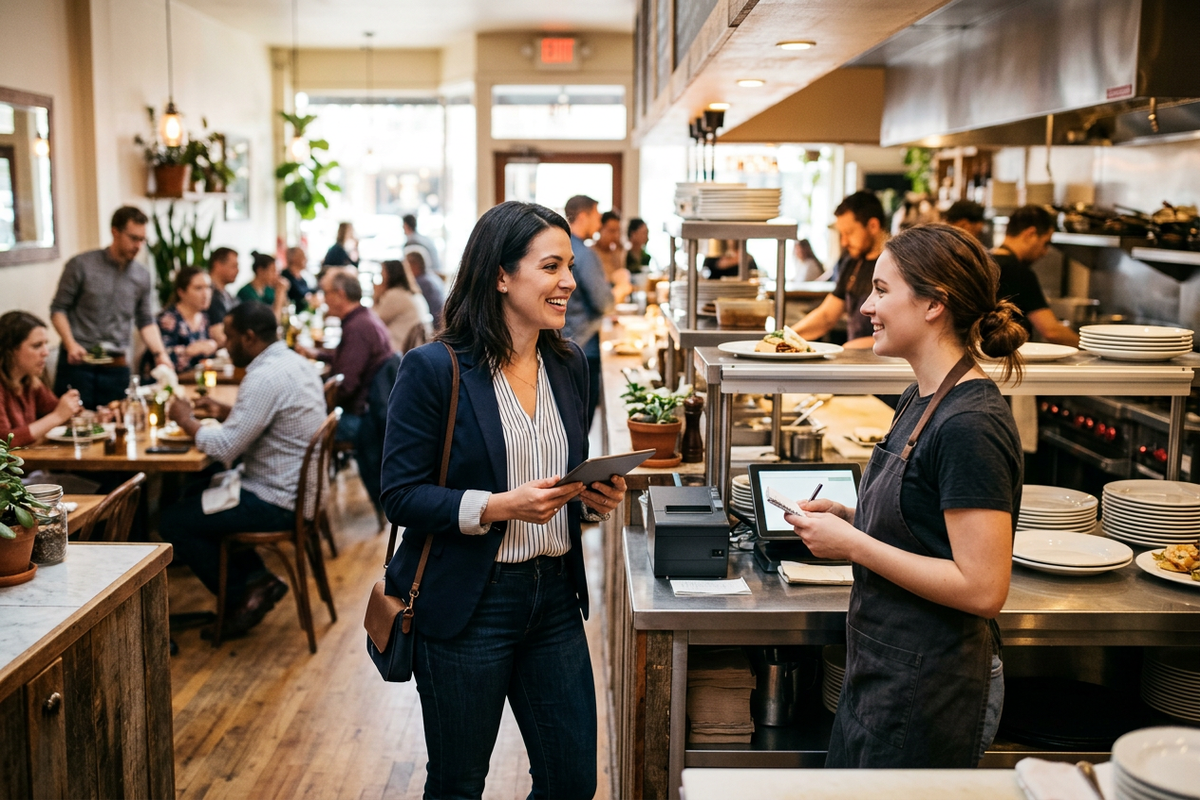
In theory, our target customer is the restaurant owner.
In reality, the first person you meet is usually:
- a cashier
- a server
- someone running between tables
They’re busy. They don’t know you. And they have no incentive to introduce you to the boss.
If you can’t pass the first 30 seconds with that person, the conversation ends right there.
Before you sell AI, you have to pass the human firewall at the front door.
The AI Adoption Paradox
After visiting dozens of restaurants, we noticed a strange pattern.
Small restaurants often say:
“We don’t get that many phone calls.”
Large restaurants probably do need automation — but the decision maker is rarely available.
So the market creates a paradox:
- Small stores don’t think they have the problem.
- Large stores are hard to access.
The businesses that need automation most are often the hardest to reach.
Nobody Wants to Hear About AI
When we started explaining the technology, interest dropped quickly.
Restaurant owners didn’t care about:
- AI agents
- large language models
- voice recognition
- automation pipelines
They asked much simpler questions:
- “Will this help when we miss calls?”
- “Will it reduce stress on my staff?”
- “Will customers stop getting frustrated?”
Technology disappears. Operations remain.
Trust Opens More Doors Than Technology
We discovered something surprising.
If we mentioned a partner that restaurant owners already knew, conversations became easier immediately.
Without that context, many restaurants wouldn’t even listen.
For small businesses, trust infrastructure matters more than technical architecture.
AI may be powerful. But familiarity is what gets you through the door.
The Real Problem Is Timing
Many restaurant owners initially say they don’t receive many phone calls.
But after a short conversation, the real pattern emerges.
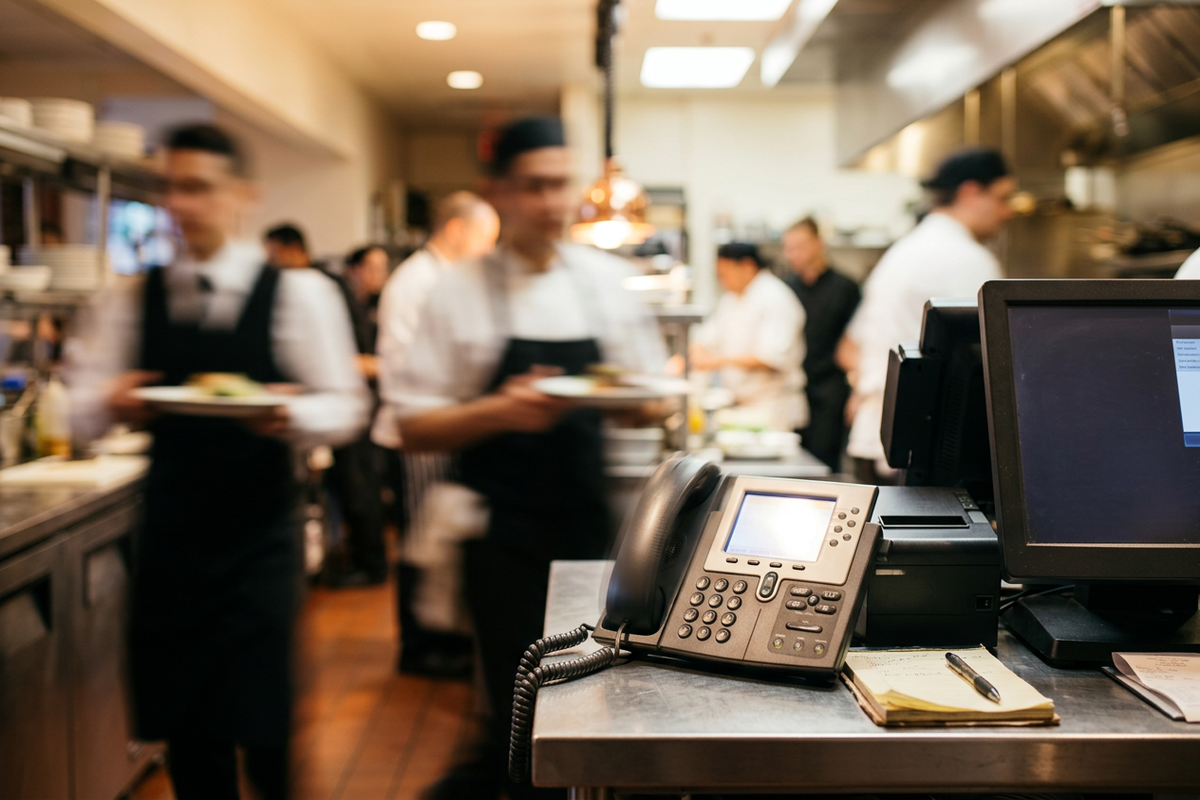
Calls don’t come all day. They come during the worst possible moment:
Dinner Rush.
When every employee is busy. When no one can answer. When customers call the next restaurant.
The problem isn’t call volume. It’s missed timing.
Simplicity Wins
We tried explaining the product in different ways.
The more complicated the explanation, the worse the reaction.
Eventually we realized the pitch that worked best was only one sentence:
“Your restaurant never misses a phone call again.”
That’s it. Everything else comes later.
The Product Isn’t Finished Until the Market Teaches You
Every conversation in the field teaches us something.
Which questions confuse people. Which features matter. Which explanations fail.
Our field team carries AI-assisted microphones that capture conversations (with consent) and convert them into structured feedback.
After each visit, we analyze:
- objections
- customer pain points
- pricing reactions
- product misunderstandings
Then those insights go straight back into product development.
The product isn’t evolving inside the office. It’s evolving at the front doors of restaurants.

The First 100 Restaurants
Right now, our goal isn’t scaling revenue. It’s learning.
100
restaurants are our classroom.
They teach us:
- how small businesses actually think about AI
- what problems are real
- what explanations work
- what technology is actually useful
And most importantly: they remind us that innovation doesn’t begin in code. It begins in conversation.
The Quiet Way AI Will Change Small Business
AI won’t take over restaurants overnight.
There won’t be a single dramatic moment when every small business suddenly adopts automation.
Instead, it will happen quietly.
One missed phone call at a time.
One frustrated customer at a time.
One owner who finally says: “We need a better way to handle this.”
The restaurants that adopt AI early won’t do it because they love technology. They’ll do it because they’re tired of losing customers during dinner rush.
And that’s the real lesson from walking into 100 restaurants:
AI adoption isn’t driven by innovation.
It’s driven by pain.
The technology just has to be simple enough — and trustworthy enough — to say yes to.
We’re building that at GMIC AI. One door at a time.
From the field
Your restaurant never has to miss a call again.
Telalive’s AI phone system answers, captures intent, and sends you a summary — even during your busiest hours.
Starting at $29.9/month. No contracts. Cancel anytime.