Estimated reading time: 8–10 minutes
Key takeaways
- Measles is surging again: U.S. cases exceeded 2,500 a year after a significant Texas outbreak, with three fatalities.
- Wastewater surveillance can detect measles early and may signal outbreaks before widespread confirmed diagnoses—but it cannot reliably identify who is infected.
- Clinicians become the “last mile” of outbreak intelligence, and that increases the need for fast, accurate, complete clinical notes.
- Wearable AI microphones (especially BLE microphones) can reduce typing, capture details in real time, and help cut after-hours charting during surge periods.
- Microphone quality is foundational: clearer audio leads to better transcription and fewer documentation errors in noisy clinical environments.
Table of contents
- A busy clinic, a measles headline, and a documentation problem
- Measles surge + wastewater surveillance: why early detection increases the need for fast, accurate notes
- Sources for deeper reading
- The simple problem: clinicians can’t type as fast as care happens
- What is a wearable AI microphone (in plain language)?
- Why BLE microphones matter for wearable AI
- How it works (simple, step-by-step)
- Practical benefits for users (what improves right away)
- Why this matters right now: measles surge + wastewater signals = faster decisions
- Real-world scenes: what “wearable dictation” looks like in practice
- A quick word on accuracy: the microphone is the foundation
- Future possibilities (near-term, realistic)
- Actionable takeaways for healthcare leaders and hardware teams
- How GMIC fits in: BLE microphones built for wearable AI hardware
- Closing: build for a healthier, faster-response future
- FAQ: AI Hardware & GMIC AI INC
A busy clinic, a measles headline, and a documentation problem
It’s 7:10 a.m. in a busy clinic. The waiting room is full. A parent is worried about a fever and a rash. A nurse is trying to keep the line moving. And a doctor is doing what many clinicians do every day: listening, caring, and then… typing. Typing a lot.
Now add a new layer of stress from public health news. Please use the following news: A year after a significant measles outbreak in Texas, U.S. cases exceeded 2,500, with three fatalities. Researchers are utilizing wastewater surveillance to detect measles early, showing promise in identifying outbreaks, despite limitations in tracking individual infections. That kind of headline changes the feeling in a clinic.
It raises questions: Are we seeing the first signs? Is this spreading? Are we documenting symptoms clearly enough to act fast?
In this post, we’ll connect that latest measles and wastewater surveillance news to something practical you can use today: wearable AI microphone hardware. Specifically, we’ll look at how BLE (Bluetooth Low Energy) microphones—like the ones GMIC specializes in—can support real-time clinical notes, reduce after-hours charting, and help teams respond faster when outbreaks surge.
Measles surge + wastewater surveillance: why early detection increases the need for fast, accurate notes
Measles isn’t just a history-book disease. Recent reporting suggests the U.S. is seeing a serious rise again, and it has public health teams on alert.
A key idea getting attention is wastewater surveillance—testing sewage to spot viruses early. It’s been used for other diseases, and now researchers are applying it to measles, too. The promise is simple: wastewater can show signals of an outbreak before many people are officially diagnosed. But there’s also a clear limit: it can’t easily tell you who is infected, or exactly where each case began.
This is where healthcare teams become the “last mile” of insight.
Wastewater data might say, “Something is rising in this area.” Clinicians and hospitals then have to confirm cases, document symptoms, track exposures, and report information quickly and clearly.
Sources for deeper reading
Here are a few sources from the latest research and reporting you can reference for deeper reading:
- MIT Technology Review: “Measles is surging in the US. Wastewater tracking could help.”
- medRxiv preprint: “Detection of Measles in Texas Wastewater”
- CDC measles data and research hub
- Texas DSHS outbreak updates and timeline
- Coverage of wastewater disease surveillance value
When outbreaks surge, time and documentation quality matter. That’s why tools that reduce “note lag” are becoming essential—especially tools that fit into the real world of clinical work.
The simple problem: clinicians can’t type as fast as care happens
During normal weeks, documentation is already heavy. During outbreak weeks, it can feel impossible. Clinicians have to capture:
- Onset and timing (when the rash began, fever pattern, exposure dates)
- Vaccine status and travel history
- Isolation guidance and follow-up steps
- Reporting details for public health teams
All of that is valuable. But typing it all after the visit causes delays and burnout.
That’s where wearable AI microphones come in—especially when they’re designed for hands-free workflows.
What is a wearable AI microphone (in plain language)?
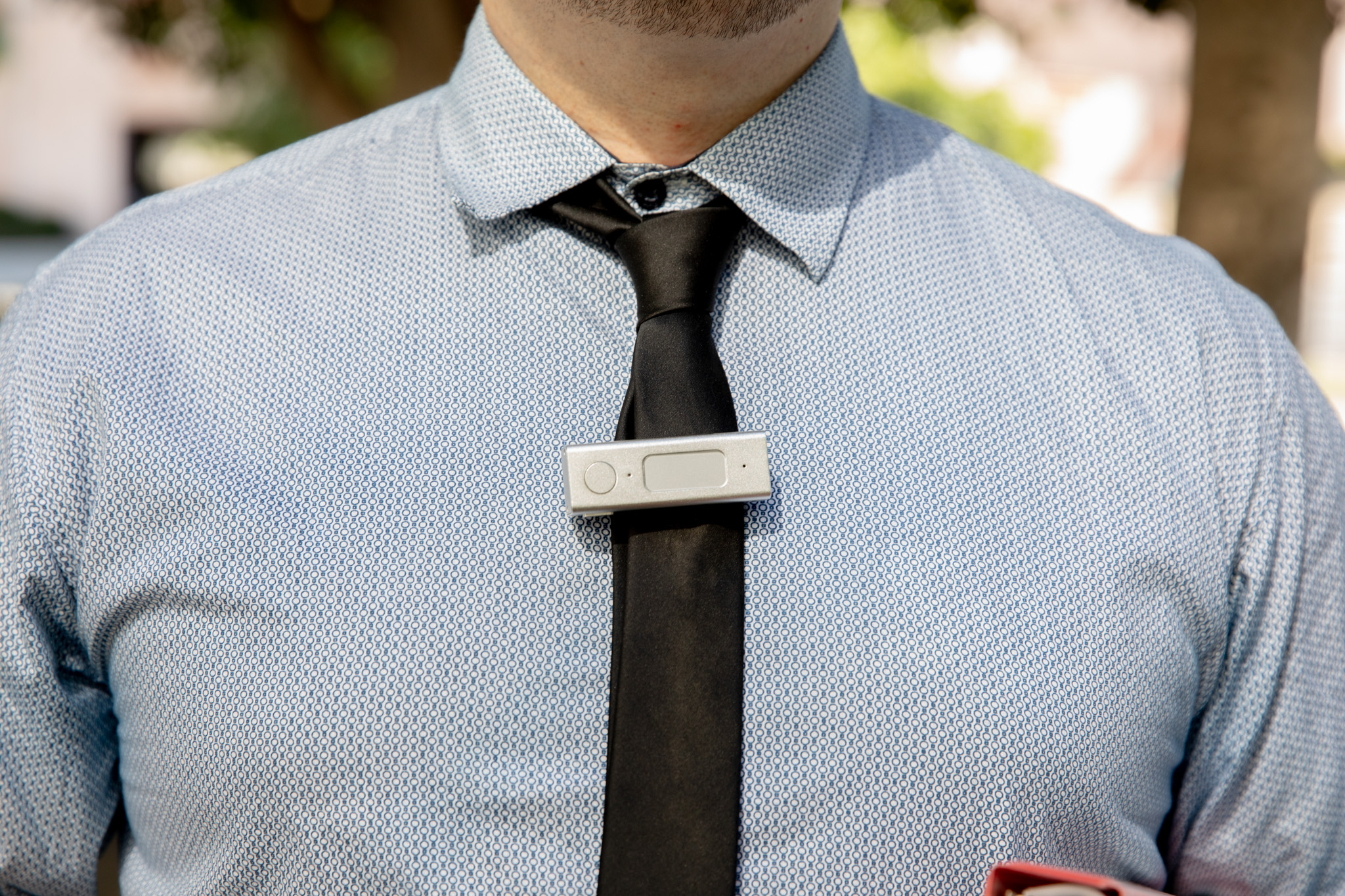
A wearable AI microphone is a small device you can wear (or clip on) that captures your voice clearly and sends it to an app that turns speech into text.
Think of it like a “smart badge mic” that helps you create notes while you work—without stopping to type.
In healthcare settings, this can support:
- AI dictation wearable for doctors
- hands-free medical notes
- real-time voice to text for clinicians
- a wearable transcription device in healthcare
The goal is not to add more tech to your day. The goal is to reduce friction: talk naturally, capture the key facts, and move on.
Why BLE microphones matter for wearable AI
BLE stands for Bluetooth Low Energy. In simple terms:
- It connects to phones, tablets, or workstations wirelessly
- It uses low power so the device can run longer
- It supports lightweight, always-ready wearable use
GMIC is a U.S.-based company focused on BLE microphones for wearable AI hardware. That focus matters because the microphone is the front door of the whole system. If the audio is unclear, the text will be wrong. And in healthcare, wrong notes can cause real problems.
A good BLE mic solution aims to be:
- easy to wear
- stable in connection
- clear in real-world noise (hallways, exam rooms, masks)
- comfortable for long shifts
How it works (simple, step-by-step)
Here’s the basic flow, without the technical buzzwords:
- You wear the microphone (clip, lanyard, badge, or headset style)
- It connects by BLE to a phone/tablet/computer
- You speak naturally during or right after the visit
Example: “Patient presents with fever, cough, and rash starting two days ago…” - The AI app converts speech to text in real time
- You review quickly and save into your note system (depending on your workflow)
That’s it. The big win is not fancy features. The big win is speed and ease—especially when your hands are busy and your attention needs to stay on the patient.
Practical benefits for users (what improves right away)
Wearable AI dictation and transcription can help with:
1) Less typing, more eye contact
Clinicians can maintain a human connection instead of turning to the keyboard.
2) Hands-free operation
Useful when wearing gloves, moving between rooms, or performing exams. This is the heart of hands-free medical notes.
3) Faster notes and fewer after-hours charts
Instead of “I’ll chart later,” notes can be captured in the moment.
4) Clearer timelines during outbreaks
When measles or other illnesses surge, details like dates and exposure history matter. Speaking those details out loud often captures them more completely than rushed typing.
5) Workflow automation potential
Once voice becomes structured text, it can trigger tasks:
- follow-up reminders
- patient instructions
- coding prompts
- routing to public health reporting teams
Why this matters right now: measles surge + wastewater signals = faster decisions
Wastewater surveillance is exciting because it can act like an early warning system. Reporting suggests it may detect outbreaks days—or sometimes longer—before diagnoses are confirmed widely. But wastewater doesn’t replace clinical care. It points to risk. Clinicians confirm reality.
So when wastewater surveillance suggests something is rising, clinics may see:
- more calls about fever and rash
- more screening questions
- more urgent documentation needs
- more coordination with infection control
In that environment, a wearable transcription device in healthcare becomes more than a convenience. It becomes a way to keep documentation from becoming the bottleneck.
Real-world scenes: what “wearable dictation” looks like in practice
Scenario 1: Urgent care intake during a rash cluster
A clinician finishes an exam and says quietly:
“Child, 6 years old. Fever 102.3. Rash started behind ears, now spreading. No known travel. Uncertain vaccine status. Possible school exposure.”
That becomes immediate text. The clinician reviews for accuracy, adds a few taps, and moves to the next patient.
Scenario 2: Hospital rounding when time is tight
During rounds, a provider speaks short summaries between rooms:
“Room 12: improved respiratory status, continue isolation precautions, counsel family on signs of worsening, arrange follow-up.”
Instead of trying to remember everything later, notes are captured while the facts are fresh.
Scenario 3: Public health follow-up calls
A nurse calls to gather exposure details and can dictate:
“Symptoms began Tuesday. Attended daycare Monday. Two siblings at home. Recommend evaluation if fever develops.”
Again: faster, clearer, and easier to share with the team.
These are not futuristic stories. They are simple workflow moments where real-time voice to text for clinicians can remove daily pain.
A quick word on accuracy: the microphone is the foundation
Many teams focus on the AI app first. But in real clinics, the microphone quality often decides whether the system feels helpful or frustrating.
A wearable BLE microphone built for AI dictation can help by:
- picking up speech consistently (even with masks)
- reducing room noise and hallway chatter
- keeping a stable wireless connection through a shift
This is where GMIC’s core expertise matters. GMIC focuses on BLE microphone hardware for wearable AI products—so teams can build solutions that work in real environments, not just quiet demo rooms.
Future possibilities (near-term, realistic)
As wearable voice capture becomes normal, we can expect more helpful features, such as:
- live translation for patient conversations (with consent and strong privacy controls)
- smarter templates for different specialties (ER, pediatrics, family medicine)
- voice-driven checklists for infection control steps
- better support for home health and mobile clinics
- broader use outside healthcare: field service, logistics, insurance, and public safety
The common thread is simple: when speech becomes usable text in real time, work gets easier—and response gets faster.
Actionable takeaways for healthcare leaders and hardware teams
If you’re a clinician or clinic manager
- Pick one workflow to start (urgent care visit notes, rounding notes, discharge instructions).
- Measure time saved for two weeks. Even 10–15 minutes per clinician per day adds up.
- Set clear rules: when to dictate, when to review, and what must be typed manually.
- Prioritize comfort: if the wearable isn’t easy to wear, it won’t last past week one.
If you’re a digital health builder or product lead
- Start with audio quality—it drives transcription quality more than most people expect.
- Design for real noise: hospitals are loud and full of echoes.
- Make pairing and reconnection painless (BLE done right can feel seamless).
- Plan privacy and consent early: especially in healthcare settings.
If you’re a business leader in healthcare operations
- Tie dictation to outcomes: faster chart completion, better note completeness, less overtime.
- Support change management: provide short training and simple templates.
- Be ready for surge periods: outbreaks and seasonal waves punish slow documentation systems.
How GMIC fits in: BLE microphones built for wearable AI hardware
GMIC is a U.S.-based company specializing in BLE microphones for wearable AI hardware. That means GMIC understands the real requirements that make wearable voice products succeed:
- stable low-power connectivity (BLE)
- wearable form factors people will actually use
- audio capture designed for AI speech-to-text workflows
- product development support for teams building next-gen wearable devices
In a world where measles signals can show up in wastewater before clinics feel the surge, speed matters. Clear notes matter. And the tools that help clinicians keep up—without adding stress—matter.
Wearable AI microphone hardware is not a cure for outbreaks. But it can help healthcare teams respond with better documentation, faster communication, and less burnout.
Closing: build for a healthier, faster-response future
The measles surge and the rise of wastewater surveillance are reminders that public health can change quickly. When early warning systems light up, the people on the ground need workflows that keep up.
If you’re exploring an AI dictation wearable for doctors, building hands-free medical notes into your care model, or evaluating real-time voice to text for clinicians, the right wearable microphone hardware is a practical place to start.
GMIC helps teams design and deliver BLE microphone solutions for wearable AI—so clinicians can spend less time typing and more time caring.
Want to explore a wearable microphone approach for healthcare dictation or AI documentation? Reach out to GMIC to discuss your product goals, workflow needs, and how BLE microphone hardware can power a reliable wearable transcription device in healthcare.
FAQ: AI Hardware & GMIC AI INC
What kind of AI hardware does GMIC specialize in?
GMIC focuses on voice-first, AI-native hardware, including wearables, desk devices, and embedded endpoints designed to integrate directly with AI software platforms.
Can GMIC help AI companies validate hardware before mass production?
Yes. GMIC supports fast MVP validation using existing platforms, light customization, and small pilot runs to reduce risk before full development.
Does GMIC work with startups or only large companies?
GMIC works with AI startups as well as established teams, especially those looking to turn software into a differentiated hardware experience.
How is GMIC different from off-the-shelf hardware suppliers?
Unlike generic devices, GMIC designs hardware around your AI workflow, including firmware, audio pipelines, and connectivity.
How long does it take to build an AI hardware prototype?
Depending on complexity, functional prototypes or pilots can often be delivered within a few weeks.
Which industries are adopting AI hardware the fastest?
Healthcare, sales, customer support, and field operations are among the fastest adopters of voice-based and edge AI hardware.
Is AI hardware risky for AI software companies?
It can be if overbuilt early. GMIC minimizes risk through MVP-first development and clear validation milestones.
How do companies typically start working with GMIC?
Most projects begin with a feasibility and scope discussion to determine whether custom hardware truly adds value to the AI product.