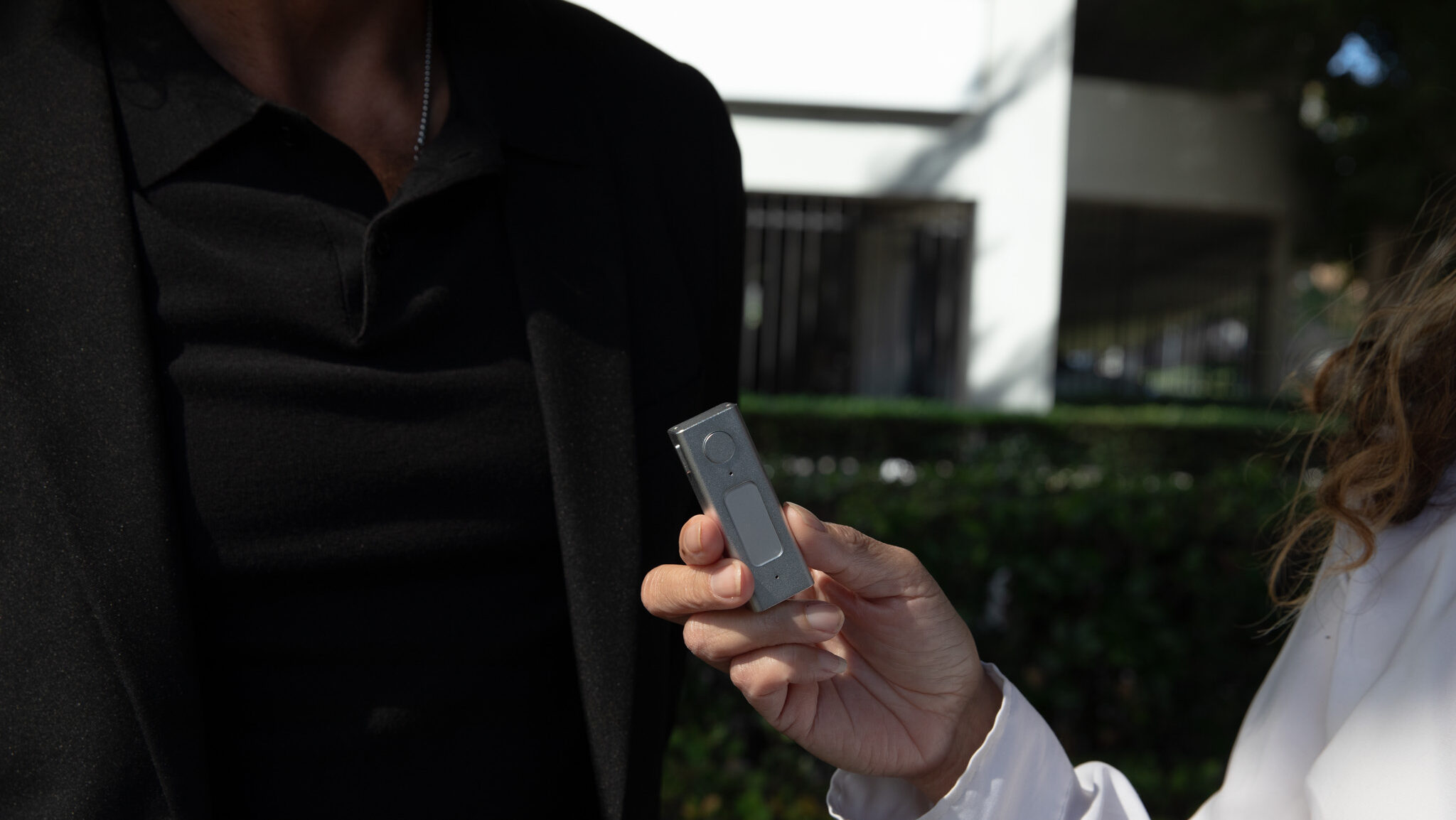
Over the past decade, artificial intelligence (AI) has reshaped healthcare — from diagnostic algorithms to predictive imaging. But a new wave of innovation is happening at the edge: AI-powered wearable devices. These small yet intelligent tools are changing how doctors capture, process, and act on information, freeing them from repetitive tasks and helping them deliver better care.
What Are AI Wearable Devices?
AI wearable devices combine sensors, voice recognition, wireless connectivity, and embedded AI algorithms into compact hardware. They can take the form of clip-on badges, smart bands, ear-mounted microphones, or glasses, and are capable of continuously capturing speech and physiological data while connecting to cloud-based or local AI systems.
Unlike traditional tools, these devices are designed for “real-time sensing and intelligent response.” Doctors can simply speak, move, or observe — the AI handles the rest, from transcription to analysis.
How Do They Help Doctors in Daily Practice?
1. Freeing Doctors’ Hands to Focus on Patients
In clinical environments, physicians often juggle between speaking with patients, operating tools, and typing notes. AI wearables with speech-to-text and smart transcription capabilities allow doctors to dictate notes naturally while maintaining full attention on the patient.
For example, a physician wearing a small lapel mic can speak normally during a consultation, while the system automatically generates structured electronic medical records (EMR) in real time. This hands-free experience increases efficiency and preserves genuine doctor–patient interaction.
2. Reducing Administrative Burden and Burnout
Studies show that doctors spend over 30% of their working hours on documentation and administrative tasks. AI wearable devices can automatically record, summarize, and categorize encounters, turning hours of manual input into seconds of automation.
The AI can also suggest templates, highlight missing data, or generate summaries for quick review — helping reduce stress and prevent burnout caused by paperwork overload.
3. Enhancing Diagnostic Accuracy and Consistency
Modern AI wearables go beyond audio. They integrate biosensors that track heart rate, temperature, or oxygen levels, combining these data streams with AI models to detect anomalies or patterns in real time.
During procedures or rounds, an AI wearable could alert the doctor to sudden changes in a patient’s vitals, or flag potential inconsistencies in charting. This augmented awareness improves clinical accuracy and safety.
4. Improving Team Collaboration and Knowledge Sharing
In multi-disciplinary care settings, AI wearables enable instant sharing of transcribed notes and highlights across teams. Nurses, specialists, or residents can access the same information instantly, minimizing communication delays.
For teaching hospitals, these tools are equally powerful: voice logs and AI summaries can help residents revisit real cases and understand clinical reasoning — accelerating their learning curve.
5. Strengthening Data Security and Compliance
Unlike personal phones or recorders, purpose-built AI wearables include on-device encryption, end-to-end data transmission, and anonymization protocols. They comply with HIPAA and other medical privacy regulations, ensuring that sensitive patient information remains secure.
This provides peace of mind for physicians and institutions alike, combining usability with strict data governance.
What Does the Future Look Like for AI + Healthcare Hardware?
As healthcare AI moves closer to edge computing, future devices will evolve from passive tools into proactive intelligent assistants. They will be able to:
- Understand medical intent through voice commands
- Offer real-time diagnostic or treatment suggestions
- Integrate seamlessly with EMR and scheduling systems
- Operate independently through Wi-Fi or BLE without relying on phones
In other words, the next generation of AI wearables won’t just record what doctors say — they’ll understand it, act on it, and help make decisions in the moment.
Where Can AI Wearable Devices Be Applied in Healthcare?
| Use Case | Core Function | Doctor’s Benefit |
|---|---|---|
| Outpatient consultations | Real-time speech-to-text & EMR sync | Hands-free charting, more patient focus |
| Surgery | Voice command control of monitors/devices | Maintains sterile workflow |
| Ward rounds | Audio notes + AI summaries | Easier team updates & training |
| Emergency response | Instant voice capture + cloud sync | Faster reporting, better coordination |
| Tele-medicine | Real-time audio + translation | Supports cross-regional collaboration |
How Will AI Wearables Reshape the Role of Doctors?
AI wearables don’t replace doctors — they amplify their abilities. By turning natural human interaction into structured, actionable data, these devices help clinicians make faster, smarter, and more informed decisions.
The doctor–AI relationship is shifting from “user and tool” to “colleagues at work.” When technology fades into the background, care becomes more human again — and medicine returns to its essence: empathy, precision, and presence.
FAQ
Q1: How is an AI wearable different from a regular recorder?
A regular recorder only stores audio. AI wearables transcribe, analyze, and structure conversations instantly, often integrating directly with EMR systems.
Q2: Do they require an internet connection?
Most support local caching with cloud sync, so they can function offline and upload data once reconnected.
Q3: How accurate is the speech recognition?
Medical-specific AI models can reach over 95% accuracy, improving over time through adaptive learning.
Q4: Are these devices safe for patient privacy?
Yes. Certified devices use end-to-end encryption, anonymization, and access control, meeting HIPAA and GDPR standards.
Q5: Will AI replace doctors?
No. AI enhances efficiency and reduces errors — it’s a partner, not a replacement. Doctors remain the core decision-makers, supported by intelligent tools.
Final Thoughts
AI wearable devices represent a quiet revolution in healthcare — one that puts time, focus, and humanity back into the doctor’s hands.
From voice-driven charting to real-time patient insights, they bridge the gap between intelligence and empathy.
The future doctor won’t type or toggle screens; they’ll simply speak — and the AI will listen, understand, and help them heal.